Limited Time Offer

Special Sale - 25% Off

12DAY
12HR
45MIN
30SEC
Get 25% OFF
Skip to content
RexTheme
  • Plugins
    • WP VR
      WP VR – Quality WP Virtual Tour CreatorCreate stunning virtual tours easily, on your own, using 360 Panoramas.
    • Product Feed Manager
      Product Feed Manager For WooCommerceMaximize Sales With The Largest Marketplaces.
    • Cart Lift
      Cart Lift To Recover Abandoned CartsRecover abandoned carts for your WooCommerce Store easily.
    • Checkoutify
      Checkoutify Checkout Field Manager for WooCommerceThe Ultimate WooCommerce Checkout Customizer.
    • Catalog Mode for WooCommerce
      Catalog Mode For WooCommerceTurn your WooCommerce store into a product showcase catalog.
    • Dynamic Discount
      Dynamic Discount for WooCommerceBoost your AOV significantly with custom dynamic discount offers.
    • Advanced Shipping Logo
      Advanced Shipping for WooCommerceSet conditional shipping and boost customer satisfaction.
    • Marketplace Auto-sync for WooCommerce
      Marketplace Auto Sync for WooCommerce – Automate Your Business GrowthAuto-sync products with leading marketplaces.
    • View All Plugins
  • Sell Kit Bundle
  • Blog
  • Resources
    • Docs
    • Support
    • Brand Assets
  • My Account
    • Log In
  • NL
  • DE

How can we help you?

Documentation

Cart Lift

18
  • Getting started
    • Introduction To Cart Lift
    • Install And Activate Cart Lift
    • A Basic Plugin Overview – Cart Lift
    • Configure And Use Cart Lift Effectively
  • Troubleshooting Common Issues
    • Troubleshooting For Common Issues – Cart Lift
  • Upgrade To Cart Lift Pro
    • How To Upgrade To Pro – Cart Lift
    • License Plan Upgrade Guide for Cart Lift Pro
  • Abandoned Cart Recovery Conditions
    • How To Track Abandoned Carts Automatically
    • How To Set Up Your Abandoned Cart Recovery Campaign
    • How To Use Twilio SMS Service To Recover Abandoned Carts – Cart Lift Pro
    • How To Get Notifications For Abandoned Carts And Recovery
    • Get Full Analytics Report On Recovery Campaign
    • Shortcodes for Email Fields in Cart Lift
    • How to Pause / Resume Individual Abandoned Cart Recovery
    • How To Set Condition To Automatically Delete Abandoned Orders After A Particular Number Of Days
    • How To Set Conditions To Exclude Carts From Abandoned Cart Recovery Campaigns
    • How To Configure Popup Editor
    • How To Configure reCAPTCHA V3 Settings in Cart Lift

Product Feed Manager

114
  • Getting Started
    • Introduction To Product Feed Manager For WooCommerce
    • Getting Started With Product Feed Manager For WooCommerce
    • How To Install And Activate Product Feed Manager
    • How To Generate Product Feed For The First Time
    • Product Feed Manager – Basic Plugin Overview
    • All Supported Plugins & Integrations With Product Feed Manager For WooCommerce
  • Upgrade To PFM Pro
    • License Renewal for Product Feed Manager Pro
    • Product Feed Manager VAT/TAX Policy
    • License Plan Upgrade Guide for Product Feed Manager Pro
  • Upload Feed To Merchants
    • How to Upload your Product Feed on the Facebook Store
    • Upload your WooComerce Product Feed directly to the Google Merchant Center – (No Need For Authorization)
    • How To Auto-sync Your Store’s Products To Google Merchant Center Using Content API
    • How To Auto-sync Product Feed To Google Merchant Center
  • Feed Generation Instructions
    • How To Generate A Google Shopping Feed With Product Feed Manager
    • How to Generate A WooCommerce Product Feed For Facebook
    • How To Generate A Custom Product Feed Easily
    • How To Create A Feed For eBay MIP
    • How to create a Target Product feed for Target Marketplace
    • How to create a WooCommerce product feed for Wish.com
    • How to create a WooCommerce product feed for Sears Marketplace
    • How to create a WooCommerce product feed for NewEgg Marketplace
    • How to create a WooCommerce product feed for Walmart
    • How to create a WooCommerce product feed for Instagram Catalog
    • How to upload products on Instagram Shop
    • How to generate WooCommerce Product Feed for Amazon
    • How to generate WooCommerce Product Feed for Zbozi
    • How to Generate WooCommerce Product Feed for Skroutz
    • How To Create A Feed For eBay Seller Center
    • How to generate WooCommerce Product Feed for Rozekta
    • How to generate WooCommerce Product Feed for Pinterest
    • How to generate WooCommerce Product Feed for TikTok Ads Catalog
    • How to generate WooCommerce Product Feed for OpenAI Commerce
  • All Google Feeds
    • How to create a WooCommerce product feed for Google Remarketing (DRM)
    • How to create a WooCommerce product feed for Google Local Products
    • How to create a WooCommerce product feed for Google Local Products Inventory
    • How to create a WooCommerce product feed for Google Manufacturer Center
    • How to create a WooCommerce feed for Google Merchant Center Promotion Using Product Feed Manager
    • How to create a WooCommerce product feed for Google Shopping Actions
    • How to create a WooCommerce product feed for Google Dynamic Display Ads (Google Ads)
    • How to create a WooCommerce product feed for Google Express (Former Google Shopping Actions Program)
    • How to create a WooCommerce product feed for Google Local Inventory Ads
    • How to create a WooCommerce product feed for Google Custom Search Ads
    • How to create a WooCommerce product feed for Google Dynamic Search Ads
    • How to create a WooCommerce product feed for Google Review
  • Category Mapping
    • How To Use Category Mapping For Product Feed
    • How To Use Category Mapping For Google Product Category
    • How To Configure Category Mapping For Facebook Product Category
  • Understanding Feed Attributes
    • Add Custom Fields For Important Product Attributes
    • How To Add A Static Prefix or Suffix To An Attribute In The Feed
    • How To Add A Custom Attribute To The Feed
    • How To Add Or Remove An Additional Product Attribute In The Feed
    • How to include WooCommerce Shipping values into your feed (Except Google & Facebook)
    • Price Attributes Mapping and Understanding The Different Use Cases
    • Understanding And Configuring Feed Attributes and Their Values
    • How To Add Currency To Your Product Price
    • How to Combine Multiple Attribute Values Using the Combined Attributes Feature
  • Understanding Basic Feed Configuration
    • Product Feed Optimization with Yoast SEO Product Title, Meta Description and Primary Category
    • How To Schedule Auto-update of Feed On Set Intervals
    • Learning About Feed File Types And How To Download Or View Feed
    • How To Add UTM Parameters To Product URLs
    • Optimize Product Feed Data With Effective Output Filters
    • How To Use RankMath Primary Category In The Feed
    • How to include Shipping values into WooCommerce product feed (Google & Facebook)
    • How to include Tax values into your WooCommerce Product Feed (Google & Facebook)
    • How To Remove HTML Tags Or Shortcodes From A Feed
    • How To Use UTF-8 Encode To Convert HTMLEntities To Symbols In A Feed Attribute Value
    • How To Convert Symbols To HTMLEntities In A Feed Attribute Value
    • How To Include CDATA In An XML Feed Attribute Tag
    • How To Remove Decimal From Price For Marktplaats Feed
    • How To Replace Space With Hyphen In A Feed Attribute Data
    • How To Use A Custom Field Value In The Product Feed
    • How To Use Yoast Primary Category In The Feed
    • How To Exclude Draft Products From The Feed
    • How to Add WooCommerce’s GTIN, UPC, EAN, or ISBN to Product Feed
    • Understanding The Basics Of Feed Settings
  • Feed Filters: Help Customize Feed
    • How To Exclude Invisible Products / Hidden Products From Product Feed
    • How To Use Category Filter When Generating Product Feed
    • How To Use Tag Filter When Generating Product Feed
    • How To Use Feed Filter Options When Generating Feed
    • How To Include Variable Products To The Feed
    • How To Include Private Products In Product Feed
    • How To Include Product Variation Term To The Product Name
    • How To Use Custom Filter When Generating Product Feed
    • How To Use The Product Filter Option To Include/ Exclude Specific Products
    • How To Use Brands Filter When Generating Product Feed
    • Best-Selling Products: Generate a WooCommerce Product Feed to Boost Sales
  • Feed Rules: Help Modify Product Data
    • How to use the Feed Rule feature to manipulate attribute values
    • How to use the Feed Rules feature to manipulate your product price
  • Feed Validation
    • Feed Validator for Google Shopping
    • Feed Validator for Facebook Catalog
  • Useful Control Options
    • Add Extensive Custom Fields Of Unique Identifiers For WooCommerce Products
    • How To Add Extensive Custom Fields To WooCommerce Products
    • How To Exclude Tax From Structured Data Prices
    • How to Schedule Feed Updates Based on Product Data Changes
    • How To Set Custom Time Intervals For Auto-Feed Update
    • Useful Options On Settings Tab
    • Control Products Per Batch In Batch Processing
    • Connect Facebook Pixel With WooCommerce For Dynamic Ads
    • How to set 5-Minutes Time Interval for Updating Feed
  • PFM Plugin Integrations
    • How To Include Brand Value From Perfect Brands For WooCommerce In The Feed
    • Enable Error Log for Product Feed Manager For WooCommerce
    • How to convert product feed price with WPML / WCML
    • How to generate product feed in multiple languages with Polylang
    • How To Generate Product Feed In Multiple Languages With WPML
    • How To Include Discount Rules In The Feed Using Discount Rules For WooCommerce And PFM
    • How To Generate Product Feed In Multiple Languages | PFM + TranslatePress
  • Fix JSON-LD Structured Data For Variable Products
    • Fix WooCommerce (JSON-LD) Structured Data For Approval In Google Shopping
  • Troubleshoot
    • Product Missing On Facebook Commerce Manager – Facebook & Instagram
    • Google Shopping Product Feed Specification – Attributes List
    • Troubleshooting Common Issues – Product Feed Manager For WooCommerce
    • How to Troubleshoot Feed Errors in Product Feed Manager

WP VR

84
  • Getting Started
    • Getting Started With WP VR
    • How To Install And Activate WP VR
    • How To Create A Simple Virtual Tour In 2 Minutes – WP VR
    • WP VR Basic Plugin Overview
  • Upgrade To WPVR Pro
    • How To Upgrade To Pro – WP VR
    • License Renewal Guide for WP VR Pro
    • WP VR VAT/TAX Policy
    • License Plan Upgrade Guide for WP VR Pro
  • WPVR Premium Add-ons
    • How To Integrate Fluent Forms On A Virtual Tour
    • How To Integrate WooCommerce To A Virtual Tour
    • How To Embed Virtual Tours On Non-WordPress Websites
    • WP VR Embed Addon – Features Overview
  • How To - Basic Settings
    • How To Use Exclusive Features On Settings Tab To Customize A Virtual Tour
    • How To Add A Preview Image To Your Virtual Tour – WPVR
    • How to Enable Auto Rotation For Your 360 Virtual Tour – WP VR
    • How to Customize the Tour Layout
  • Setting Up Control Buttons
    • Using Custom Icons For Navigation And Control Buttons In A Virtual Tour
    • How to Share Virtual Tours on Social Media
    • How To Configure A Call To Action (CTA) Button in Virtual Tour
  • Turn Panorama Images Into Live Scenes
    • How To Add A Scene To Your Virtual Tour
    • How To Set Default Scene Face On A Virtual Tour
    • How to Set 360 Image Grab Limit On A Scene in Your Virtual Tour – WPVR
    • How To Use Scene Settings To Customize A Scene
  • Use Hotspots for Navigation & Information
    • How To Add Hotspots To A Scene In Your Virtual Tour
    • How To Use Hotspots To Show Information, Images Or Videos
    • How To Use Hotspots To Go From One Scene To Another
    • How To Customize Hotspot Icons And Color
    • Embed A Self Hosted Video on WPVR Hotspots
    • How To Embed Youtube Videos Inside Virtual Tours Using WPVR
    • How To Set Hotspot Content Easily Inside Virtual Tour – Using WYSIWYG HTML Editor
    • How to use the Custom Icon Class
  • Create 360 Degree Video Tours
    • How To Embed A Youtube 360 Video On Your Website Using WPVR
    • How To Create A Virtual Tour Using Self Hosted 360 Degree Interactive Video with WPVR
  • Embed Google Street Views
    • How To Embed A Google Street View Tour On Your Website Using WPVR
  • Partial Panorama & Full View Virtual Tours
    • How To Create A Virtual Tour With Partial Panoramas or iPhone Panoramas
    • How To Create A Virtual Tour With Mobile Phone Panorama Images
    • How To Create Full Screen Virtual Tours – WPVR
    • How To Set A 360 Panorama Background Virtual Tour
  • Publish Virtual Tours on Your Website
    • How To use a WPVR Shortcode to Embed a Virtual Tour
    • How to Set Up Password Protection For Your 360 Virtual Tour – WP VR
    • How to Publish Virtual Tours Using QR Code
  • Import, Export, & Duplicate Virtual Tours
    • How To Duplicate A Virtual Tour
    • How To Export And Import Virtual Tours
  • Troubleshooting - Solve Common Issues
    • Troubleshooting Common Issues – WPVR
    • How To Solve Virtual Tour Not Showing Up – WPVR
    • How To Exclude Assets of WPVR From Autoptimize
    • How To Manage Your WPVR User Account Settings & Subscription Plan
    • WP VR Tour Not Displaying on Review and On the Published Webpage
    • WP VR Troubleshooting Guide: Embedding 360 Tours on External Platforms
  • Optimize Virtual Tour for Mobile Devices
    • How To Set A Dynamic Front End Notice On Virtual Tours For Mobile Phone Viewers
    • How To Auto Resize Images On Mobile Devices for Virtual Tours
    • How To Set Custom Height for Mobile Devices to Your Virtual Tours
  • Demo Virtual Tours
    • Basic Virtual Tour
    • Google Street View Tour – WPVR Pro
    • Video Tutorials – WPVR
    • Demo Partial Panorama Virtual Tour – WPVR Pro
    • Bar/Pub Showcase
  • Advanced Settings for Virtual Tours
    • How To Set Up WPVR Exclusive Settings
    • Control Script And Style Loading For The Virtual Tours
    • How To Disable WordPress Large Image Handler For Virtual Tours
    • How To Enable Gyroscope Sensor On 360 Virtual Tours
    • How To Add Background Music To Virtual Tours
    • How To Limit Keyboard Controls For Navigation And Zoom
    • How To Limit The Use Of Mouse Scroll To Zoom Or Drag To Move A Tour
    • How to Add A Virtual Tour Icon or Your Company Logo in 360 Degree Tours – WPVR
    • How To Set YouTube Explainer Videos Inside Virtual Tours 
    • How To Enable The Support for VR Headset for Phones
    • How To Set Individual Hotspot Icon Color and Animation In Panorama Images
    • How To Set Virtual Floor Plans Inside Your Tours – WPVR
    • How to do SEO optimization for Embeded tour
    • How To Set Scene Transition (Scene Entrance Animation)
    • How to Set Custom Zoom Settings in WPVR
    • WP VR Analytics: How to Track and Analyze Your Virtual Tours
    • How To Set Up A Scene Gallery On Virtual Tours
  • WP VR Plugin Integrations
    • How To Embed A Virtual Tour Using WPVR Gutenberg Block
    • How To Embed A Virtual Tour Using WPVR Elementor Widget
    • How To Use WP VR Oxygen Element To Embed A Virtual Tour
    • WP VR & Dokan Integration: Empower Vendors to Create 360° Virtual Tours
    • How To Embed A Virtual Tour Using WPBakery Element
    • How To Publish A Virtual Tour Using WPVR Panorama Module for Divi
    • How To Embed WPVR Virtual Tours Using Visual Composer Element

Dynamic Discounts for WooCommerce

18
  • Getting Started
    • How To Install & Activate the Dynamic Discounts for WooCommerce
    • How To Create A Discount Rule For The First Time
    • Basic Plugin Overview – Dynamic Discounts for WooCommerce
  • Discount Conditions
    • How To Set Product Based Discount
    • How To Set Cart Based Discount
    • How to Set Discount Conditions for Bulk Purchases in WooCommerce
    • How To Set Discount Conditions Based on Customer Purchase History
    • How To Set Discount Conditions For Product Variations
    • How To Apply discount To The cheapest product In The Cart
    • How to Set Discount Based On Category and Tag
    • How To Set Buy X Get Y Discount
    • How To Set Stock-Based Discount
    • How To Set A Bundle Discount
    • How To Set Buy X Get X Discount
    • How To Apply Discount To Nth Quantity
    • How To Set The Cheapest Product On Cart Discount
    • How To Set “Offer One Or More Free Products” Discount
    • How to Set Attribute Specific Discount For Product Variants

Checkoutify

5
  • Getting Started
    • How To Install & Activate Checkoutify Pro – Checkout Customizer
    • How to Replace Your WooCommerce Checkout Using Checkoutify – Checkout Customizer
    • How To Create and Customise an Order Bump
    • How to Create a Custom Field in Checkoutify
  • Customizing Checkout
    • Creating a Multi-Step Checkout Using Checkoutify – Checkout Customizer

Advanced Shipping for WooCommerce

18
  • Getting Started
    • How To Install & Activate The Advanced Shipping For WooCommerce
    • Basic Plugin Overview – Advanced Shipping For WooCommerce
    • How To Add Advanced Shipping To An Existing Shipping Zone
    • How to Set Shipping Conditions For The First Time Using Advanced Shipping
  • Shipping Conditions
    • How To Set Product-Specific Shipping Conditions
    • How To Set Category-Based Shipping Conditions
    • How To Set Shipping Conditions Based On WooCommerce Product Tag
    • How To Set Shipping Conditions Based On WooCommerce User Role
    • How To Set Shipping Conditions Based on Product’s Weight, Volume, Length, Height, and Width
    • How to Add Price Based Shipping Conditions in Advanced Shipping
    • How to Add Weight Based Shipping Conditions in Advanced Shipping
    • Quantity Based Shipping Conditions: Easy Steps to Set Them Up in WooCommerce
    • How to Set Time and Day Based Shipping Conditions in Advanced Shipping
    • How to Set Country Based Shipping Conditions in Advanced Shipping
    • How to Set City Based Shipping Conditions in Advanced Shipping
    • How to Set State Based Shipping Conditions in Advanced Shipping
    • How to Set ZIP Code Based Shipping Conditions in Advanced Shipping
    • How to Set Zone Based Shipping Conditions in Advanced Shipping

Catalog Mode for WooCommerce

7
  • Getting Started
    • How To Install & Activate the Catalog Mode for WooCommerce
    • Basic Plugin Overview – Catalog Mode For WooCommerce
  • Settings
    • How To Set Users Rules For Catalog Mode
    • How To Configure Catalog Mode Options
    • How to Manage the Exclusion List in Catalog Mode
    • How To Configure the Inquiry Form in Catalog Mode
    • How to Create and Manage Custom Buttons and Labels

Marketplace Auto-Sync for WooCommerce

4
  • Getting Started
    • How To Install & Activate Marketplace Auto Sync
    • Basic Plugin Overview – Marketplace Auto Sync
    • How To Set Up an Auto Sync For The First Time
    • How To Auto-sync with Google Merchant Center
  • Home
  • Docs
  • Product Feed Manager
  • Upload Feed To Merchants
View Categories

How To Auto-sync Product Feed To Google Merchant Center

With our Product Feed Manager, you can list your products on the Google Merchant Center using the Auto Sync method to send the feed.

In this guide, we’ll show you the Auto-Sync method which automatically sends your product feed to Google Merchant Center without any manual uploads.

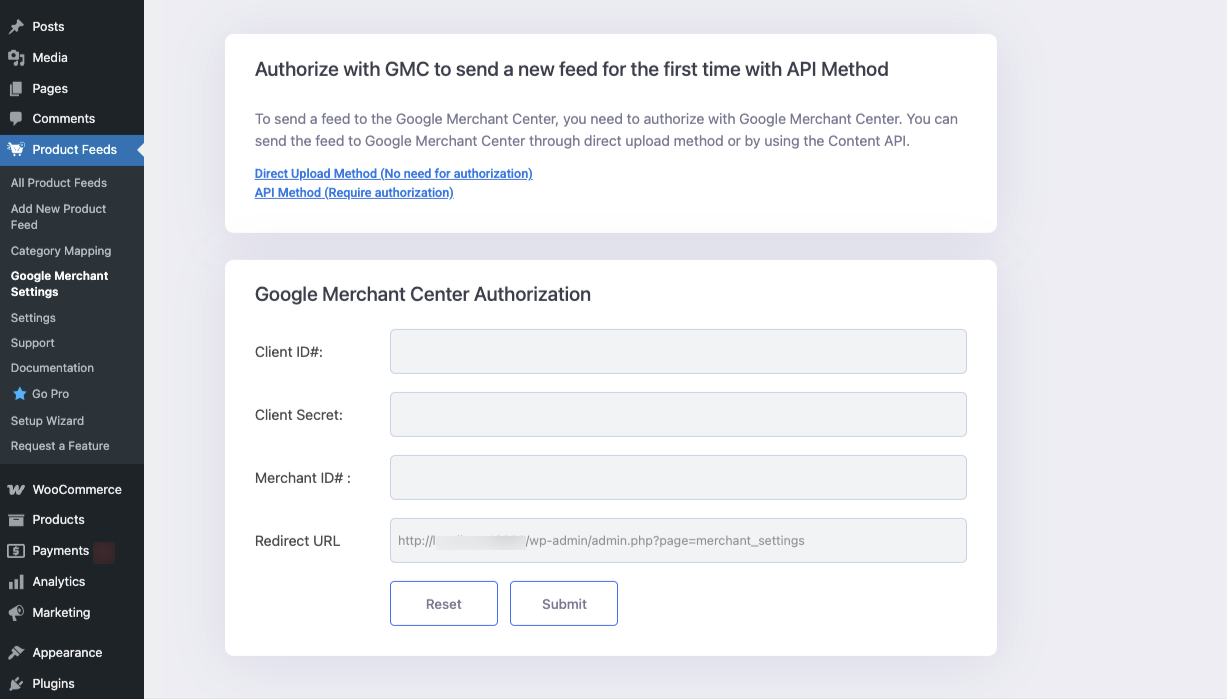
However, to use this method you need to authorize with the Google Merchant Center first, and to do so you will need the following information:

  1. Client ID
  2. Client Secret
  3. Merchant ID
  4. Redirect URL
How To Auto-sync Product Feed To Google Merchant Center 1

You will see that the Redirect URL is already added, but you need to collect the Client ID, Client Secret, and Merchant ID to authorize with the Google Merchant Center.

Follow the steps below to learn how to auto-sync product feed to Google Merchant Shop:

Step 1: Create a Project #

1. Go to https://console.developers.google.com/ or https://console.cloud.google.com/

2. Choose an existing Project or create a new one.

How To Auto-sync Product Feed To Google Merchant Center 2

3. If you choose to create a Project, it will take you to New Project Page.

4. Here choose Project Name, and Organization (if you have a G-suite acc). If you want you can edit the project Id as well, (which cannot be changed once the project is created).
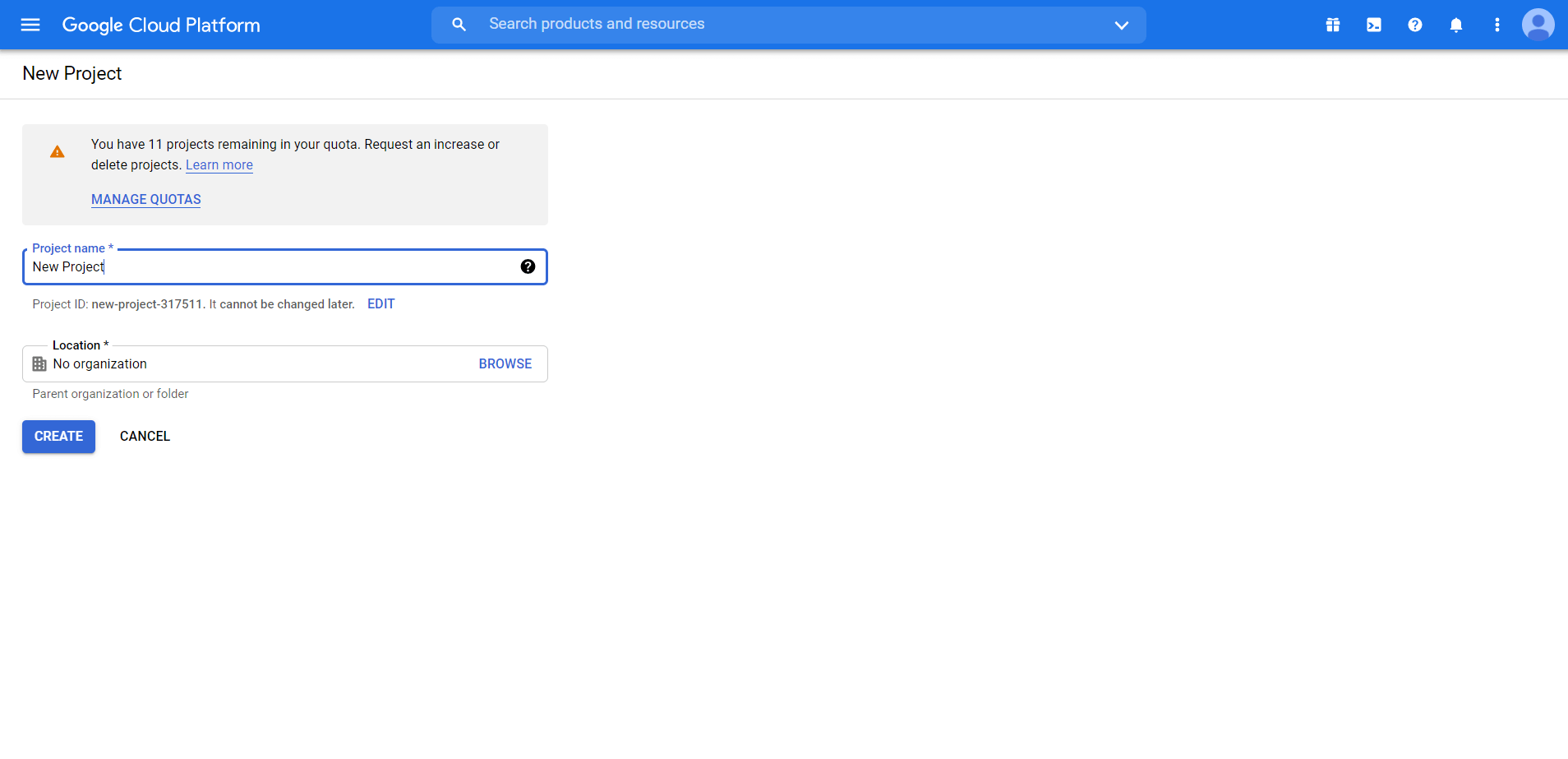
Google Cloud Platform - Create New Project

Step 2: Enable Content API for Shopping #

1. Once the Project is created, it will take you to the project dashboard. On the left Menu panel, click on APIs & Services.

2. Here, click on Enable APIs and Services. It will take you to the API library.
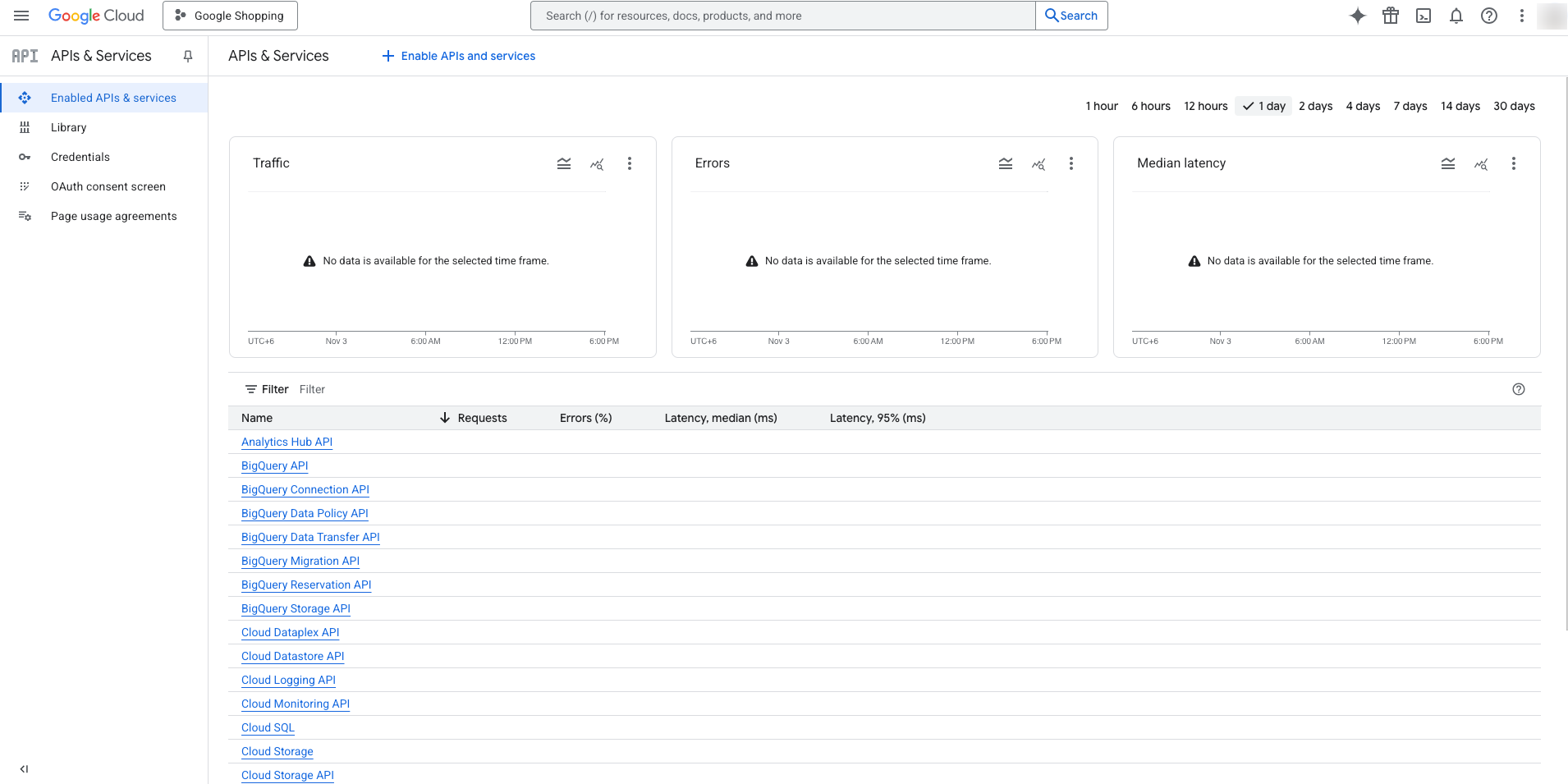
How To Auto-sync Product Feed To Google Merchant Center 3

3. Search with “Content API for Shopping” and you will find an API service with the same name.

How To Auto-sync Product Feed To Google Merchant Center 4

4. Click on it to view the API service overview and Enable it.
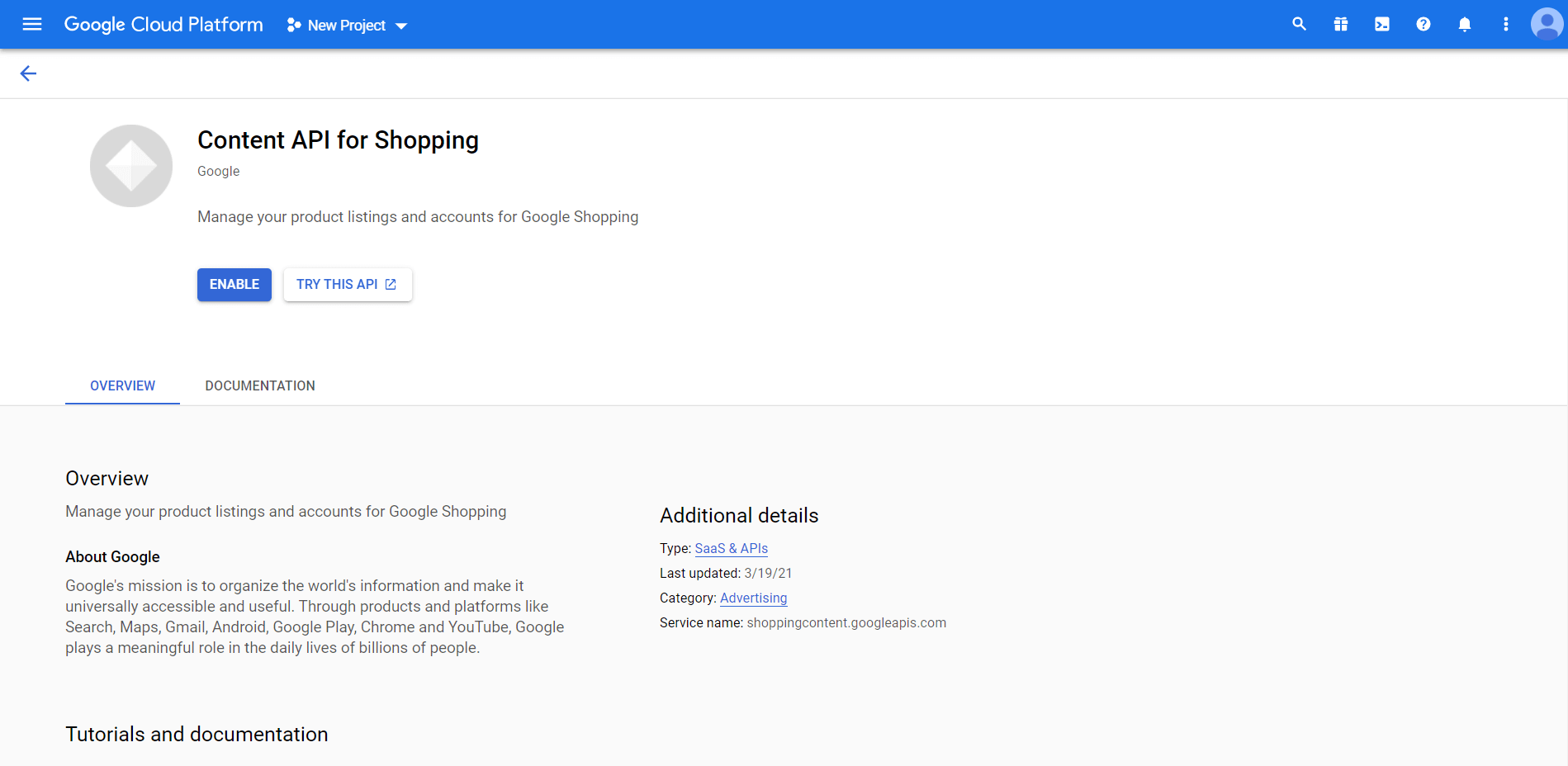
Enable Content API for Shopping

Step 3: Configure OAuth Consent Screen #

1. Once you enable the Content API for Shopping, it will take you to the Content API for the Shopping Overview dashboard. Here click on the Credentials menu option from the left side of the window
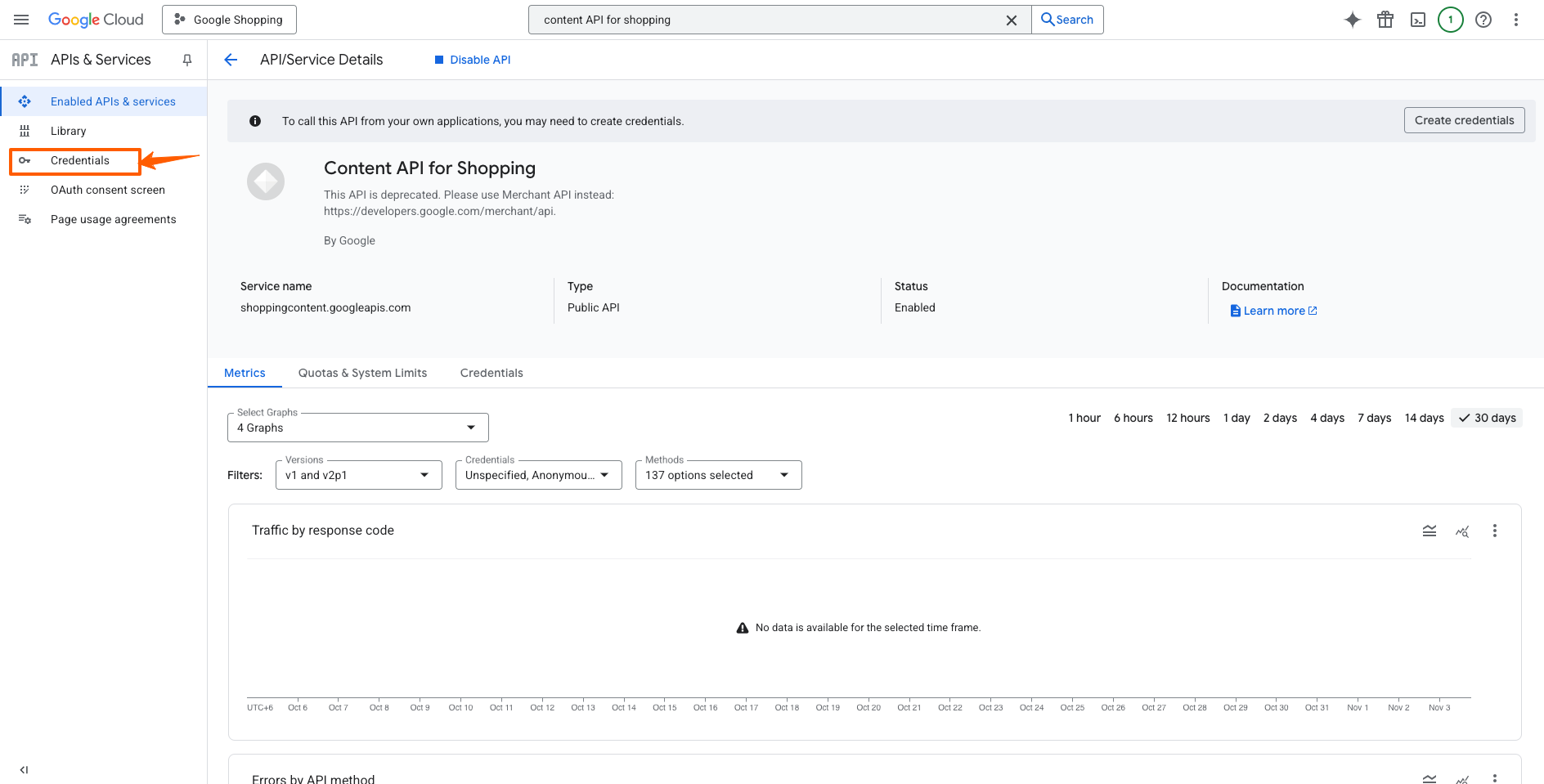
How To Auto-sync Product Feed To Google Merchant Center 5

2. Click on the “Configure Consent Screen” button on the right side.
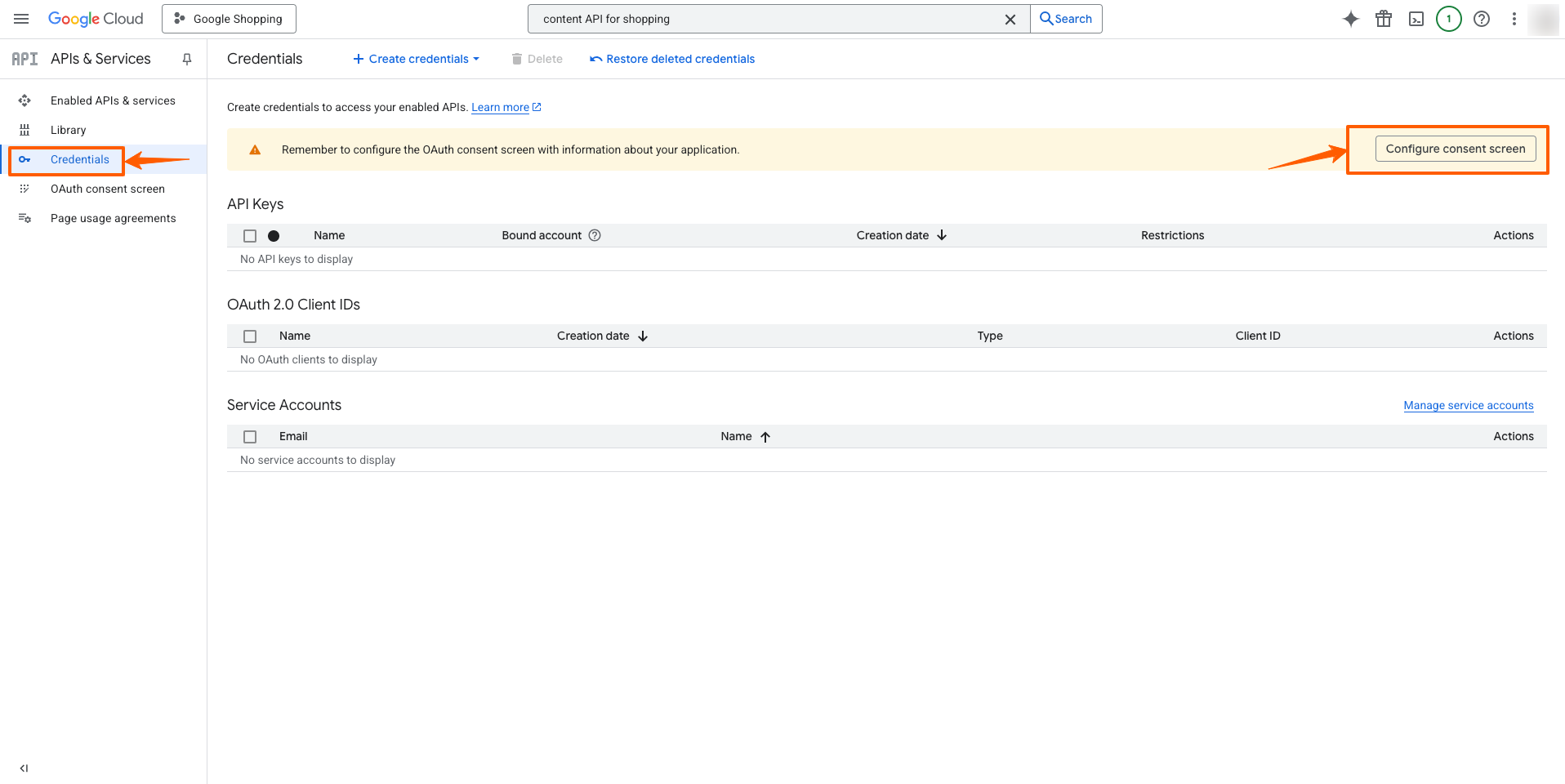
How To Auto-sync Product Feed To Google Merchant Center 6

3. If you see that the Google Auth Platform not configured yet. Click on “Get Started”
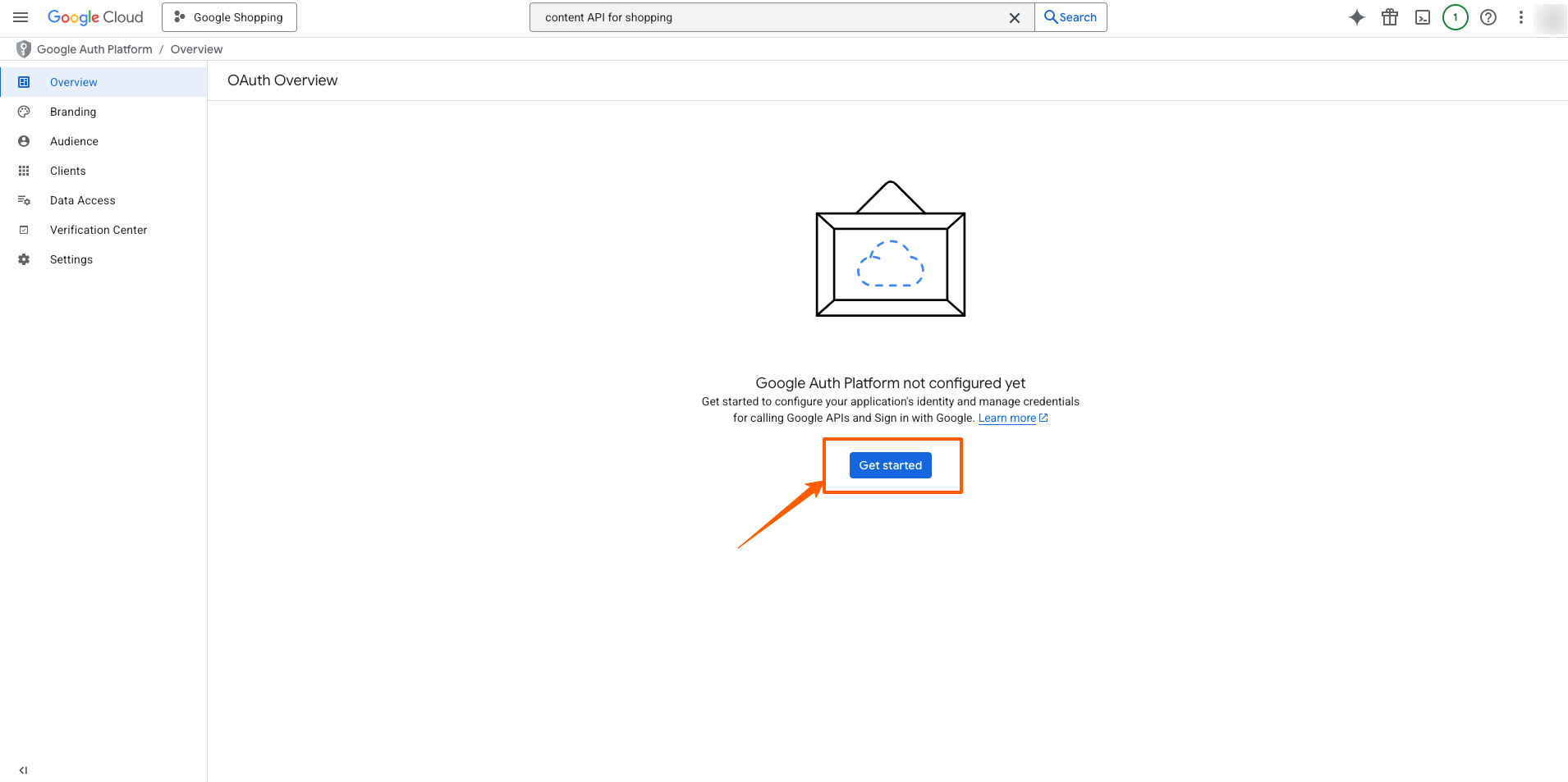
How To Auto-sync Product Feed To Google Merchant Center 7

4. In the Overview Section, Provide you App Information and User Support email and click on next
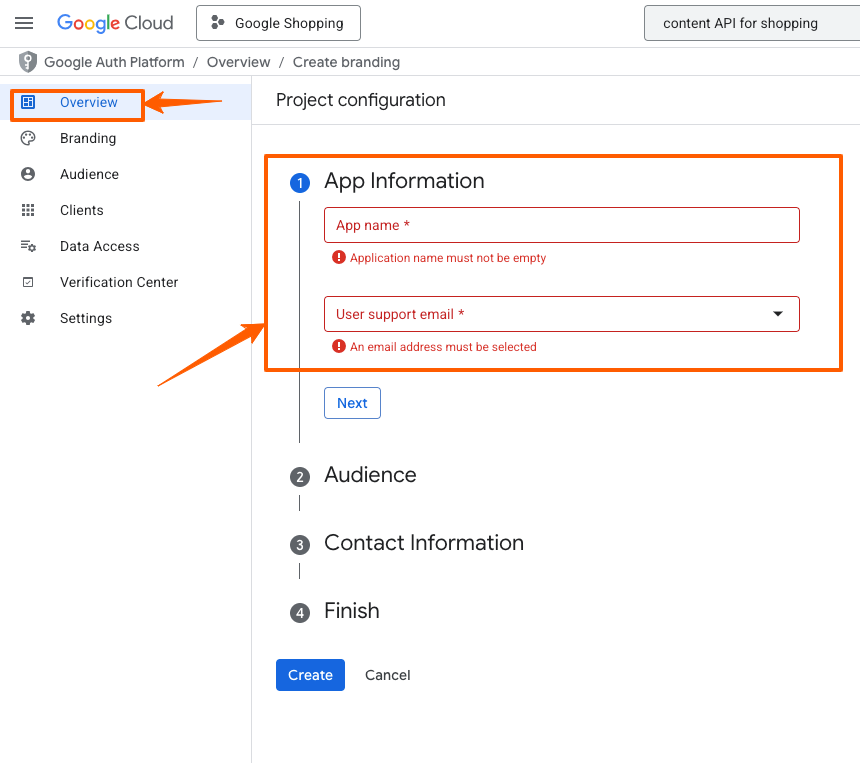
How To Auto-sync Product Feed To Google Merchant Center 8

5. Now choose External and click on Next
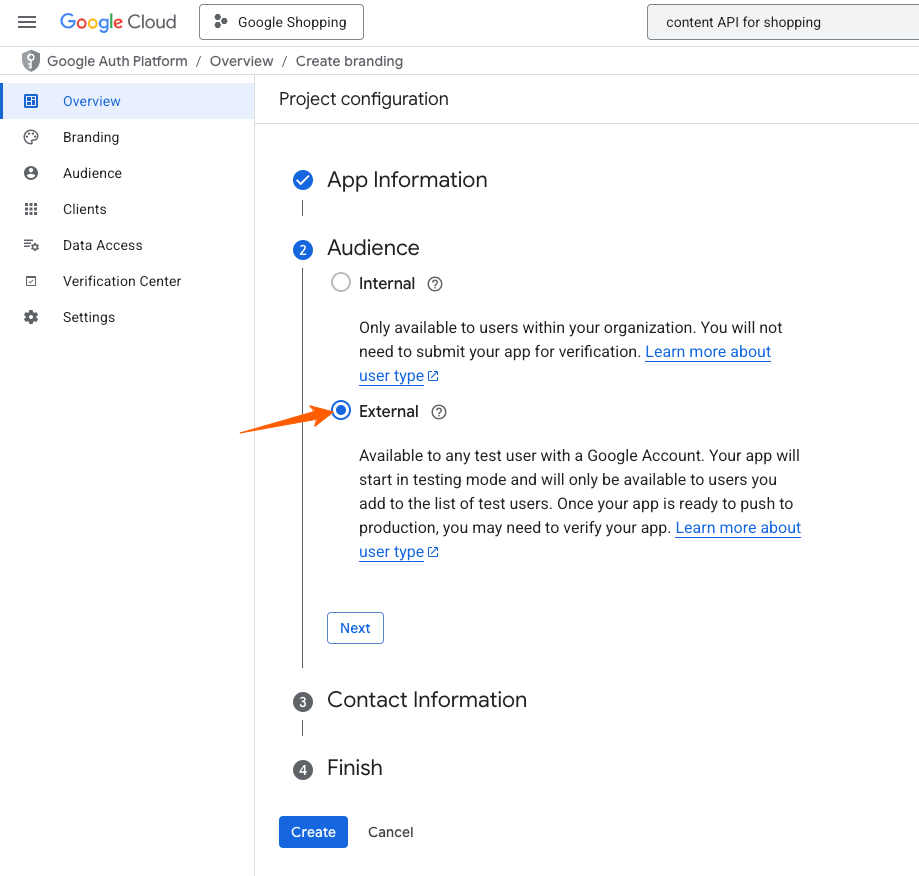
How To Auto-sync Product Feed To Google Merchant Center 9

6. Now provide the Contact Information (Email)
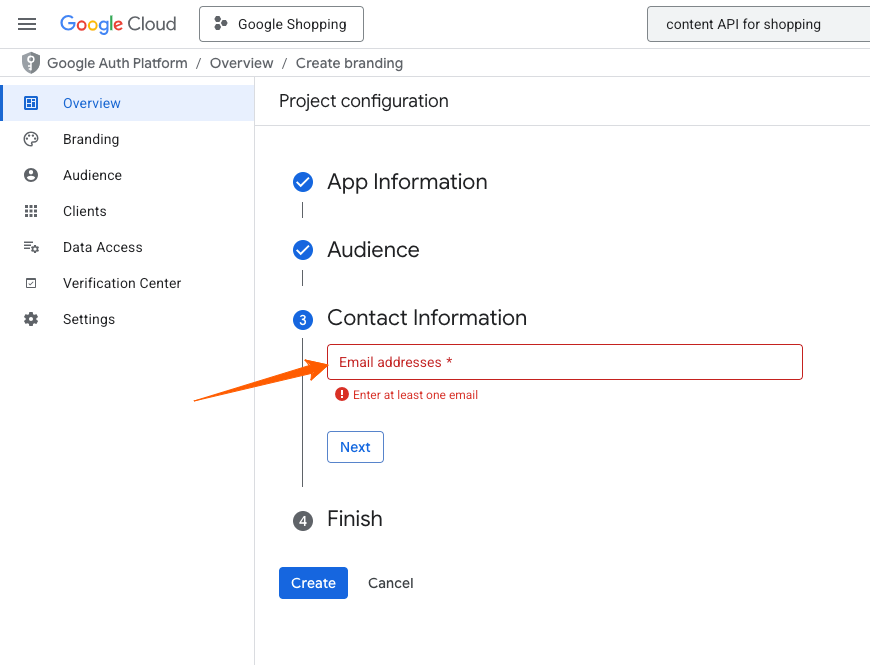
How To Auto-sync Product Feed To Google Merchant Center 10

7. Now check the terms and condition and click “Create”
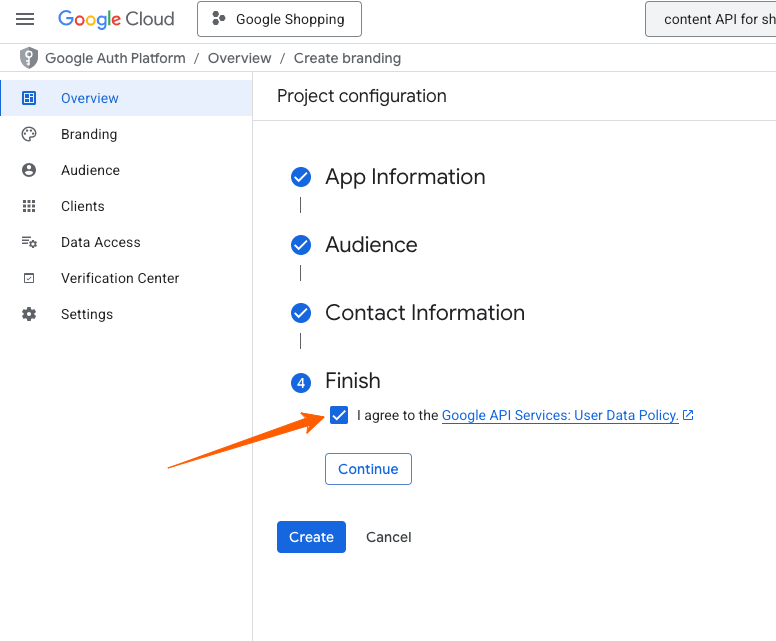
How To Auto-sync Product Feed To Google Merchant Center 11

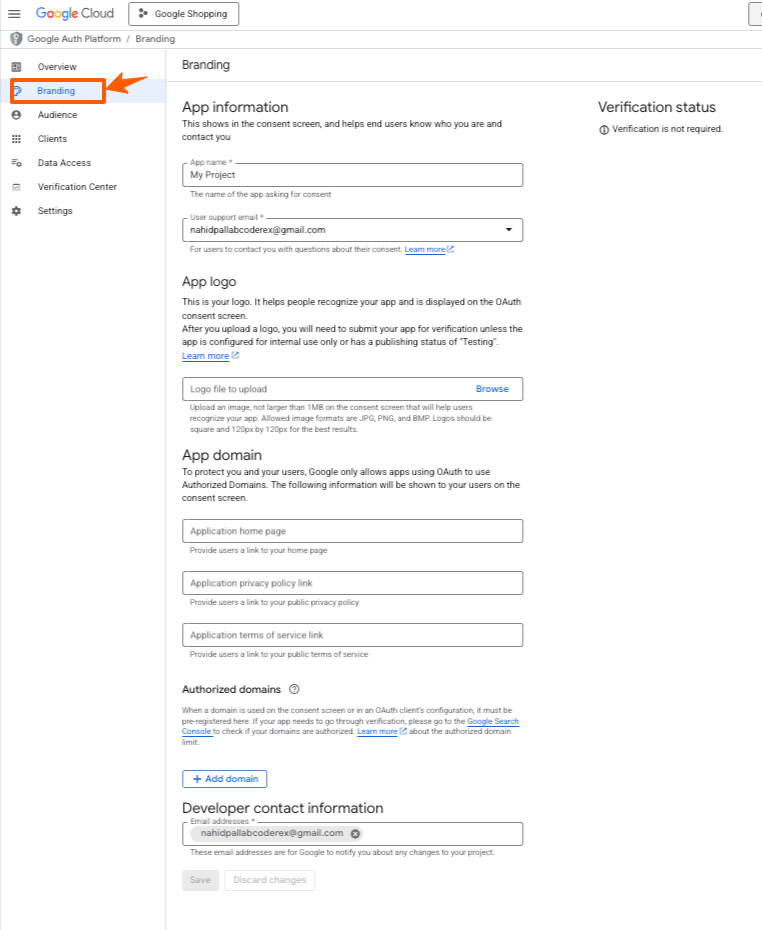
8. Now on the Branding Section

How To Auto-sync Product Feed To Google Merchant Center 12

Here you will need the following information:


–App Information – Give a name to your app and provide your support e-mail address. You may
also, upload a logo for your app.

-App domain – Here you may provide links to your site’s home page, privacy policy page, and Terms of
Service page. Then click on the Add Domain button and submit your website’s domain name without ‘“https://www.”. (If you have an authorized domain, then this may already be added by default). FYI: The domain you submit here must be a top-level domain, I.e. it should be a normal domain with a .com, .org, or other such cases. So a dev server domain such as “dev.website.com” will not be accepted.

-Developer contact information – Here you may use a personal e-mail to get Google notifications.

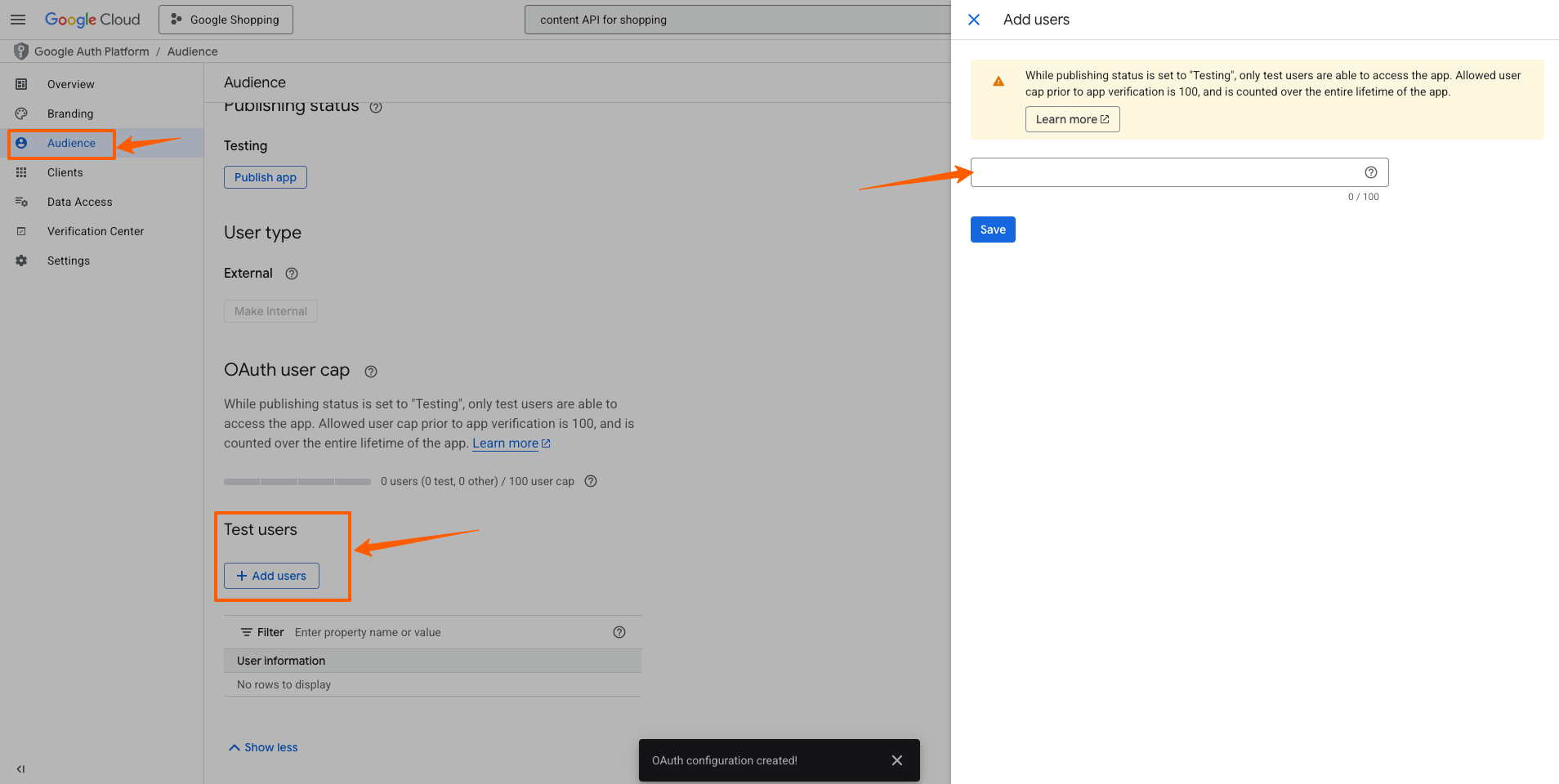
9. In the Audience Section, you can set up test users
How To Auto-sync Product Feed To Google Merchant Center 13

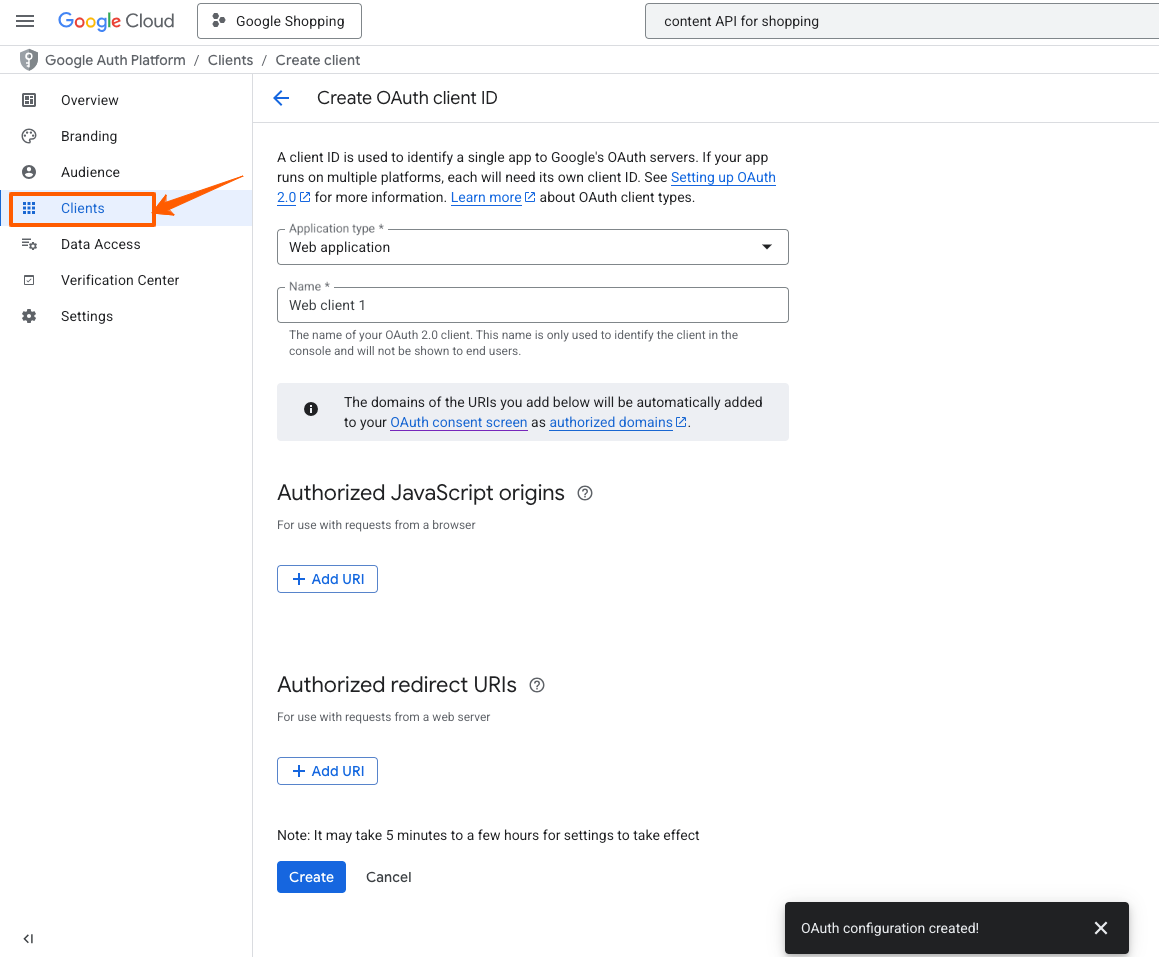
10. Now in the Client Section, you need to Create OAuth client ID
How To Auto-sync Product Feed To Google Merchant Center 14

11. Now choose Application type and Name

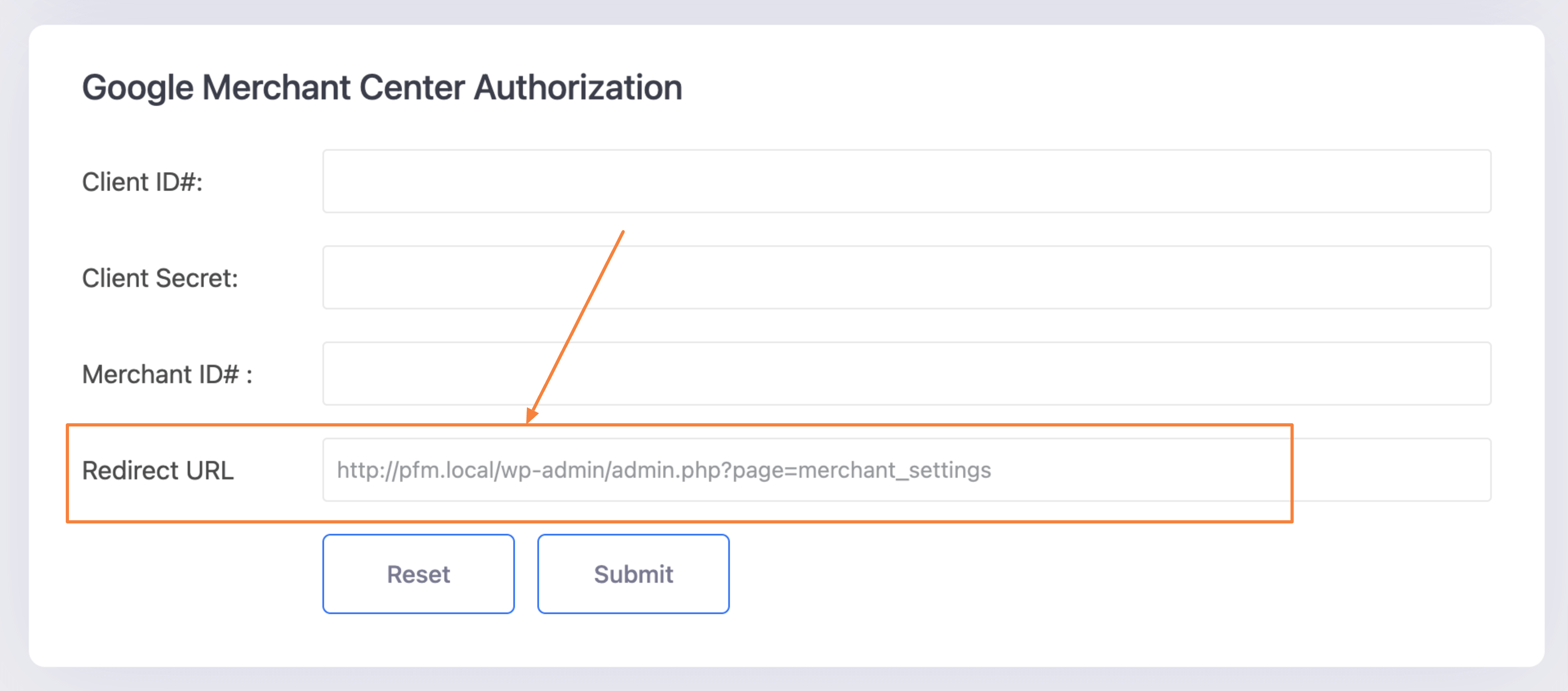
Put in the Authorized redirect URIs for that go to Product Feed > Google Merchant Settings. Here, copy the Redirect URL from the Redirect URL field.
Product Feed Manager Redirect URL For Google

12. Now go back to your Google console tab and paste the URL. Then click on create.

Click on ADD URI for Authorized redirect URIs. Here add the Redirect URL that you just copied from the plugin. Then click on Create.

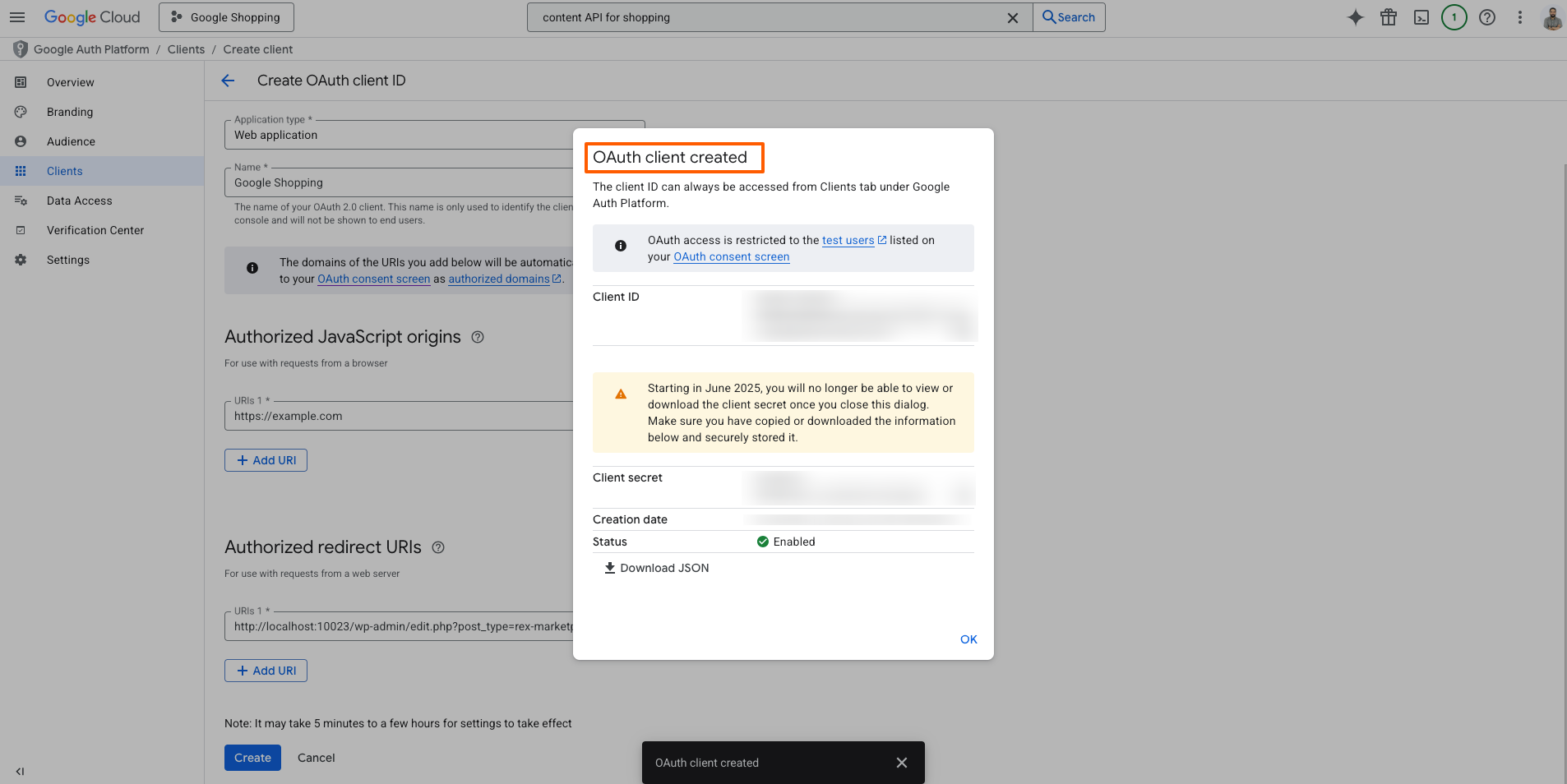
13. Your OAuth client will be created, and your Client ID and Client Secret will be generated.

You will find your:
Client ID
Client secret
How To Auto-sync Product Feed To Google Merchant Center 15

14. Copy the Client ID and Client Secret

15. Also, on another tab, go to https://merchants.google.com/ and log in to your Google Merchant Account. (Make sure your Google Merchant Account Settings are properly configured). Collect your Merchant ID from the top right corner of the window.

Google Merchant Center Merchant ID

Step 4: Create Credentials & Authorize With Google Merchant Center #

1. Then Go back to Google Merchant Settings page open and paste Client ID, Client Secret, and the Merchant ID in the respective fields, like shown in the screenshot below:

How To Auto-sync Product Feed To Google Merchant Center 16

2. Click on Submit, and a section will appear above asking you to Authenticate. Click on it and it will
confirm that you are authorized.

3. After clicking the Submit button and successfully the Authentication is completed it will be like the screenshot below:

How To Auto-sync Product Feed To Google Merchant Center 17

Step 5: Send Feed to Google Merchant Center #

Once you are authorized with Google Merchant Center, now when you generate a Google feed, you will get an option Send to Google under the feed title. Select a schedule, and click on Send To Google and your feed will be sent to Google Merchant Center.
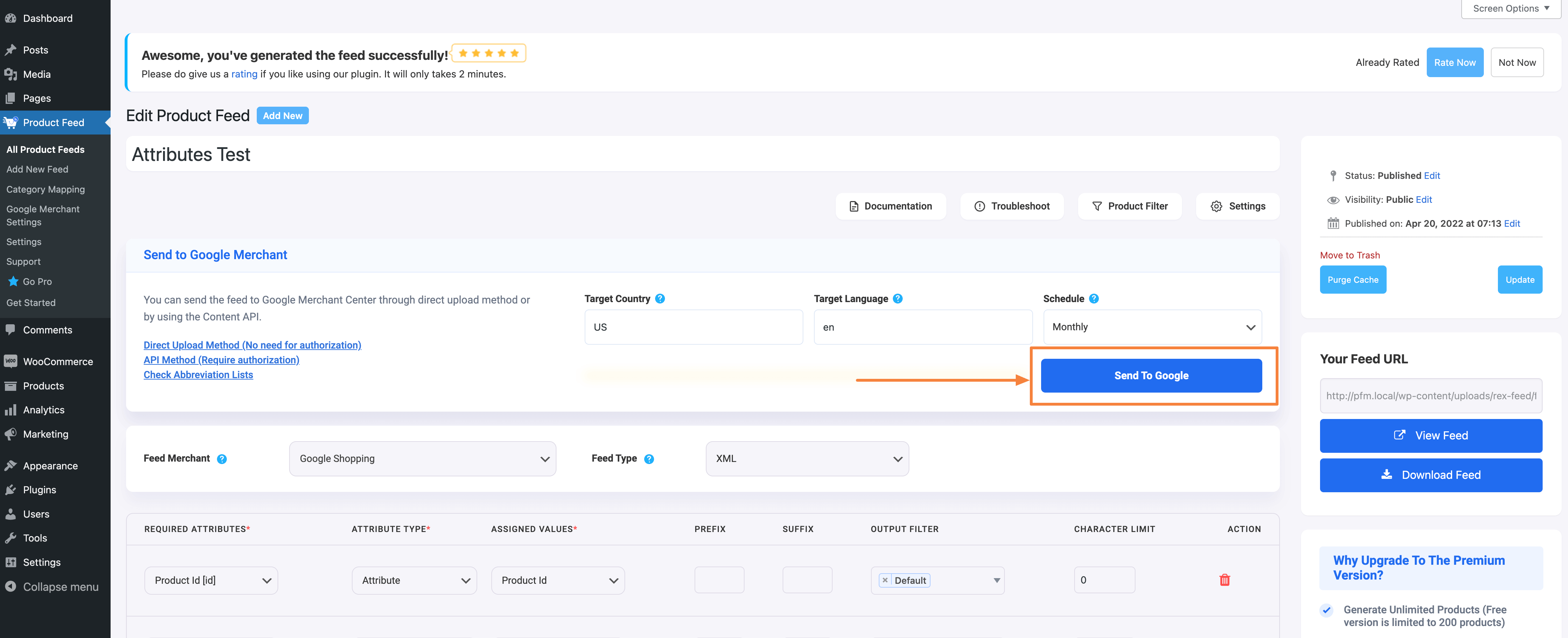
Product Feed Manager - Send To Google Option

You have set up an Auto-sync successfully and your products will be visible on Google Merchant Center after being processed by Google

Quick Note #

Once you authorized and you sync the feed successfully to the Google Merchant Center, you can see the message like this in the Product Feed Manager dashboard’s Google Merchant Settings page:
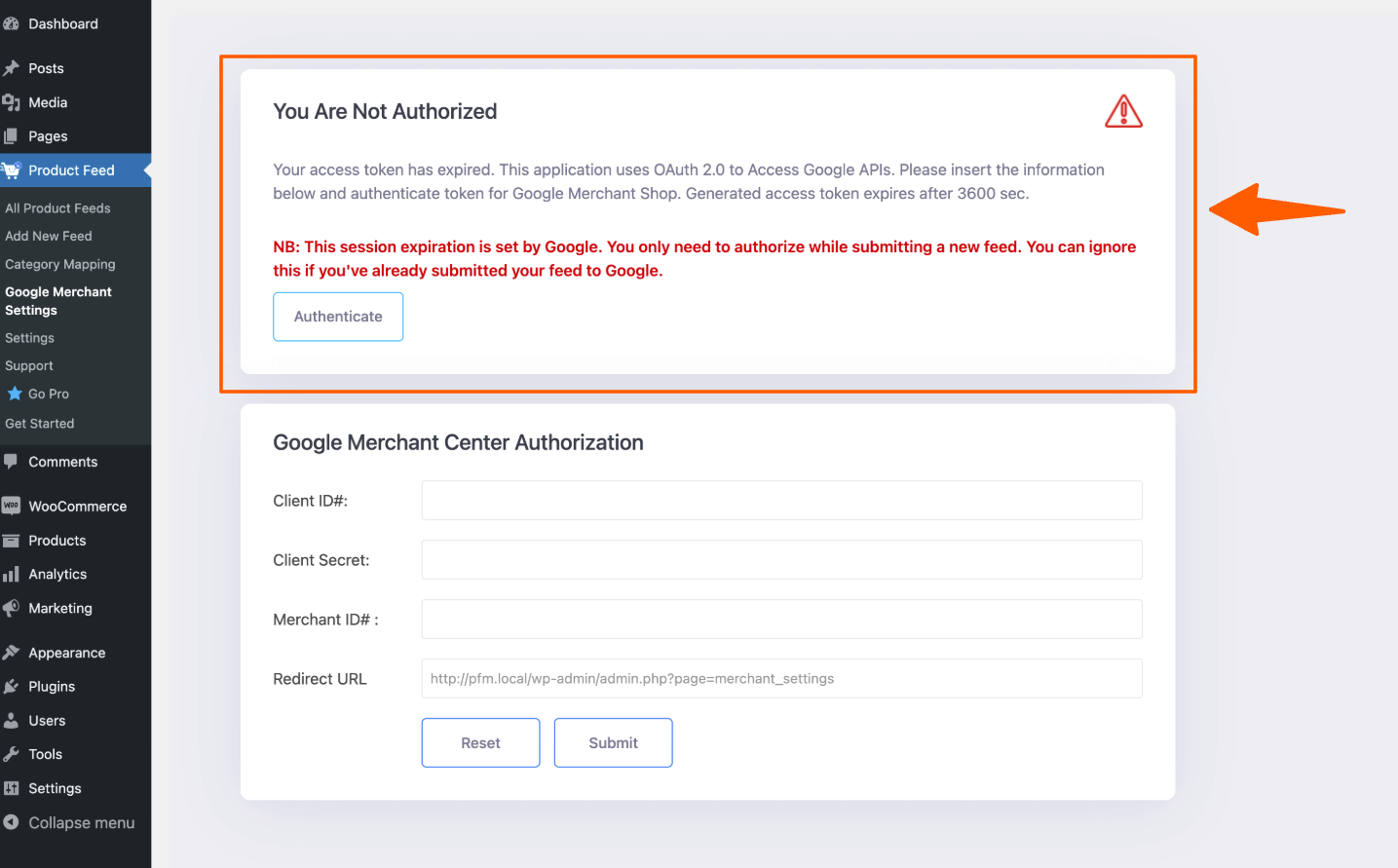
How To Auto-sync Product Feed To Google Merchant Center 18

The reason you’re seeing the authentication message is because the token expires after 1 hour. This limit is set by the Google Merchant Center.

However, once the feed is successfully authenticated, you don’t need to authenticate it again—even if the message appears.

You can safely ignore the message as long as the feed has already been authorized.

** Also, please note that for each individual feed, authorization is required only once. After you’ve completed the authorization for a specific feed, you won’t need to do it again for that feed in the future.

That’s it. Your products will be visible on Google Merchant Center after being processed by Google

Still stuck? How can we help?

How can we help?

Updated on November 28, 2025
Table of Contents
  • Step 1: Create a Project
  • Step 2: Enable Content API for Shopping
  • Step 3: Configure OAuth Consent Screen
  • Step 4: Create Credentials & Authorize With Google Merchant Center
  • Step 5: Send Feed to Google Merchant Center
  • Quick Note
RexTheme

Stay updated with our latest releases and useful guides.

By subscribing RexTheme you agree to Privacy Policy.

Products

  • WP VR
  • Product Feed Manager
  • Cart Lift
  • Checkoutify
  • Dynamic Discount
  • Advanced Shipping
  • Catalog Mode
  • Marketplace Auto-sync

Resources

  • Terms of Service
  • Privacy Policy
  • Refund Policy
  • Affiliate Policy
  • Support Policy
  • Bug Bounty Program

Company

  • Blog
  • Documentations
  • Changelog
  • Affiliate Program
  • Brand Assets
  • Contact Us

Copyright © 2013 - RexTheme