![10 Inspiring Virtual Reality Examples Across Different Industries [2026]](https://rextheme.com/wp-content/uploads/2025/08/Virtual-Reality-Examples-Feature-Image.webp)
The first time I tried VR, I didn’t expect much. I just put on the headset and found myself walking through a luxury villa from my desk. It felt so real that I actually paused to imagine where the sun would hit the living room in the afternoon.
That’s when I realized VR isn’t just for games; it can change how we shop, travel, learn, and even get medical care.
Over 171 million people are already using VR for things like virtual concerts, property tours, destination previews, and medical consultations.
But here’s the thing: most of them are just trying random apps without a clear plan, and it often ends up being more confusing than useful.
In this guide, I’m going to show you real VR examples across industries from real estate to fitness, education, and healthcare, so you can see what actually works, what’s worth your time, and what you can safely skip.
TL;DR – Virtual Reality Examples Across Industries
This guide explains what virtual reality is, how it works, and how it’s different from AR and XR.
It breaks down 10 real virtual reality examples across different industries, showing how VR is used in practical, everyday scenarios.
The examples covered include:
- Real estate – virtual property tours to explore homes remotely
- Tourism – virtual destination and hotel previews
- Education – immersive learning and virtual classrooms
- Automotive – exploring cars and interiors from home
- Healthcare – training, therapy, and treatment simulations
- Retail – previewing products in real spaces before buying
- Exhibitions – virtual art galleries and museum tours
- Fitness and wellbeing – guided workouts in virtual environments
- Events – virtual venues for conferences and personal events
- Military and law enforcement – realistic training simulations
The blog also covers the key advantages of virtual reality, such as better decision-making, time savings, stronger engagement, and fewer costly mistakes.

What is Virtual Reality and How Does It Work?
Virtual Reality, or VR, is basically a technology that creates a fully digital environment you can interact with as if it were real. When you use a VR headset, it blocks out the physical world and replaces it with a 3D space that moves with your head and body.
You can look around, move, and interact with objects in this virtual space, giving you a sense of presence inside the environment.
To make this clearer, imagine you’re checking out a flat online. Instead of scrolling through photos, you put on a VR headset.
Suddenly, you’re standing in the living room. You can walk around, check the window placement, feel how spacious the rooms are, and even see how sunlight moves across the space.
This scenario shows how VR combines software and sensors to track your movements and adjust the visuals in real time, creating an interactive, immersive experience.
VR vs AR vs XR – How They Differ
Before I get into the VR examples, it’s worth clearing up the difference between VR, AR, and XR. Honestly, a lot of people mix these up, and it’s obvious as they all involve virtual experiences, use similar headsets or apps, and even overlap in some use cases.
You’ve probably heard someone say, “I tried VR, but it was more like AR,” and wondered what the difference really is. That confusion is normal.
Think about this scenario: you’re shopping for a new sofa.
- With VR (Virtual Reality), you put on a headset and step into a fully virtual room. You can walk around, move the sofa, and see how it looks from every angle, everything you see is digital.
- With AR (Augmented Reality), you use your phone or tablet to view the sofa in your actual living room. The sofa looks like it’s really there, but your room is still visible around it.
- XR (Extended Reality) is the umbrella term that covers mixed reality experiences, both VR and AR, plus any future tech that mixes real and virtual worlds. It’s like saying “all immersive experiences” in one category.
Here’s a quick table to make it easier to remember:
| VR | Fully digital environment | Walking through a virtual apartment |
| AR | Digital objects overlaid on the real world | Viewing a sofa in your real living room through your phone |
| XR | Any mix of real and virtual worlds | Combining VR tours with AR furniture placement |
Once you understand that, you’ll see exactly how VR fits into daily life. It also makes it clear why the following examples actually work.
- Read this blog to learn about VR vs AR in detail- Augmented Reality vs Virtual Reality – What’s The Difference
10 Virtual Reality Examples of Different Industries
Whether you’re buying a home, planning a trip, or teaching a classroom full of curious minds, virtual reality examples in daily life show how VR simplifies tasks and improves experiences.
Let’s look at 10 applications of virtual reality where VR is making a difference.
1. Real Estate: Virtual Property Tours
When searching for a flat, you focus on room size, layout, lighting, and how everything flows. Virtual reality technology lets you explore all these details from your own home with ease.
For example, using devices like Samsung Gear VR or PlayStation VR, you can virtually walk through each room, checking the space and how it connects. This VR space experience removes guesswork and makes property hunting much clearer.
You can also inspect finer details like window placement for natural light, ceiling height, or the quality of finishes. VR support even simulates views from balconies or windows, giving you a true feel for the property’s surroundings.
This detailed exploration is a perfect example of how VR improves the buying process. It helps you evaluate a flat’s livability and suitability with confidence before visiting in person.
- Learn more – Guide to Creating Virtual Luxury Home Tours for Real Estate Success
- Learn more – 10 Special Benefits of Virtual Tours for Real Estate
- Learn more – How to Create a Virtual Tour for Real Estate to Increase Property Sales
2. Tourism: Virtual Travel and Exploration
VR in tourism clears up the “what ifs” when planning your next trip. It lets you explore destinations and hotels before you even pack your bags.
For example, a popular virtual reality example is walking through a hotel room or pool area to check if it matches what you imagined. This helps you feel confident about where you’ll stay.
You can also take virtual hikes along trails or explore cultural sites like museums, giving you a clear idea of what to expect on your trip. This reduces surprises and helps you plan better.
For businesses, this builds trust and drives bookings. When travelers see exactly what they’re getting, they’re more likely to hit “confirm” and less likely to complain later.
- Learn more – 8 Important Benefits of Virtual Reality in Tourism Businesses
- Learn more – How to Create a Hotel Virtual Tour to Get Faster Bookings
3. Education: Immersive Learning Experiences
Imagine if you didn’t have to just read about history or science but could actually step inside it. That’s what virtual reality can do for you as a learner, making education more real and exciting.
For example, you could use VR exercises to explore the human body in 3D or walk through ancient cities right from your classroom. These immersive experiences help you understand things better and remember them longer.
This kind of experiential learning, VR keeps you engaged and makes lessons come alive. It’s a whole new way to learn that fits how you explore the world today.
Plus, VR-related products are now used for therapy solutions and training, giving you even more ways to benefit from this technology every day.
- Learn more – Create an Engaging School Virtual Tour With 6 Essential Tips
- Learn more – Virtual Reality in Education: What’s The Future?
4. Automotive Industry: Finding Out Suitable Cars From Home
Nowadays, VR’s power to create realistic environments goes beyond gaming; it’s changing how you make important decisions. One great example is car shopping from the comfort of your home.
For instance, during virtual reality event examples hosted by some auto brands, you can explore new car models in detail without visiting a dealership. You can check the dashboard, seating, and design just by putting on a headset.
This lets you get a true feel for the vehicle and compare options easily. You’ll save time and avoid dealership crowds while making smarter choices.
With VR, finding the right car becomes simpler and more enjoyable. It also gives you confidence before you even step into a showroom.
5. Healthcare Industry: Revolutionizing Treatment and Training
Virtual reality is changing healthcare in ways that directly benefit you. It’s helping doctors train safely and patients get better treatment without risks.
For example, VR works in surgical training, letting doctors practice complex procedures in a virtual space. This helps them improve skills and feel more confident before real operations.
You, as a VR learner or patient, can also benefit from VR therapy solutions that reduce pain and anxiety, making recovery smoother. The healthcare metaverse is growing fast with tools like Remio VR and immersive VR events.
Using the term virtual reality here means more than just tech; it’s a real, practical tool improving lives. Whether you’re in healthcare or just curious, VR offers exciting possibilities you can explore today.
On the patient side, VR is also changing the way treatments are delivered. Pain management apps like RelieVR provide immersive experiences to distract patients during painful treatments.
Similarly, VR exposure therapy is helping individuals with PTSD face and overcome their fears in a safe and controlled setting.
These advancements show how VR isn’t just enhancing medical knowledge; it’s directly improving lives by making treatments more effective and accessible.
6. Retail: Enhancing Shopping Experiences
Shopping has always been about finding the right fit for your space and style. With VR, the advantages of virtual reality let you see exactly how products will look before you buy them.
For example, apps like IKEA Place offer some of the best virtual reality examples in retail. You can virtually place a chair or table in your room to check the size, color, and style before making a decision.
This hands-on experience helps you avoid buyer’s remorse by making sure your choice fits perfectly. Retailers benefit too, as VR boosts your confidence and makes you more likely to complete a purchase.
VR in retail shows how this technology is reshaping shopping, from big purchases like cars to everyday items. It’s about giving you control and making shopping easier and more fun.
- Learn more – Turn Your WooCommerce Site into an Online Virtual Store
- Watch live example – Virtual Showroom Tour
- Learn more – How to Use 360 Virtual Shopping Stores to Increase Your WooCommerce Sales
7. Exhibitions: Art Galleries and Museums
VR is changing the way you experience art and history. It makes museums and galleries accessible like never before. This technology brings collections to your fingertips, no matter where you are.
For example, the British Museum offers virtual tours that let you explore ancient artifacts and modern art from home. These VR events create immersive experiences that feel just like being there in person.
This approach breaks down barriers like travel costs and location limits, making culture available to everyone. Institutions use VR marketing to build deeper connections and engage visitors more meaningfully.
The term VR here isn’t just tech jargon; it’s a strong tool that enriches how you discover and appreciate art and history. It’s changing museums for the better, one virtual visit at a time.
- Watch live example – Virtual Exhibition Tours
- Learn more – How to Create a Virtual Art Gallery in WordPress
8. Fitness and Wellbeing: Innovative Exercise Solutions
VR is making fitness more fun and flexible by bringing workouts to amazing virtual places. Whether it’s yoga on a peaceful beach or cardio in a lush forest, VR changes how you exercise.
For example, some of the best examples of virtual reality in fitness come from apps like Supernatural, where you can do full-body workouts in stunning VR environments. This makes exercising more enjoyable and motivating.
This kind of virtual workout makes fitness accessible to everyone, whether you prefer working out at home or need new ways to stay active. VR exercises take the boredom out and add excitement.
With VR, reaching your fitness goals becomes easier and more enjoyable, no gym required. It’s a fresh, creative way to keep moving and feel great every day.
9. Events: Conferences & Casual Events
Event planning is changing fast with VR technology. Now, you can explore venues and setups without leaving your home, saving time and effort.
For example, VR showcases let you virtually walk through wedding venues or conference spaces, checking layouts and decor before you book. This gives you a clear picture of what to expect.
Event companies use these virtual tours to improve their marketing and help you make confident decisions. It’s a win-win that makes planning easier and more enjoyable.
With VR, both organizers and clients get a convenient, interactive way to plan events, reducing surprises and boosting satisfaction.
10. Military and Law Enforcement: Simulated Training Environments
VR is changing how you train for high-pressure jobs in the military and law enforcement. It puts you in realistic situations like combat missions or emergencies without any real danger.
For example, you can use VR work simulations to practice tactical drills or crisis responses. This hands-on experience helps you build confidence and react faster when it really matters.
With VR training, you get a safe, practical way to sharpen your skills and improve decision-making. It’s a great technology for staying prepared in these demanding fields.
This use of virtual reality technology is making training more effective, safer, and easier to repeat. It’s helping you perform better when every second counts.
What Are the Advantages of Virtual Reality
Now that you’ve seen how different industries are using VR in real situations, it’s easier to see why this technology is getting real attention.
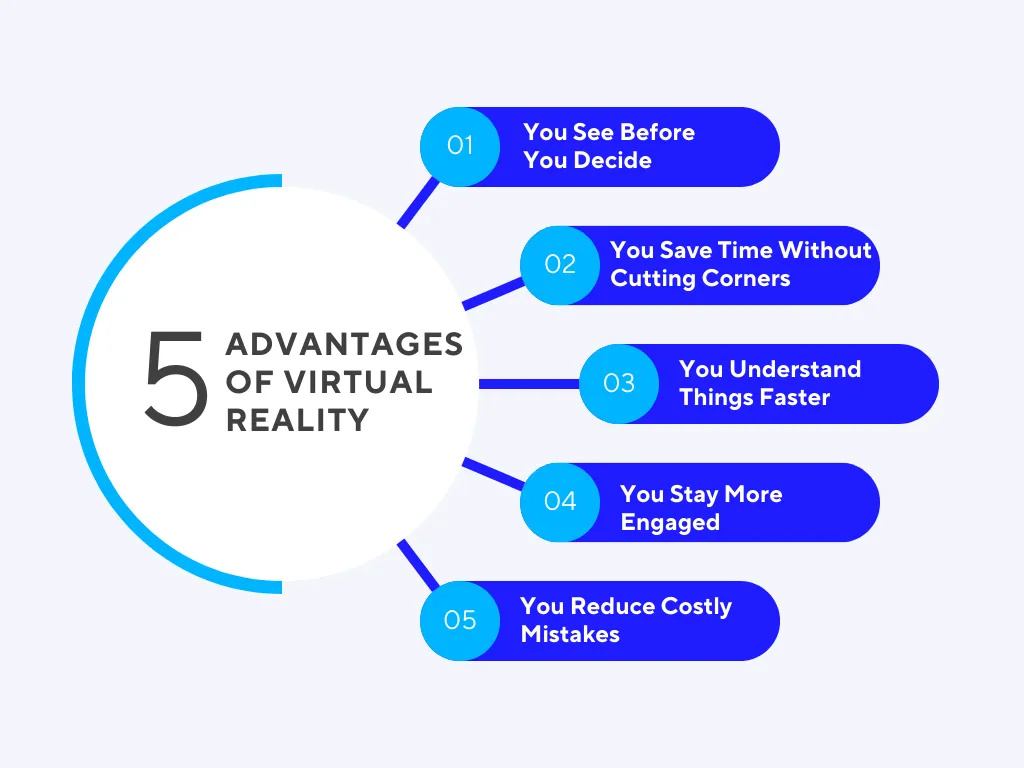
Here are the practical outcomes you can notice the moment you start using VR.
i. You See Before You Decide
With VR, you don’t rely on photos or descriptions. You walk through a space, look around, and understand how it actually feels. Whether you’re touring a property, previewing a hotel, or checking a venue, you make decisions with more confidence and fewer surprises.
ii. You Save Time Without Cutting Corners
VR lets you explore multiple options without traveling, scheduling visits, or sitting through long demos. You can compare places, layouts, or setups in minutes while still getting a clear sense of each one.
iii. You Understand Things Faster
Instead of reading or watching from the outside, you experience things from the inside. This makes it easier to understand layouts, processes, or environments, especially when details matter.
iv. You Stay More Engaged
VR keeps your full attention. You’re not passively scrolling or skimming. You’re present in the experience, which makes information easier to remember and harder to ignore.
v. You Reduce Costly Mistakes
When you can preview outcomes in advance, you avoid wrong choices. That means fewer canceled bookings, fewer return visits, and fewer changes later.
These advantages explain why VR works best when you use it with a clear goal.
Up next, I’ll show you how to choose the right VR opportunities, so you focus on what actually delivers value and skip what doesn’t.
How to Choose the Right VR Opportunities
Here’s how to pick the best VR options so you don’t waste time or money:
- Know Your Goals: Be clear about what you want VR to do for you, like boosting sales or improving training. When your goals are clear, it’s easier to find the right fit.
- Check Cost vs. Value: Look at the price and decide if the benefits are worth it. Focus on VR tools that give you the most bang for your buck.
- Follow Real Success: Look for VR examples that have actually worked for others. This helps you focus on what really gets results, not just flashy virtual reality ideas.
- Avoid Gimmicks: Some VR trends look cool but don’t help your business. Skip those so you don’t waste effort on things that don’t deliver.
- Match Your Comfort: Choose VR options that fit your tech skills and budget so you feel confident and avoid frustration.
- Learn from Others: Find real stories of success to inspire and guide your own VR journey. It’s like learning from someone who’s been there.
Conclusion
VR is changing how businesses connect with people in ways that feel almost magical. It’s providing you with new ways to engage your customers and train your team more effectively.
Whether it’s helping someone choose a car or making healthcare easier to access, VR is opening doors you may not have considered before.
As you think about these examples, ask yourself how VR could help you solve problems or find new chances to grow. It can be closer than you think.
With WPVR, you can easily create virtual tours and experiences that bring VR to your business. It’s a simple tool to help you start using this effective technology today.
FAQs
What is virtual reality in simple words?
Virtual reality is a technology that lets you experience a computer-made world as if you are inside it. You use a headset to look around, move, and interact with that space. Common virtual reality examples include property tours and virtual classrooms.
What are the 5 applications of VR?
VR is used in real estate tours, education, healthcare training, retail previews, and fitness programs. These vr examples help you see, learn, or practice without being physically present. They turn static information into interactive experiences.
Is VR safe for children?
VR can be safe for children when used for short periods and with age-appropriate content. Many examples of VR in education are designed specifically for learning. Adult supervision and time limits help avoid discomfort or misuse.
What are the risks of VR?
Extended VR use can cause eye strain, dizziness, or motion discomfort for some people. This can happen when you use a virtual reality example for too long without breaks. Using proper settings and limiting session time reduces these risks.
Is VR ok for the brain?
VR is generally safe for the brain when used in moderation and with proper guidance. Many Virtual reality examples in daily life focus on learning, therapy, and skill training. Problems usually appear only with excessive or uncontrolled use.