![What is VR Training And How to Conduct It for Real Estate [2026]](https://rextheme.com/wp-content/uploads/2025/02/What-is-VR-Training.png)
Suppose you are the owner of a real estate agency. A buyer from out of state wants to see your $650K listing tomorrow.
Your newest agent, just 3 weeks in, is the only one available. She’s smart, but inexperienced. The buyer already said they have “a lot of questions.”
Now you have two options.
You can send her in unprepared and hope it goes well. Or you can let her practice the entire showing in VR the night before — handling questions, objections, and real scenarios.
By the next day, she’s done it multiple times. She knows what to say. She’s confident. She’s ready.
That’s what VR training does.
Studies show that learners are up to 275% more confident in applying what they’ve learned after VR training.
Real estate isn’t sold with brochures. It’s sold by agents who truly understand the property.
Teams using VR are turning new agents into confident closers in months — while others are still relying on PDFs that don’t work.
In this guide, you’ll learn what VR training is, why it works for real estate & how you can start using it right away (no tech skills needed)
Laten we beginnen.
TL;DR – VR Training
- VR training puts your agents inside realistic property walkthroughs and client scenarios, before they meet a real buyer
- Real estate teams use it for: property walkthroughs, objection handling, listing presentations, and luxury market training
- 5 steps to conduct VR training:
- define your training goal,
- capture 360° property scans,
- build the scenario in WPVR,
- add interactive hotspots,
- and run your agents through it with feedback
- VR training isn’t a luxury anymore; it’s how top organizations build faster, safer, more confident teams.
- Final verdict: Use WPVR to create immersive virtual training environments on WordPress.
What Is VR Training in Real Estate?
VR training is exactly what it sounds like: training your team using virtual reality.
Think of it like a flight simulator, but for real estate. Instead of flying a plane, your agent is practicing property walkthroughs, client conversations, and real sales situations.
Your agent can use a VR headset or even just a browser on a tablet. They step into a realistic, interactive property and practice handling real scenarios.
Here’s the important part:
Your brain learns from it almost like it’s real.
That’s why pilots, surgeons, and now real estate agents use VR; it helps them improve faster with fewer mistakes.
What It Looks Like in Real Estate
Your agent steps into a virtual $1.2M listing.
She walks through the home and practices:
- Answering questions about the property
- Explaining features like layout and storage
- Handling objections like: “This is $80K over our budget”
She tries different responses and sees what works best.
Why VR Training Works So Well for Real Estate
Real estate is uniquely well-suited to VR training, and I have given some points why:
1. Your Job Is Already Visual
Most industries train people on processes you can write down in a manual.
Real estate isn’t like that. You’re selling space, how a home feels when you walk in, how the light hits the kitchen at 4 pm, how the master bedroom flows into the bathroom. None of that translates to a PDF.
VR captures the experience of your property. Your agents train inside the space, not just about the space.
2. Buyers Ask Different Questions You Can’t Script
Every showing is a little different. The buyer who suddenly asks about the HOA.
The one who tries to negotiate before you’ve even finished the kitchen. The one who goes quiet at the staircase because their kid has mobility issues.
You can’t prepare for all of that by reading. But you can simulate it in VR and let your agents practice handling whatever scenario comes up before they’re in front of a real client.
3. The Mistakes Are Expensive
Here’s the math: a missed sale on a $500K listing costs you roughly $15K in commission. Two missed sales because of undertrained agents? That’s $30K out the door.
Compared to the cost of building a VR training program, it pays for itself the first time it stops a deal from falling apart.
4. Shadowing Doesn’t Scale
Most teams still train new agents by having them shadow senior ones. The problem is that your senior agents have actual deals to close. Every hour they spend mentoring is an hour they’re not earning.
VR training removes that bottleneck; your new agents can practice on their own, repeatedly, without burning your top performers’ calendars.
What VR Training Looks Like in a Real Estate Team

Before getting into how to set it up, let’s talk about what this actually looks like in your day-to-day.
Because this isn’t some complicated system. It’s just practice, but smarter.
- Property walkthrough practice: Your new agent puts on a headset and walks through one of your listings. They move room to room, learn the layout, notice the details, and practice what to say. By the time they visit the real property, it already feels familiar.
- Objection handling: You know the usual ones. “It’s overpriced.” “We want to keep looking.” “I’m not sure about this area.” Instead of figuring it out live, your agent practices these in VR. They try different responses until one feels right.
- Stepping into the luxury market: Selling a $300K home and a $3M home are completely different experiences. With VR, your agent can practice those higher-end conversations, the tone, the expectations, the details, before ever stepping into that level of deal.
- Working with first-time buyers: These clients need more guidance. More patience. More clarity. In VR, your agent can practice answering those “basic but important” questions without the pressure of a real client standing there.
- Listing presentations: Your agent walks into a virtual seller meeting. They go through your property, explain pricing, and handle pushback like, “We think it should be listed higher.”They get comfortable having that conversation before it actually matters.
- Open house situations. Now imagine a busy open house. Multiple buyers. Questions coming from different directions. In VR, your agent can experience that pressure and learn how to stay calm and in control.
If you look at your team, chances are these are the exact moments where things go wrong. VR just gives your agents a chance to get it right before it’s real.
Benefits of VR Training

Now that you understand what VR training is and how it works, let’s dive into the real benefits you can expect when you implement it in your training programs.
Here’s how VR training can directly benefit you and your team:
i. Enhanced learning outcomes:
When employees are fully immersed in a VR training environment, they retain information much better than through traditional methods.
Instead of explaining the process, you can let the employee practice it in VR, repeating actions until they get it right. This hands-on practice leads to better retention and faster skill development.
ii. Reduced costs and risks:
VR training significantly cuts down on the expenses that come with traditional training methods.
No more travel costs, no need to rent expensive training equipment, and no more worrying about safety risks when training in hazardous environments.
iii. Faster onboarding and upskilling:
VR training speeds up the time it takes for new employees to become proficient in their roles.
Instead of waiting for lengthy on-the-job training or relying on costly in-person instruction, your employees can quickly get up to speed by practicing scenarios in a VR setting.
Take the healthcare sector, for instance. Doctors, nurses, and emergency responders can complete simulations of surgeries or emergency procedures quickly, allowing them to gain the skills they need in a fraction of the time it would take with traditional methods.
These are just a few of the specific ways VR training can transform your business. By making learning more engaging, cost-effective, and efficient, VR helps you train your employees more effectively and prepare them for success.
So, you know how VR training can benefit your business, and it’s time to talk about the best ways to get started.
Best Practices for Implementing VR Training

Implementing VR training the right way will set you up for success, making sure your team gets the most out of the technology.
Here are some practical steps to help you integrate VR training effectively into your organization:
i. Align Training Goals With Business Objectives
First, define what you want to accomplish with VR training.
Are you aiming to improve skill mastery, increase learner engagement, or ensure better knowledge retention?
For example, if you’re training healthcare students, your goal might be to enhance their confidence in performing specific procedures. Pinpoint these objectives and tie them to measurable outcomes like exam performance or time taken to complete a task.
This alignment keeps your program focused and effective.
ii. Start Small and Scale Gradually
Instead of diving in headfirst, begin with a pilot program for a specific audience.
For example, start by offering VR modules to one class, team, or group of learners. Gather feedback on what worked, what didn’t, and what can be improved. Once you’re confident in the results, gradually expand it to larger groups or other departments.
This approach minimizes risks, helps fine-tune the experience, and ensures a smoother rollout.
iii. Invest in the Right Tools and Resources
Choosing the right tools is key to creating impactful VR training. Focus on platforms and devices that suit your specific needs:
- Hardware: Use reliable VR headsets like Oculus Quest 2 or HTC Vive to deliver immersive experiences. These headsets offer clear visuals and ease of use, making them ideal for learners of all levels.
- Software: Look for tools that enable you to create customizable VR environments. For instance, WPVR can help educators create interactive virtual tours for students, such as walking them through an ancient archaeological site for history lessons or demonstrating lab safety protocols for science learners. These tools bring learning to life, making it interactive and memorable.
- Analytics Tools: Platforms offering real-time data on learner progress, like engagement time or success rates, help you fine-tune the program.
By prioritizing the right tools and resources, you ensure the VR training experience meets the needs of your learners while delivering measurable outcomes.
Comparison Between the Advantages and Disadvantages of Virtual Reality Training
While VR training offers many benefits, it’s important to weigh the advantages against the challenges. Here’s a clear comparison to help you see both sides:
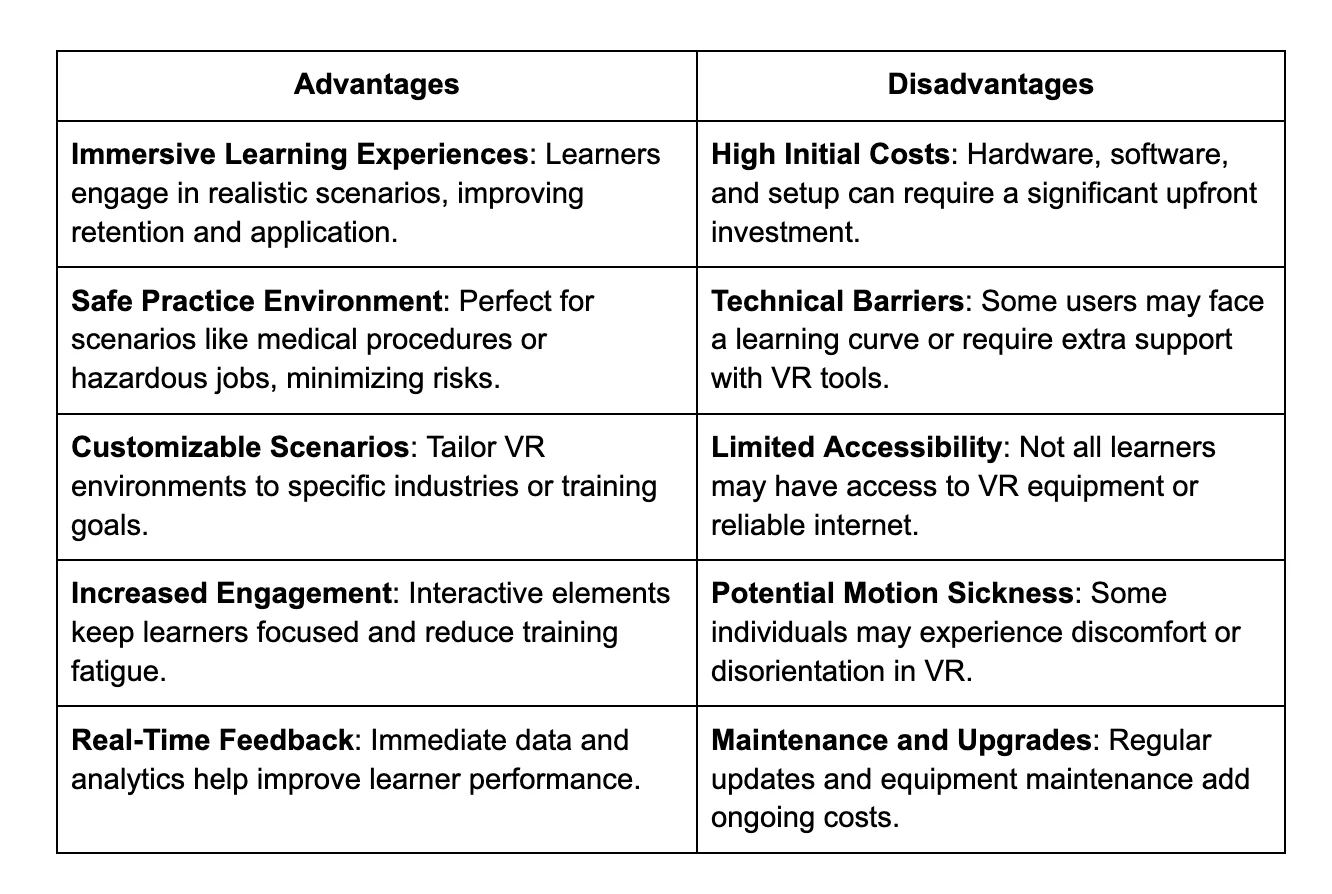
So, this balanced view helps you decide if VR training systems fit your specific goals and resources.
How to Conduct VR Training for Real Estate: The 5-Step Playbook

Alright, this is the part you came for. Let’s break down exactly how you actually run VR training for your team, step by step.
Step 1: Define What You Actually Want to Improve
Before you buy anything, pick one specific outcome. Don’t try to fix everything at once.
Good examples:
- “Cut new-agent ramp-up time from 6 months to 6 weeks”
- “Reduce lost deals from objection fumbles by 50%.”
- “Get every agent confidently running luxury showings within 3 months”
Bad examples:
- “Improve training”
- “Make agents better”
The more specific your goal, the easier it is to know if VR training is working. Pick a number you can actually measure.
Step 2: Capture or Source Your 360° Property Content
This is where a lot of teams get nervous, but it’s simpler than you think.
You’ve got three options:
- Use a 360° camera: A consumer-level camera like the Insta360 or Ricoh Theta costs around $300-500. Walk through a property, take 360° shots at key points, and you’ve got the raw material for training.
- Use existing virtual tours: If you already do virtual tours for listings, you can repurpose that content for training.
- Use stock or sample 360° environments: For practicing generic scenarios (luxury homes, condos, first-time buyer properties), you can use sample 360° environments to start.
You don’t need professional-grade equipment to start. Most teams begin with one or two properties and expand from there.
Step 3: Build Your VR Training Scenarios in WPVR
Here’s where the magic happens and where most people expect it to get technical and overwhelming. It doesn’t have to be.
WPVR is a WordPress plugin built specifically for creating interactive virtual tours and training environments. You don’t need a developer. You don’t need to know code. If you can drag and drop, you can build VR training in WPVR.
Here’s the basic flow:
- Install WPVR on your WordPress site (a 2-minute setup)
- Upload your 360° property images
- Connect scenes so agents can navigate from room to room
- Drop in interactive hotspots that trigger questions, objection scenarios, or coaching tips
- Publish and share the link with your team
The whole setup for your first training scenario takes about an hour. After that, you can build new ones in 15-20 minutes.
Step 4: Add Interactive Elements That Make It Training, Not Just a Tour
This is what separates a regular virtual tour from actual VR training: the interactive elements.
In WPVR, you can add hotspots at key locations that:
- Pose buyer questions (“How old is this HVAC system?”)
- Trigger objection scenarios (“This seems overpriced, what would you say?”)
- Provide coaching feedback (“Notice how the kitchen flows into the dining area, agents who point this out close 20% more often”)
- Show video clips of senior agents demonstrating how to handle that exact moment
- Display checklists of what to highlight in each room
The goal is to turn the property into a series of decision points where your agent has to think, respond, and practice, not just look around.
Step 5: Run Your Team Through It and Measure
Now you actually deploy the training. For best results:
- Have each new hire complete the scenario at least 3 times; repetition is where confidence builds
- Track which hotspots they hesitate on (WPVR analytics can show you this)
- Hold a 15-minute debrief after they complete it, asking what felt hardest
- Have them repeat the scenario, focusing on the parts they struggled with
- Pair VR practice with one shadowed real showing before letting them solo
Then measure your original goal from Step 1.
- Are your agents ramping up faster?
- Are they closing more deals?
- Are they losing fewer to objections?
If yes, scale it across the team. If something’s off, refine the scenarios based on what’s actually happening in real showings.
Examples of VR Training in Action Across Different Industries
Now that you have covered the benefits and best practices, let me show you how VR training is already changing the game in other industries.
I’m including these for a reason, because if some of the highest-stakes industries on earth are betting on VR, that should tell you something about where real estate is headed.
When you see who’s using this stuff, the question “Is VR training really worth it for my team?” kind of answers itself.
i. Healthcare and Emergency Services
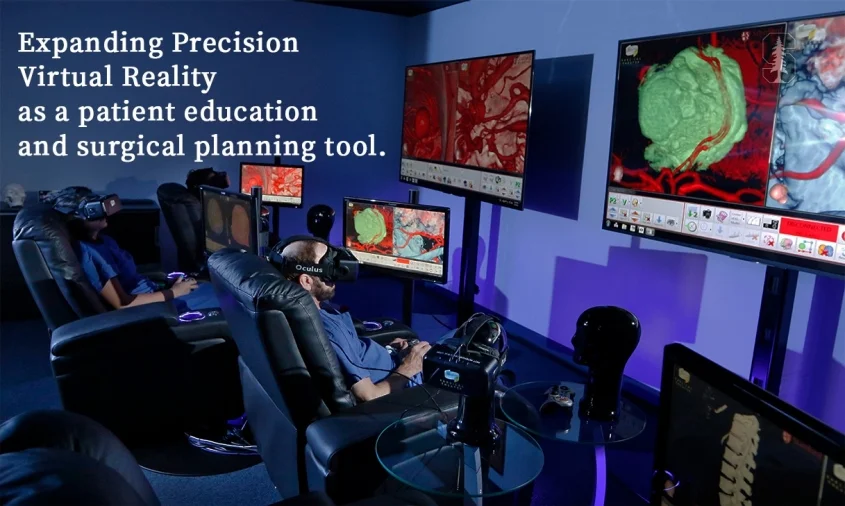
Healthcare is probably the most impressive example because the stakes are literally life and death. Hospitals and medical schools are using VR to let students practice complex procedures without ever putting a real patient at risk.
For example, Stanford University uses VR simulations to train medical students in performing intricate surgeries like tumor resections.
Emergency services are doing the same thing. So when the real one hits, they’re not reacting for the first time. They’re reacting from experience they’ve already lived through, even if it was virtual.
In Australia, firefighters used VR to train for bushfire emergencies — the simulations recreate the heavy smoke, extreme heat, and zero-visibility chaos of a real fire.
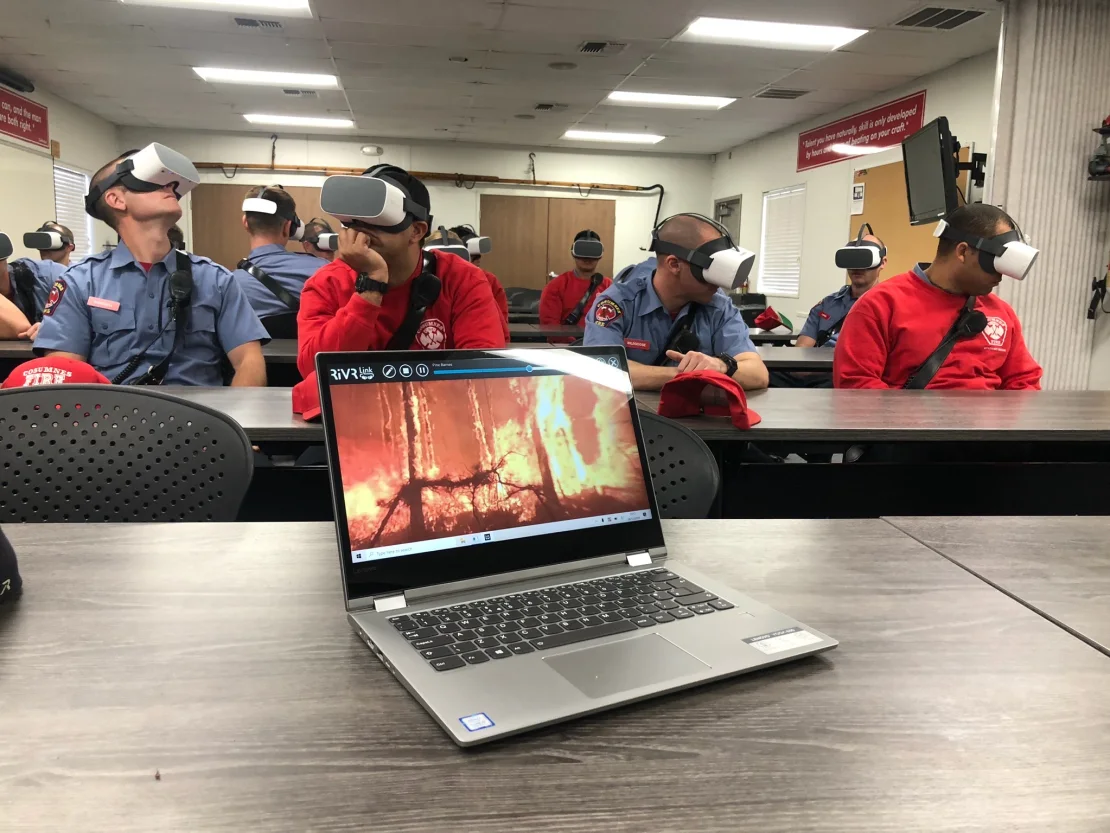
The pattern here is simple: when mistakes are catastrophic, you want people practicing in a place where mistakes don’t actually matter.
ii. Construction and Manufacturing
Construction sites are inherently risky, but VR is changing that by creating safe training environments.
Bechtel, a global leader in construction, uses VR to train workers to operate heavy equipment like cranes and forklifts.
This allows workers to gain practical experience in identifying hazards and mastering equipment controls without stepping onto an active site.
In manufacturing, VR is optimizing complex industrial processes.
Siemens uses VR to train factory operators in assembly line procedures and maintenance for large-scale equipment like turbines.
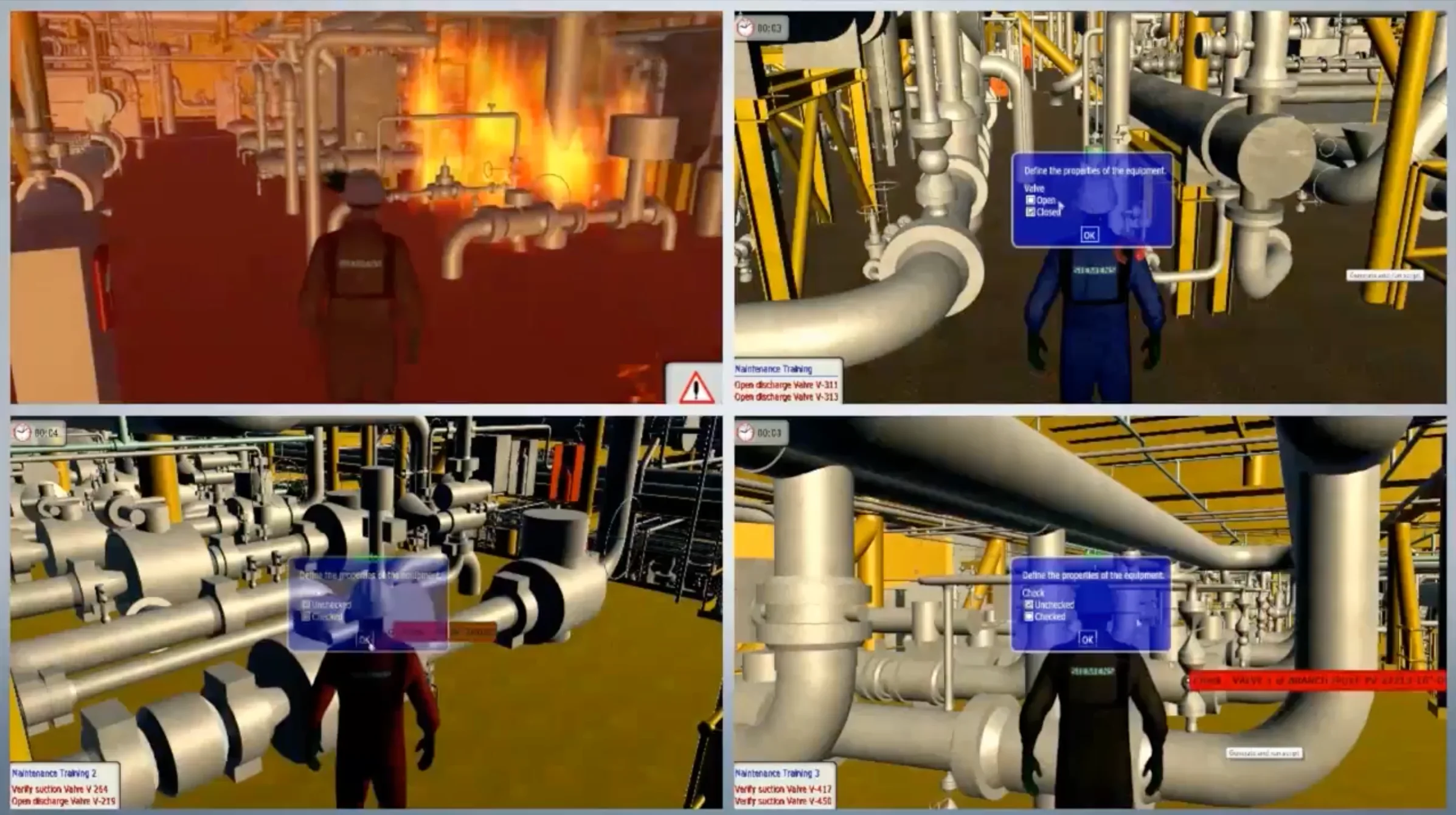
Workers learn to identify mechanical issues and troubleshoot solutions in a virtual environment. This reduces downtime, minimizes mistakes, and ensures better handling of critical machinery during actual operations.
This method has significantly reduced errors and training time while boosting productivity.
iii. Aviation and Automotive
Aviation has relied on simulators for years, but VR takes training to new heights with immersive experiences.

Lufthansa Airlines uses VR to simulate emergency scenarios, such as engine failures or severe turbulence, giving pilots a realistic environment to practice handling critical situations.
These training sessions ensure pilots can react swiftly and effectively in emergencies.
In the automotive industry, VR is helping technicians stay ahead of advancing technology.
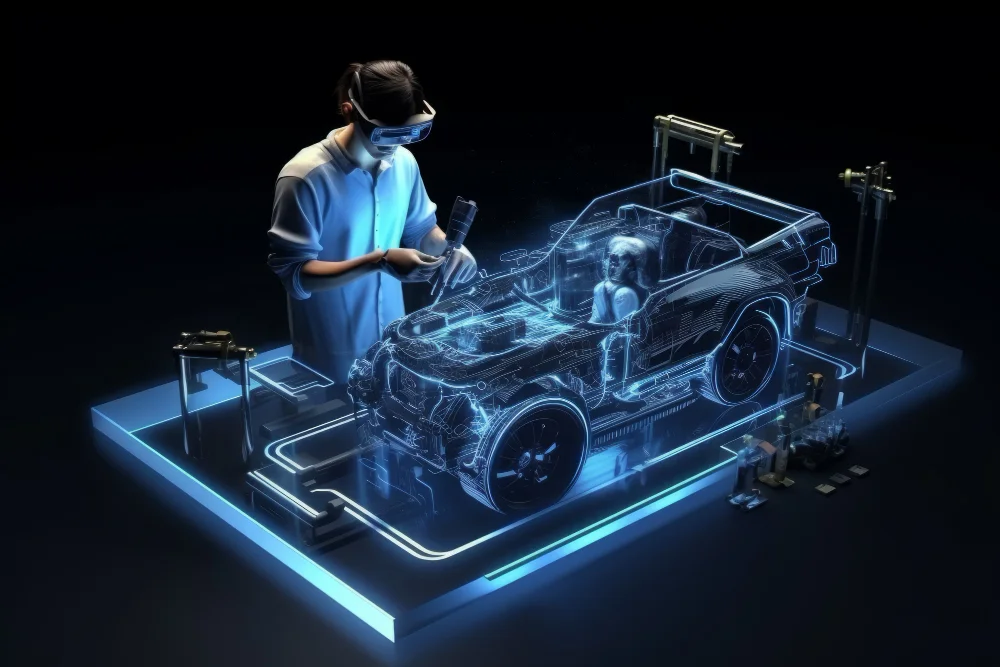
Ford has implemented VR training for assembly line workers, allowing them to practice installing complex car parts virtually.
The hands-on nature of this training makes complex repairs faster and more accurate, ensuring vehicles meet customer expectations.
These examples highlight how VR is shaping the future of professional training by improving skills, reducing risks, and enhancing real-world readiness.
Why Should You Choose WPVR to Create Virtual Environments for Real Estate

Let me address the obvious question. Of all the tools out there, why am I telling you to use WPVR for this? Honestly, three reasons.
The first one is that it runs on WordPress, and most real estate teams already have a WordPress site running their listings. WPVR plugs right into the site you’re already using.
No separate platform to learn, no second login to remember, no extra hosting bill to budget for. You install it like any other plugin, and you’re off.
The second reason is that it’s built for people like you, not for developers. There’s no code, no technical setup, no moment where you have to call your nephew who “knows computers.”
If you’ve ever made a poster in Canva or set up a Zoom meeting, you can build a VR training scenario in WPVR.
The whole thing is drag-and-drop. Upload your 360° property photos, drop in your hotspots, type out your buyer questions, and you’ve got a training environment.
The third reason is that it just makes financial sense. Enterprise VR training platforms can run you thousands of dollars a month, the kind of pricing that only makes sense for huge corporations.
WPVR is a one-time purchase. You pay once, and you own it. For a real estate agency, the math isn’t even close.
Put those three things together, and the picture is pretty clear. You can install WPVR this week, build your first training scenario by Friday, and have your team practicing real showings in it by Monday.
That’s the kind of timeline that actually fits a real estate business, not a six-month enterprise rollout.
Conclusie
Most real estate teams are still training the old way, shadowing, using PDFs, and learning on the job. It slows your agents down and leaves too much to chance.
New agents take months to feel confident, and deals get lost in the process. That gap between learning and performing is where most teams struggle.
Meanwhile, other industries already use VR to train faster and more effectively. Real estate is catching up, and early adopters are already seeing the results.
You don’t need a big setup to start, just the right tool and approach. Start with WPVR and turn your training into something your agents actually learn from.
** FAQs **
1. Why does my team keep making the same mistakes even after training?
Most real estate training is passive, agents read or watch, then forget. VR puts them inside real scenarios like showings and negotiations, so they learn by doing. One focused session can fix what months of traditional training couldn’t.
2. How do I train new agents faster without pulling my best people away from clients?
VR lets new agents practice real situations on their own without needing senior support. They repeat scenarios until they feel confident, without scheduling or shadowing. This speeds up onboarding while your top agents stay focused on closing deals.
3. How do real estate agents practice handling difficult buyer objections before a real showing?
You simulate real walkthroughs in a virtual property using tools like WPVR. Agents practice handling objections like “it’s overpriced” or “we want to keep looking.” Repeating these moments builds confidence before the real showing happens.
4. How do I measure if VR training is actually changing behavior on the job?
Focus on real performance, not just training completion or quizzes. Look for fewer mistakes, faster decisions, and better handling of live situations. If nothing improves, the scenario needs to be more realistic.
5. My team hates sitting through training. How do I get them actually to engage?
People disengage when training feels boring or irrelevant. VR makes it interactive by putting them inside real situations. When agents are actively involved, they naturally pay attention and learn better.