![Why Home Buyers Think Real Estate Floor Plans Are Too Confusing [2026]](https://rextheme.com/wp-content/uploads/2026/05/Why-Home-Buyers-Think-Real-Estate-Floor-Plans-Are-Too-Confusing.webp)
You upload a clean floor plan to your listing. The measurements are there, the rooms are labeled, and everything looks right.
Then you get some questions.
- “How big is the living room?”
- “Does the kitchen open to the dining area?”
And you’re thinking, didn’t they see the floor plan?
As you know, the floor plan helps buyers to understand your property, and they spend more time on it.
According to statistics, 93% of buyers say they spend more time on a listing with a floor plan.
So homebuyers definitely want it. But wanting it and understanding it are two different things. A floor plan doesn’t fail because it’s wrong. It fails because the buyer can’t step inside it.
In this article, you’ll learn why most floor plans don’t actually help buyers and the simple way to overcome confusion to conversion.
So let’s get started,
TL;DR – Real Estate Floor Plan
- Agents and sellers assume floor plans speak for themselves, but buyers see only confusing lines.
- Traditional floor plans rely on technical symbols, abbreviations, and measurements that feel like blueprints, not home previews.
- That confusion drives buyers away, fewer clicks, shorter time on listing, and lost showings from qualified leads.
- A good floor plan should help buyers:
- See real property, not just walls and dimensions
- Understand the room flow from one area to the next
- Picture their lifestyle in your home
- Explore at their own pace without needing an agent to explain it
- The fix isn’t a better drawing; it’s letting buyers explore, not interpret.
- Final Verdict: Use the best interactive floor plan and virtual tour creator for real estate professionals using WordPress.
You Think a Floor Plan is Enough to Win Buyers
Most agents assume that adding a floor plan to a listing is enough to help buyers decide.
You get the layout drawn up, maybe a great-looking 2D version, upload it alongside the photos, and figure that’s one more thing working in your favor.

But in reality, that floor plan is usually just “there” on the listing. It sits between the photo gallery and the description, and most buyers scroll right past it.
They glance at it, maybe. But they don’t use it to make a decision. Not yet. And that’s the part most real estate professionals miss.
A floor plan is only valuable if it actually helps the buyer understand something they couldn’t figure out from photos alone. If it doesn’t do that, it’s a decoration, not a decision tool.
But Suddenly You Realize Your Property Floor Plans are not Adding More Value

Now I am telling you where you get frustrated exactly.
You’ve got a floor plan on the listing. It’s accurate. The sq ft 2000 or whatever the size is, it’s clearly marked. The rooms are labeled. Everything looks right.
But buyers are still asking the same basic layout questions.
- “Which side of the house is the master bedroom on?”
- “How do you get from the kitchen to the backyard?”
- “Is there room for a home office?”
They still don’t understand room sizes or flow. Even when the listing looks good overall, something feels “unclear” at the floor plan stage. It’s like buyers are reading the plan but not absorbing it.
So the floor plan isn’t doing what it’s supposed to do.
It’s present, but it’s not performing. And when something is present but not useful, it’s easy to assume it’s fine until you realize it’s been quietly costing you more engagement the whole time, as buyers think differently.
Because Buyers Don’t See Your Floor Plan the Same Way You Do
This is the part that changes everything once you understand it.
You already know the property. You’ve walked through it, maybe multiple times. So when you look at the floor plan, the layout feels obvious.
You know where the sunlight hits. You know how the hallway connects to the living room. You can picture your property because you’ve been in it.
Buyers are seeing it for the first time, without any of that context.
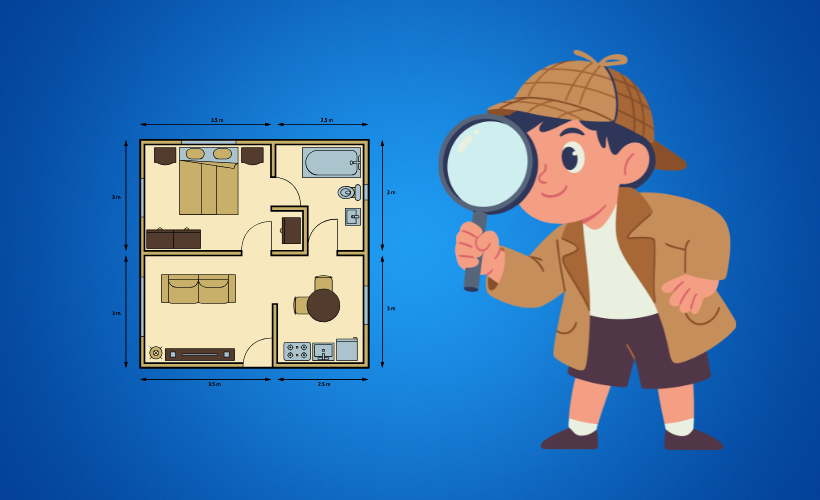
No furniture. No real-world reference points. No sense of how it feels to walk from one room to the next. Just lines, labels, and measurements.
So they can’t mentally “enter” your property. They’re looking at a diagram and trying to imagine their home as they will live here for at least 5 to 10 years.
Think about it like this, if someone handed you project plans for a building you’d never visited, could you tell how it feels to live there? Probably not.
That’s exactly what buyers are dealing with every time they see a traditional floor plan.
- In my opinion, Buyers don’t naturally understand flat real estate floor plan visuals. They need context, scale, and spatial cues to make sense of your property layout. Without that, even accurate drawings fail to convert your buyers.
That’s Why Most Buyers Struggle With Traditional Real Estate Floor Plans

Now let’s talk about what actually makes traditional floor plans hard for buyers to use. They’re flat. So everything is shown on one page – walls, doors, windows.
There’s no real sense of depth or how big your property actually feels. A large, airy room can look just like a small, tight one.
Then you’ve got the symbols and measurements. For many buyers, that part gets confusing fast. Door arcs, numbers in feet and inches, it’s not always easy to understand.
And you need to understand that most buyers aren’t architects. They’re just trying to figure out if the home works for their life.
Another issue is how disconnected everything feels. Each room is shown separately, like boxes. But in real life, spaces flow into each other, especially in open layouts. That natural connection gets lost on paper.
And the biggest problem is that buyers can’t picture themselves living there. Whether it’s a cozy farmhouse or a coastal home, there’s no feeling, no lifestyle, no “this is my home” moment.
So instead of making things clearer, traditional floor plans often end up creating confusion.
And That Confusion Builds the Moment They Try to Imagine the Layout

Once a buyer can’t immediately understand your floor plan, something shifts. They stop trying to understand and start guessing. They get more questions in mind.
- “I think the bedrooms are on this side.”
- “Maybe there’s enough room for a dining table here.”
- “I’m not sure if the garage size plans out to fit two cars.”
Everything becomes uncertain. The flow between rooms becomes unclear. Lifestyle questions stay unanswered.
- Can they work from home in that second bedroom?
- Is there enough storage?
- Does the living area connect well enough for entertaining?
They can’t tell, not from what they’re looking at. That’s why you need more follow-ups, and it takes alonger time to close your deals.
And when your property starts to feel uncertain instead of familiar. When you’re spending hundreds of thousands of dollars on a home, uncertainty is the last thing you want.
Buyers don’t want to close a deal when they’re unsure. They move on.
This is especially true for new house plans or properties with unique architectural styles like craftsman style homes or new American plans with open layouts.
The more unique the layout, the harder it is to understand from a flat drawing. And the harder it is to understand, the faster buyers lose interest.
Until You Realize Floor Plans Only Work When Buyers Can Explore Them
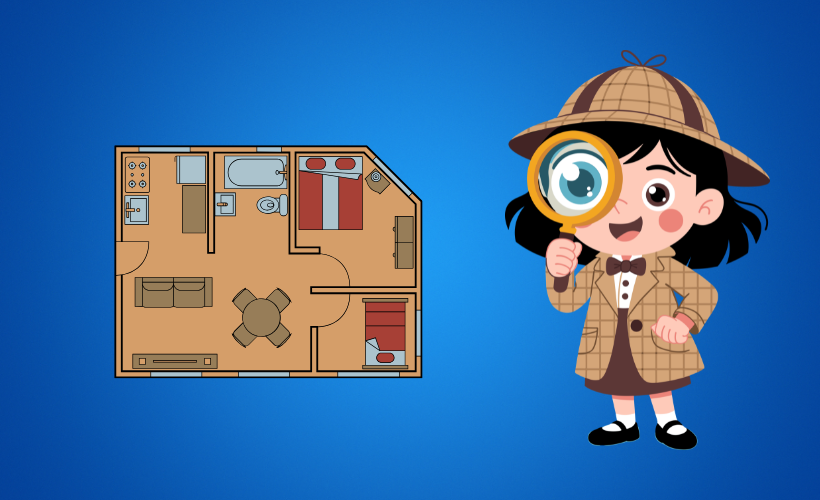
Now you have to be more serious about your real estate floor plan, as traditional structure or lines are losing interest gradually or making way for more questions, times, and follow-ups.
So you may think, “What can I do in this situation?” Let me clarify to you, Buyers don’t want to interpret a drawing. They want to experience your property.
They don’t want to study your floor plan like it’s an exam; they want to walk through it, click through it, feel it.
The best floor plan in the world is useless if the buyer has to work hard to understand it.
Clear visuals remove hesitation faster than any description or explanation ever could.
When a buyer can see the actual space, see the room sizes, see how the kitchen connects to the living room, and see where the sunlight comes in, understanding replaces confusion instantly.
And that’s when engagement actually starts improving. That’s when you stop getting confused phone calls and start getting serious inquiries.
That’s when the floor plan stops being a checkbox on your listing and starts being an effective real estate presentation tool that actually moves buyers forward.
You don’t need small edits to your current floor plan. You need a completely different way of showing it.
And That’s Exactly Where Virtual Floor Plans Change Everything
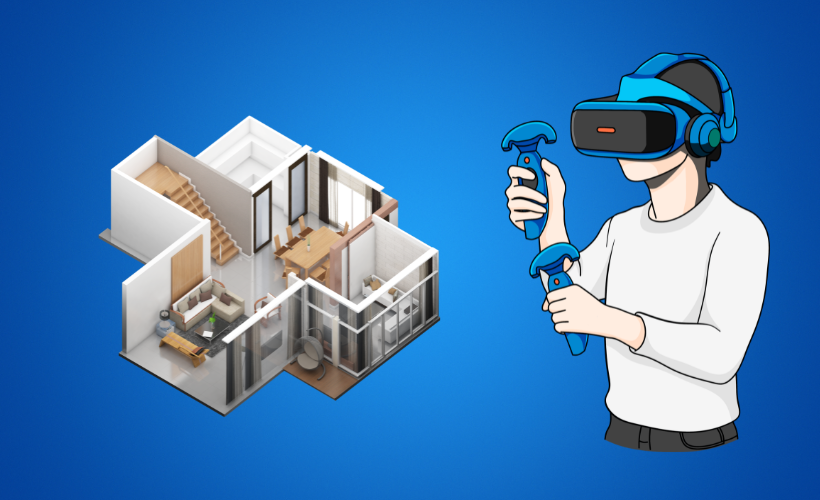
Virtual tours make floor plans easy to understand because buyers don’t just look, they explore your property.
Instead of a flat drawing, they move through your home step by step. From your kitchen to the hallway to the bedroom, everything feels clear and natural. No guessing, no confusion.
They also connect the floor plan with 360° views, so buyers always know exactly where they are in the layout. One tap on a room, and they’re inside it instantly, like a real showing, just online.
Whether it’s a recreation, a garage setup, or a multi-family layout, everything makes sense when buyers can actually see it in context.
This is where interest turns into intent. Because when buyers can experience your home, they can finally picture themselves living there.
You can create this experience with WPVR directly on your WordPress site. It is the best virtual floor plan creator that is easy to set up with no technical skills needed.
Although the floor plan is in the Pro version, you can start your virtual tour with the free version.

- Learn more – How to Use Real Estate Floor Plans in Virtual Tours
- Learn more – How To Set Virtual Floor Plans Inside Your Tours
Watch this video to clear things up about a virtual floor plan.
Conclusion
Your floor plan isn’t broken; it just doesn’t do enough for today’s buyers. It shows the layout, but not what the home actually feels like.
When buyers can explore instead of trying to interpret, everything becomes much clearer. You naturally get more engagement and better-quality showings.
You don’t need to change your whole marketing. Just improve how you present your floor plan.
Try WPVR to turn your floor plans into explorable experiences in just a few minutes. Buyers can start walking through your property online.
** FAQs **
1. Why are buyers still asking layout questions even after I added a real estate floor plan?
Because your floor plan is technically there, but it’s not actually helping them see the home. Most buyers can’t read a flat 2D drawing the way you do; they need spatial context, not just measurements. That’s why interactive or 3D floor plans work so much better on real estate listings.
2. How do I make my property floor plan easier for buyers to understand?
You make it explorable instead of just viewable. Add a virtual walkthrough or interactive floor plan so buyers can click through rooms and feel your property, not just stare at lines on a page. Once they can experience your home, confusion disappears, and engagement on your listing goes up.
3. Will switching to virtual floor plans really help me sell faster?
Yes, in most cases it does. Property listings with virtual tours and clear visual layouts get up to 87% more views, and buyers who already understand your home tend to make faster decisions. The clearer the experience, the shorter the path from viewer to serious buyer.
4. Can I use virtual floor plans on my existing real estate website?
Yes, the WPVR plugin directly integrates into your WordPress site and works with your current property listings, no rebuild needed. You just upload your photos, link them to your floor plan, and your house listing instantly becomes interactive.
5. Are virtual floor plans worth it for smaller or budget listings?
Yes, when competition is high and budgets are tight, a clearer visual experience helps your property stand out without spending more on photography or ads. Even a basic home looks more premium when buyers can actually walk through it online.