
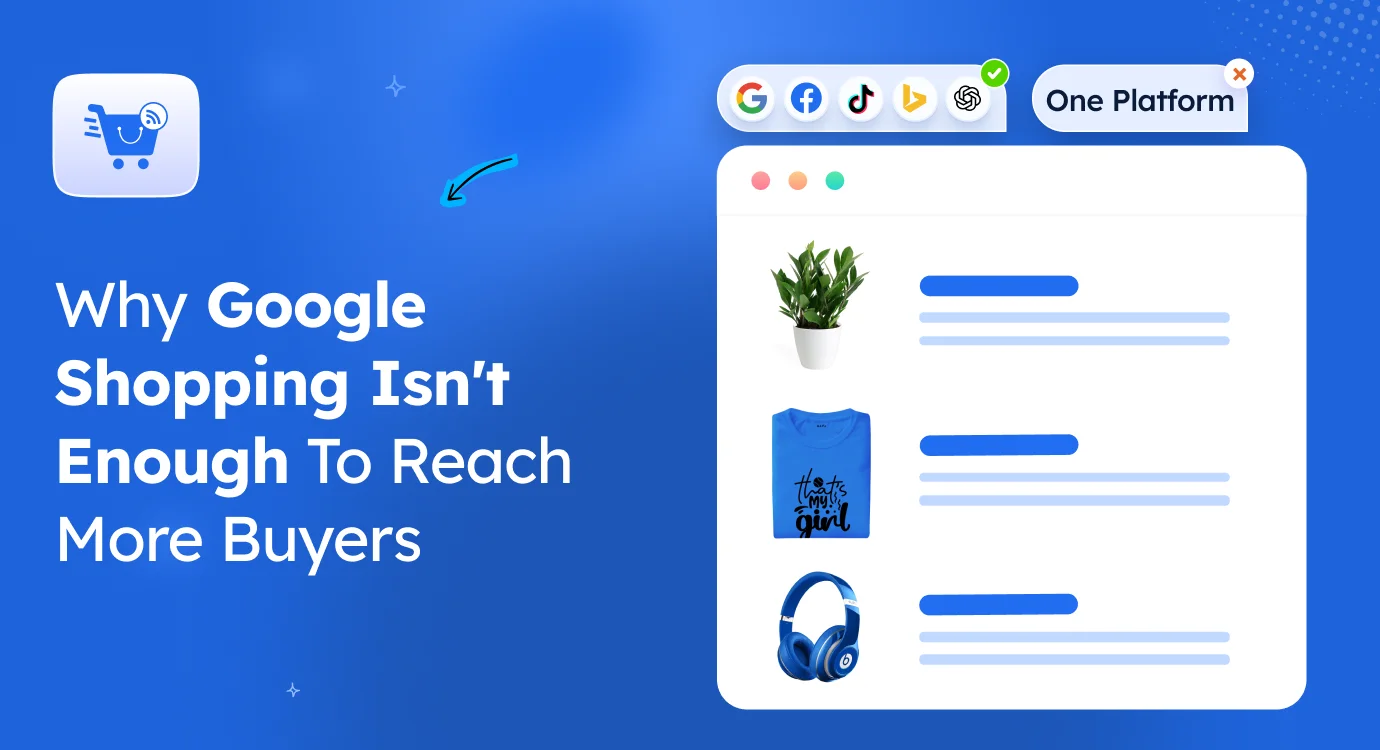
You’re not doing anything “wrong” if you’re relying on Google Shopping.
In fact, most WooCommerce store owners do the same thing. You list your products there, maybe connect Facebook Marketplace too, and then spend time optimizing that one channel—trying to get more clicks, better rankings, more sales.
And it does bring results. That’s why it’s easy to stick with it.
But here’s the part that usually gets overlooked.
While you’re focused on making that one listing perform better… your buyers are already looking at your product in other places too.
Not always directly—but through comparisons, alternatives, and similar listings across different platforms.
In fact, around 73% of shoppers use multiple channels before they buy.
So even if your Google Shopping listing looks solid, it’s only one piece of what the buyer is seeing.
In this guide, you’ll see why only Google Shopping isn’t enough and how expanding to more online marketplaces puts your product back into the full decision process where it actually matters.
TL;DR: Google Shopping Isn’t Enough
- Relying on one platform like Google Shopping limits how often buyers see your product
- Google Shopping isn’t enough when buyers are checking multiple online marketplaces before deciding
- Buyers don’t stick to one marketplace — they move across platforms to compare price, trust, and delivery
- Being visible once is not enough — repeated exposure across online marketplaces builds familiarity and trust
- local marketplaces often influence the final purchase because they feel easier and more reliable
- Missing from other platforms means missing from the actual comparison process
- Managing listings manually across platforms leads to inconsistency and lost trust
What should you do next?
Start shifting from a single platform approach to a multichannel listing so your product shows up across multiple marketplaces, not just where you list it, but where buyers actually decide.
You Think Google Shopping Is Enough… But Buyers Don’t Decide That Way
You probably think like this: if your product is showing up on Google Shopping and getting clicks, it should be bringing in steady sales.
And from your side, it looks that way. You see impressions, you see clicks, and sometimes even a few orders come in. So it feels like the channel is doing its job, and you focus on improving that one listing.
But what you don’t see is what happens right after that click.
Think about a simple moment. Someone clicks your product while searching for “wireless earbuds under $50.” They don’t stay there deciding. They open another tab and check Amazon to see ratings. Then they jump to another online marketplace to compare pricing. In some cases, they even check a local seller just to see faster delivery or cash-on-delivery options.
At that point, your product is no longer being judged in isolation. It’s being compared against everything else they found in those extra steps.
So when the decision finally happens, it’s not based on that first Google Shopping click. It’s based on which option kept showing up and felt more reliable across those checks.
And if your product wasn’t present in those other places, you didn’t really compete in that decision — you were only part of the starting point.
Being on Google Shopping Doesn’t Mean You’re Fully Visible
You’ve seen how buyers don’t really stay in one place after they click your product.
Now the bigger issue comes from how that gets misread on your side.
Because when your product shows up on Google Shopping, it feels like you’ve covered visibility & you’re in front of buyers, so naturally, you assume you’re being seen everywhere that matters.
But that’s not how exposure actually works in ecommerce today.
Think about your own behavior for a second.
When you want to buy something, you don’t stick to one platform and trust what you see there. You move around. You check Amazon for ratings, scroll Facebook or Instagram for validation, and sometimes even look at local listings if delivery speed or payment options matter.
That means visibility is not tied to one platform anymore.
A large share of product searches, around 50–60%, actually start on marketplaces like Amazon rather than search engines.
So even the starting point is different depending on where the buyer feels most comfortable.
What this really tells you is simple.
Buyers don’t discover your products in one place and make a decision. They keep their eyes on multiple environments, each shaping a part of the decision.
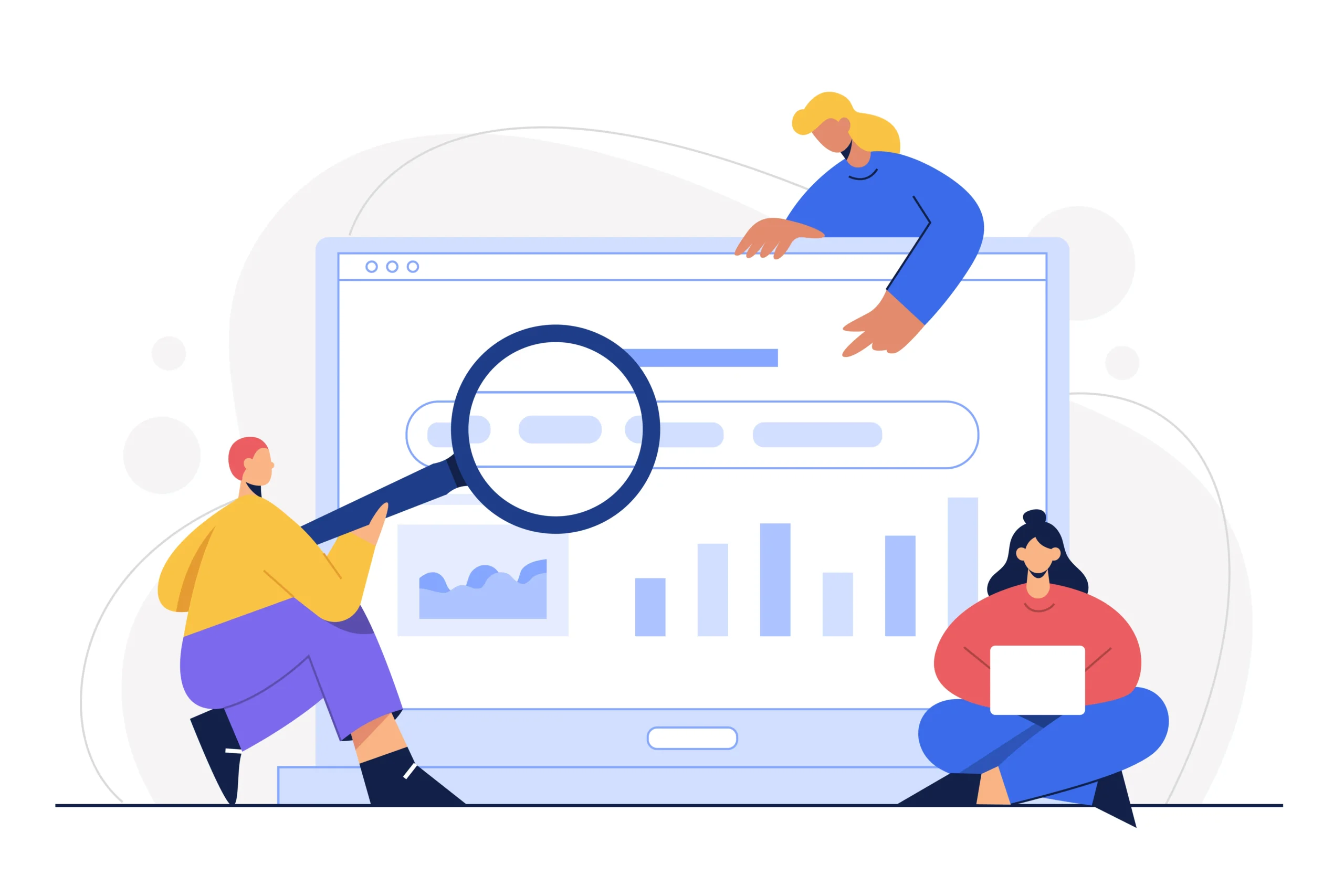
So if you’re only showing up on Google Shopping, you’re not fully visible; you’re only present in one slice of a much wider market.
Showing Up in One Place Is Not Enough to Stay in the Buyer’s Decision Loop
Now, taking what you just saw about visibility not being tied to one platform, there’s another thing you need to factor in.
It’s not just where your product shows up once. It’s how often it shows up while the buyer is still deciding.
Because in real behavior, one view is never enough to build confidence. The more a buyer sees your product in different places, the more it starts to feel familiar.
That’s basically how it builds up in your case:
- More platforms = more chances for buyers to come across you
- More exposure = your product starts feeling familiar
- More familiarity = it becomes easier to trust
Think about a real situation.
A buyer sees your product on Google Shopping once. Later, they see a similar listing on Amazon with more reviews. Then maybe they come across another seller on Facebook Marketplace. At that point, your product isn’t being judged alone anymore — it’s being weighed against everything else they keep running into.
And that’s the key part you miss when you stay in one place.
Buyers usually don’t decide after the first time they see something. They decide after they’ve seen it enough times in enough places for it to feel safe.
So if you’re only showing up in one platform, you’re not staying in that loop where decisions are actually forming.
If you’re missing from other platforms, you’re missing from the comparison process entirely.
Local Marketplaces Influence Purchase Decisions More Than You Think
So, you’ve seen how buyers keep moving between platforms before they decide. There’s another shift you need to pay attention to.
Even when discovery happens on Google Shopping or a global marketplace, the final decision often changes when local options appear in the picture.
And the reason is simple.
At the point of purchase, buyers stop thinking about product features and start thinking about risk.
- Will it arrive on time
- What happens if I need to return it
- Can I trust this seller
- Is there an easier way to pay or get support
This is where local marketplaces start to influence the decision more than global ones.
Because they reduce uncertainty in ways global listings often don’t.
- Faster delivery removes waiting concerns.
- Local presence increases trust because it feels more accountable.
- Easier returns reduce hesitation before buying.
- Flexible payment options make the purchase feel less risky.
So even if your product is discovered globally, the final decision often shifts locally because that’s where buyers feel more in control of what happens after they click buy.
And that’s the key point you need to understand.
Buyers don’t just buy where they discover a product. They buy where the decision feels safest and least uncertain.
The Invisible Sales You Are Losing Without Realizing It
Now, when you step back and look at how buyers actually move across platforms, there’s something you don’t get to see in your analytics at all.
A lot of the time, the buyer you initially brought in doesn’t come back to your store, even though they were interested at some point.
Here’s how it usually plays out in a real situation.
Someone clicks on your product from Google Shopping. They’re interested enough to check it out, but they don’t decide immediately. They open Amazon to see how many people have bought something similar. Then they check another online marketplace where a competitor is listed with more reviews or a slightly better price. In some cases, they even land on a local seller who can deliver faster.
At that point, your product is no longer the only option they’re thinking about.
And in many cases, they end up choosing the competitor they kept seeing across those different places, not because your product was weak, but because theirs felt more present and easier to trust.
From your side, none of this shows up.
You don’t see that comparison. You don’t see the shift. You only see that one click didn’t turn into a sale, and the rest stays invisible.
That’s where the real gap is.
These are not missed clicks; they are missed decisions.
The Right Way to Handle Multichannel Listing Without Losing Control
Now, after seeing how buyers compare across platforms, the real issue isn’t understanding what to do.
It’s handling it in your day-to-day work.
Because once you try to show up on multiple online marketplaces, things don’t stay simple for long.
You end up repeating the same work everywhere:
- Uploading products separately on Google Shopping
- Re-entering details on Facebook Marketplace
- Adjusting listings again on Amazon or other platforms
And every small change turns into multiple updates across different places.
That’s usually where things start going wrong.
A price update goes live on one platform but not on another. Stock changes reflect somewhere, but stay outdated elsewhere. And during comparison, that’s exactly when buyers start hesitating or switching to another seller.
So the problem is not being on multiple platforms.
The problem is managing them like separate systems.
What works better
Instead of treating every marketplace separately, you keep one product source and push it everywhere from there.
So when you update:
- Prijs
- Stock
- Product details
…it reflects across all connected platforms without doing it again and again manually.
Where feed-based systems help
This is where feed-based systems come in.
If you’ve worked with WooCommerce for a while, you can look into Product Feed Manager that supports 200+ channels, lets you create unlimited feeds, and helps you handle multichannel listing without going back and forth between platforms.
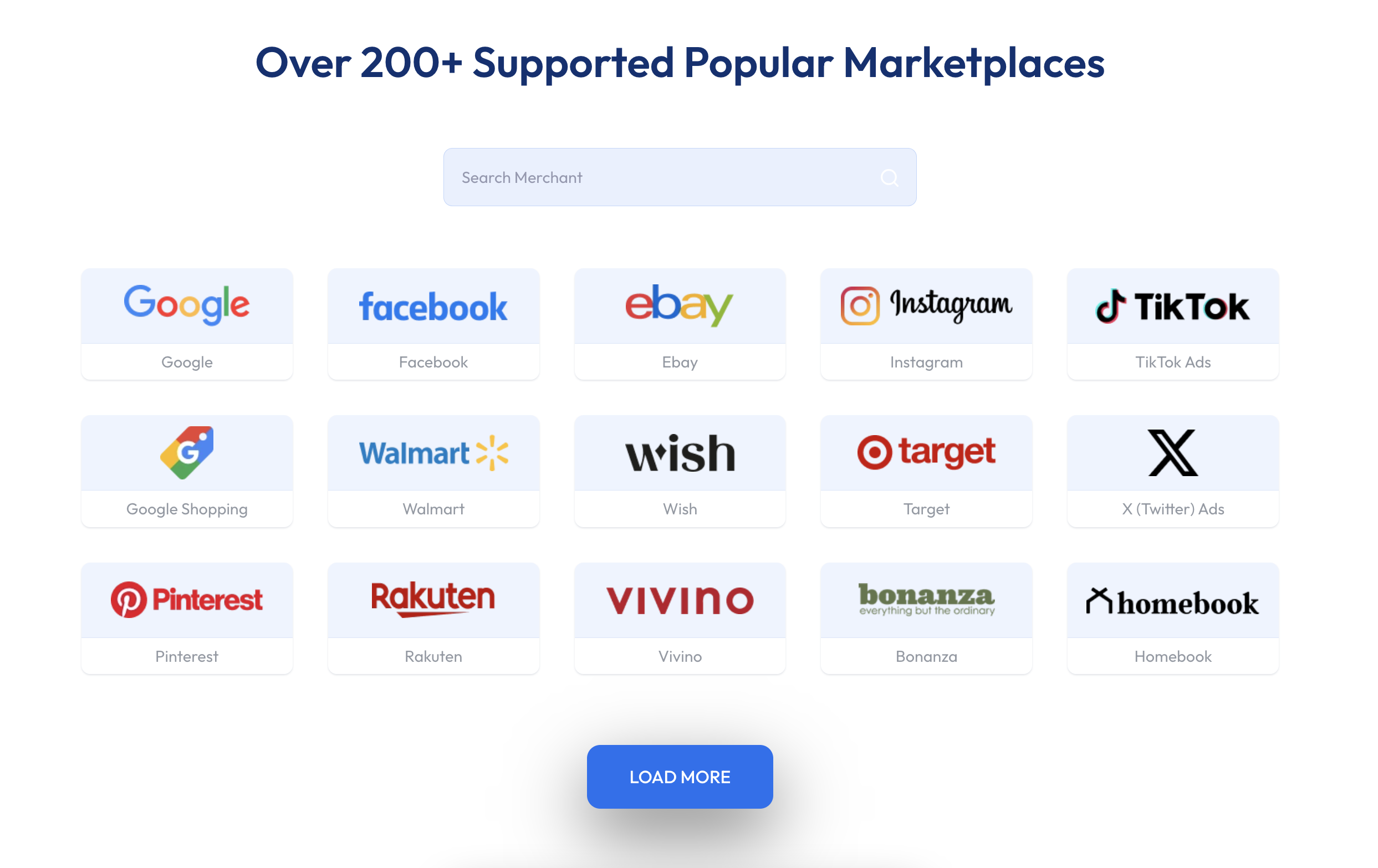
So instead of rebuilding listings every time, your product data stays in one place and adjusts based on what each marketplace needs.
What changes for you
Once this is set up:
- You don’t manage listings in multiple places
- You don’t repeat updates manually
- You don’t risk mismatched product info
Instead, you maintain one clean product setup, and it stays consistent everywhere buyers are comparing.
That’s what makes multichannel listing actually work in real situations — not more effort, but less repetition and fewer mistakes.
One Platform Was Never Meant To Be Enough
Now, tying everything you’ve gone through so far, the main issue comes down to how you’re thinking about visibility.
When you rely only on Google Shopping, you’re only covering one part of where buyers actually see and compare products. As you’ve already seen, they don’t stay in one place. They move across different platforms, compare options, and build their decision step by step across those touchpoints.
So even if your product is performing well in one channel, that’s still only a partial view of the full buying process.
What this really comes down to is alignment.
Your visibility needs to match how buyers behave, not how convenient it is for you to manage listings in one place.
Because the decision is not happening on a single platform anymore, it’s happening across multiple environments where your product either shows up repeatedly or gets replaced in the comparison.
If your product is not visible across platforms where buyers compare, it is not part of their decision.
FAQs
Why is Google Shopping not enough for ecommerce sales?
Google Shopping isn’t enough when you look at how buyers actually move before purchasing. They don’t rely on a single source, they check multiple online marketplaces, compare options, and validate before deciding.
Also, visibility today is spread across platforms, not concentrated in one place. If your product only shows up there, you miss out on buyers who start or finish their journey elsewhere in different online marketplaces.
What is multichannel listing in ecommerce?
Multichannel listing means placing your products across multiple online marketplaces instead of relying on just one marketplace. It ensures your product is visible wherever buyers are searching, comparing, or validating options.
With multichannel listing, you’re not dependent on a single platform’s traffic. Instead, you spread your presence across different online marketplaces so your product stays visible throughout the buyer’s decision process.
Why do buyers compare across multiple platforms?
Buyers compare across online marketplaces because they want to reduce risk before making a purchase. They check pricing, reviews, delivery options, and seller reliability across more than one marketplace.
This behavior naturally pushes them toward local marketplaces as well, where they often feel more confident about delivery and support. That’s why relying on a single platform limits your role in the comparison process.
How do local marketplaces affect purchase decisions?
Local marketplaces play a strong role in final decisions because they reduce uncertainty for buyers. Faster delivery, easier returns, and familiar payment options make local marketplaces feel more reliable.
Even if discovery happens on global platforms, buyers often switch to local marketplaces when they are ready to buy. That shift directly affects which seller gets chosen in the end.
What is the best way to manage multichannel product listings?
The best way to handle multichannel listing is to avoid managing each platform separately. Instead, you maintain one product source and distribute it across multiple online marketplaces from there.
This approach keeps your product data consistent across every marketplace, reduces manual work, and ensures your listings stay accurate wherever buyers are comparing options.

![Show Your WooCommerce Products on ChatGPT & OpenAI Ads with Product Feed [2026] 2](https://rextheme.com/wp-content/uploads/2026/08/Show-Your-WooCommerce-Products-on-ChatGPT-with-OpenAI-Product-Feed-1-407x213.webp)