You’re getting leads, which means the major part is working.
But if you look closely, a lot of them don’t go anywhere. You follow up, have a few conversations, and realize they were just browsing. You’ve probably spent time on leads that felt promising but didn’t move forward.
And it’s pretty common!
Only about 20% of marketing-qualified leads actually turn into real opportunities, even in real estate.
So a big portion of your inquiries were never serious to begin with.
Here, the issue is how most realtors track performance—page views, number of leads, and form submissions. Those numbers look fine, but they don’t tell you who’s actually interested.
So, you treat every lead the same way and that’s where time gets wasted. Because in reality, the quality of your leads depends on what you track.
In this guide, you’ll see what signals actually matter and how to spot the best real estate leads that are worth your time without chasing every single inquiry.
So, let’s go!
TL;DR
- Most leads look good on paper, but only a small portion turn into real buyers.
- Tracking page views or total inquiries doesn’t show you who’s actually serious.
- Engagement is the real filter:
- More time on your listing = higher interest
- Exploring virtual tours = deeper intent
- Clicking through features = active evaluation
- Not all leads should be treated equally:
- Passive leads browse and leave
- Engaged leads spend time, interact, and return
- Relying only on form answers isn’t enough.
- Real intent shows in behavior, not just what people say
- Focus on these key signals:
- Time on listing page
- Time spent on virtual tour
- Interactions within the tour
- Time spent on gallery
- Start simple:
- Track just time on page and virtual tour engagement
- Use that to prioritize your follow-ups
- Interactive elements like hotspots increase engagement and help you spot high-intent leads faster
Bottom line:
If you track engagement instead of just leads, you naturally filter and focus on your best real estate leads.

How Do You Know If Your Listing Page Is Working (Here’s What Most Do Wrong)
At this point, it usually comes down to how you’re measuring performance.
What you’ll often see is this:
- You run ads
- You bring people to your listing
- You check page views or the number of leads
That’s where the tracking stops.
The problem is, those numbers don’t tell you much about who’s actually serious.
Most listing pages are treated like a digital flyer:
- Show photos
- Add a few details
- Wait for inquiries
And then expect buyers to take action on their own.
But that’s not how people decide anymore.
A buyer doesn’t move forward just because they saw your listing. They move forward when they understand the property and feel confident about it. That only happens when they spend time exploring, checking details, and interacting with what you’ve shown.
That’s where things start to shift.
Your listing page isn’t just there to collect leads. It can actually help you filter which leads are worth your time—based on how they engage with it.
You’ll start noticing patterns:
- Some people leave within seconds
- Some scroll through once and disappear
- Some spend time, explore, and come back again
Those are not the same leads.
When you begin to look at it this way, the focus changes. Instead of treating every inquiry equally, you start paying attention to who actually engaged before reaching out.
That’s the difference between chasing leads and prioritizing them.
Before moving forward, take a moment to look at how you’re currently handling this. The gap usually becomes clear once you review it closely.
Quick Check: Are You Losing Your Best Leads Without Knowing It?
Once you start looking at engagement, a pattern usually shows up pretty quickly.
You might be getting 30+ inquiries on a listing, but only a small number turn into serious buyers. Most of them don’t go beyond the first conversation.
If you break it down further:
- Only a portion of those leads actually move forward to book a visit
- And from there, even fewer place a real offer
That gap is where most of your time goes.
The usual approach is to reach out to every lead one-by-one. It feels like the right thing to do, but it slows everything down. By the time you get to the most serious buyer, they may have already moved on to another listing.
That’s the part that often goes unnoticed. Not every lead needs the same level of attention. Some were never going to convert, while a few were ready to act much earlier.
Suppose you had a way to see that upfront, the list would look very different. Instead of dealing with 30+ inquiries, you could narrow it down to a smaller group—around 10–15 leads that actually showed real interest through their actions.
That shift alone changes how you prioritize and how quickly you move.
My Form Includes Questions to Identify Urgency. Isn’t That Enough?
Most realtors already add fields to their inquiry forms—like “How soon are you planning to move?” or “When are you looking to buy?”
That information is useful, no doubt. It gives a quick idea of timing and intent.
But it only tells part of the story.
Those answers are self-reported, and people don’t always give the full picture. A lead might say they’re ready now, but their actions don’t match that claim.
The real difference comes when you combine form responses with actual engagement behavior. How much time they spent on your listing, which features they explored, how often they came back—those signals show who is genuinely serious.
Tracking these behaviors is what separates leads that are worth your time from the ones that aren’t.
Next, I’ll break down exactly which engagement metrics to track so you can see who actually deserves priority.
The “Game-Changing” Engagement Metrics To Prioritize Leads
Once you combine form responses with behavior, the picture of your leads becomes much clearer. Engagement metrics let you see real intent—without having to guess.
Here’s what to focus on:
i. Time on Listing Page
Leads that spend more time on your listing are usually more serious. They’re reading the details, reviewing amenities, and forming an opinion. Use analytics tools to track this per user and flag those who spend above-average time.
ii. Time Spent on Virtual Tour
Serious buyers explore the property in depth. Longer virtual tour sessions show they’re imagining themselves in the space and evaluating it carefully. Plugins or tracking tools can capture this behavior automatically.
iii. Interactions on Virtual Tour
Clicks on rooms, features, or hotspots are a clear signal of interest. Each interaction can be tagged, helping you identify leads who are actively engaging with the property rather than just browsing passively.
iv. Time Spent on Gallery
Looking through multiple images indicates a deeper evaluation process. Leads who view more images are likely comparing, considering, and prioritizing the property over others.
When you combine all of these metrics with your form responses, you get a clear picture of who is genuinely serious. This lets you focus on leads that matter most, while reducing time spent chasing those that don’t.
Here’s What Your Next Step Should Be
Now that you know which engagement metrics matter, it’s time to start simple.
Begin by tracking just two metrics: time on the listing page and time spent on the virtual tour. These give you the clearest early signals of which leads are serious.
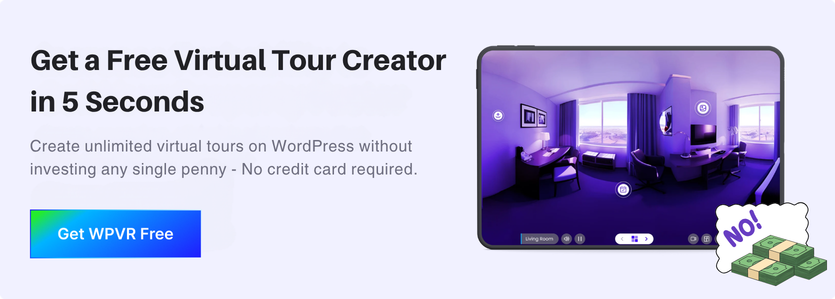
Adding virtual tours naturally increases engagement. When buyers can explore the property at their own pace, they spend more time interacting, which makes it easier to see who’s genuinely interested.
Even with just these two metrics, you’ll immediately start seeing which leads deserve your attention first. That’s how you move from chasing every inquiry to focusing on the ones most likely to convert.
Learn How Interactive Hotspots Ensure High Engagement
Before wrapping up, here’s an extra tip you can put into action right away. Interactive elements, like hotspots on virtual tours, can significantly increase engagement and show you which leads are really serious.
There’s a video that demonstrates exactly how this works in real scenarios, showing how buyers interact with listings and explore details at their own pace.
Tools like WPVR make it easy to add this kind of interaction to your listings without any complicated setup. It’s a simple way to make your virtual tours more engaging and help you identify high-quality leads faster.
FAQs
1. How do engagement metrics help identify the best real estate leads?
Engagement metrics like time on listing page, virtual tour activity, and interactions show real buyer interest, helping you focus on the best real estate leads.
2. Which engagement metrics matter most for a listing page?
The most important engagement metrics include time on listing page, time spent on virtual tours, interactions, and gallery views to understand lead intent.
3. Why is my listing page getting leads but not conversions?
Your listing page may attract visitors, but without strong engagement metrics, it’s hard to identify and prioritize the best real estate leads.
4. Can engagement metrics replace traditional lead qualification methods?
Engagement metrics don’t replace forms but improve them by showing actual behavior, helping you filter and prioritize the best real estate leads.
5. How can I improve engagement metrics on my listing page?
You can improve engagement metrics by adding virtual tours, interactive elements, and better visuals to attract and convert the best real estate leads.