![Walmart Marketplace vs Amazon: Which Platform Actually Fits Your Store? [2026]](https://rextheme.com/wp-content/uploads/2026/05/Walmart-Marketplace-vs-Amazon-—-Which-One-Should-You-Sell-On_.webp)
As a WooCommerce store owner expanding to marketplaces, you’d think Amazon is automatically the better choice because it’s bigger, right? Not always!
Let’s look at an interesting fact: Amazon sellers now spend 10–20% of their revenue on ads just to stay visible, while many Walmart Marketplace sellers grow with almost no ad spend at all.
That means bigger doesn’t always mean better for your store.
Amazon gives you a massive reach and proven buyer demand. Walmart gives you cleaner margins and less competition. Both can grow your store — but only one truly fits your stage, product, and budget.
So how do you decide which platform is actually right for you: Walmart Marketplace vs Amazon?
That’s exactly what I’ll break down next.
🔍 Quick Answer
Walmart Marketplace vs Amazon — which one is right for your store?
Choose Amazon if you have a strong ad budget, sell in high-demand categories, and want fast access to a global audience. Choose Walmart Marketplace if you want lower competition, cleaner margins, no monthly seller fee, and steady long-term growth in the US market.
In short:
- Amazon = scale + speed (but higher fees and heavy ad dependency)
- Walmart = margin + opportunity (but stricter approval and slower scale)
Walmart Marketplace vs Amazon at a Glance
Here’s a side-by-side look at how the two marketplaces stack up on the factors that matter most.
| Factor | Amazon | Walmart Marketplace |
|---|---|---|
| Audience Reach | Global, multi-segment buyers | US-focused, value-driven shoppers |
| Competition Level | Very high — most categories saturated | Medium — many category gaps open |
| Seller Entry | Open onboarding, fast setup | Approval-based, stricter screening |
| Monthly Fee | $39.99/month (Pro plan) | None |
| Referral Fees | 8% – 15% | 6% – 15% |
| Ad Dependency | High (25–35% of revenue) | Low to medium (often optional) |
| Fulfillment | FBA — wide reach, higher fees | WFS — simpler, cleaner pricing |
| Typical Margins | Shrink faster under ad pressure | Cleaner, more predictable |
| Best For | Branded products with budget for scale | Value-priced products, margin-first sellers |
Key Takeaways
- Amazon = high traffic + high competition + high ad dependency
- Walmart Marketplace = lower competition + stricter approval + growing opportunity
- Fees: Walmart has no monthly subscription; Amazon adds FBA and ad costs that quietly shrink margins
- Fulfillment: FBA scales wider, WFS gives cleaner cost predictability
- Best fit: Choose Amazon for volume and reach, Walmart for margin and sustainable growth
- Bonus: Most established sellers eventually sell on both — but require separate listing optimization for each
What are Walmart Marketplace and Amazon Marketplace?
Let’s first get clear on what each platform actually is in practical terms.
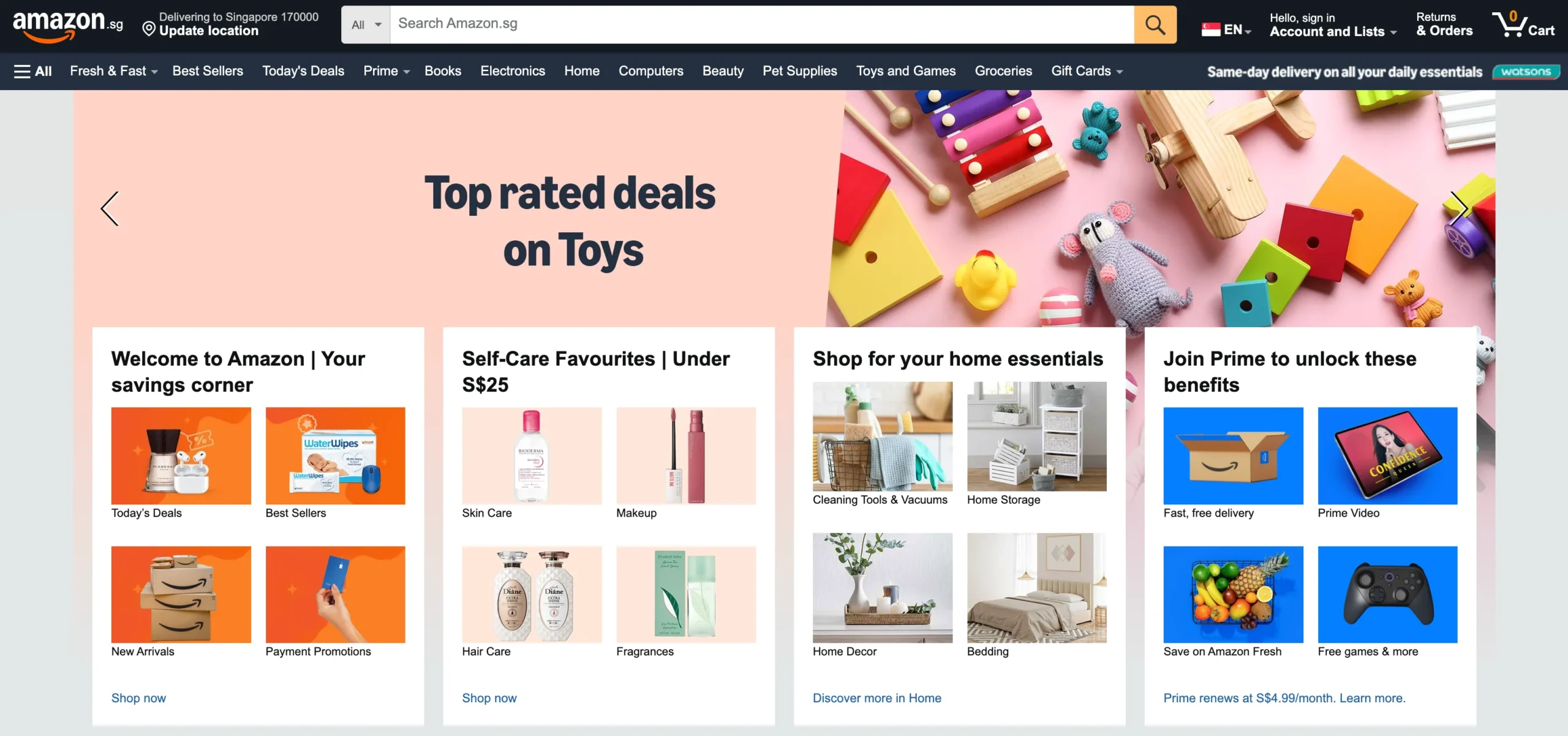
Amazon is a large ecommerce marketplace where your products sit inside a high-traffic system.
- Buyers are already searching for products like yours, so you’re not starting from zero demand.
- You also get access to services like FBA (Fulfillment by Amazon), which handles storage, packing, and shipping.
- The trade-off is clear: you’re entering a space where competition is intense, and multiple sellers often compete for the same search results and customers.
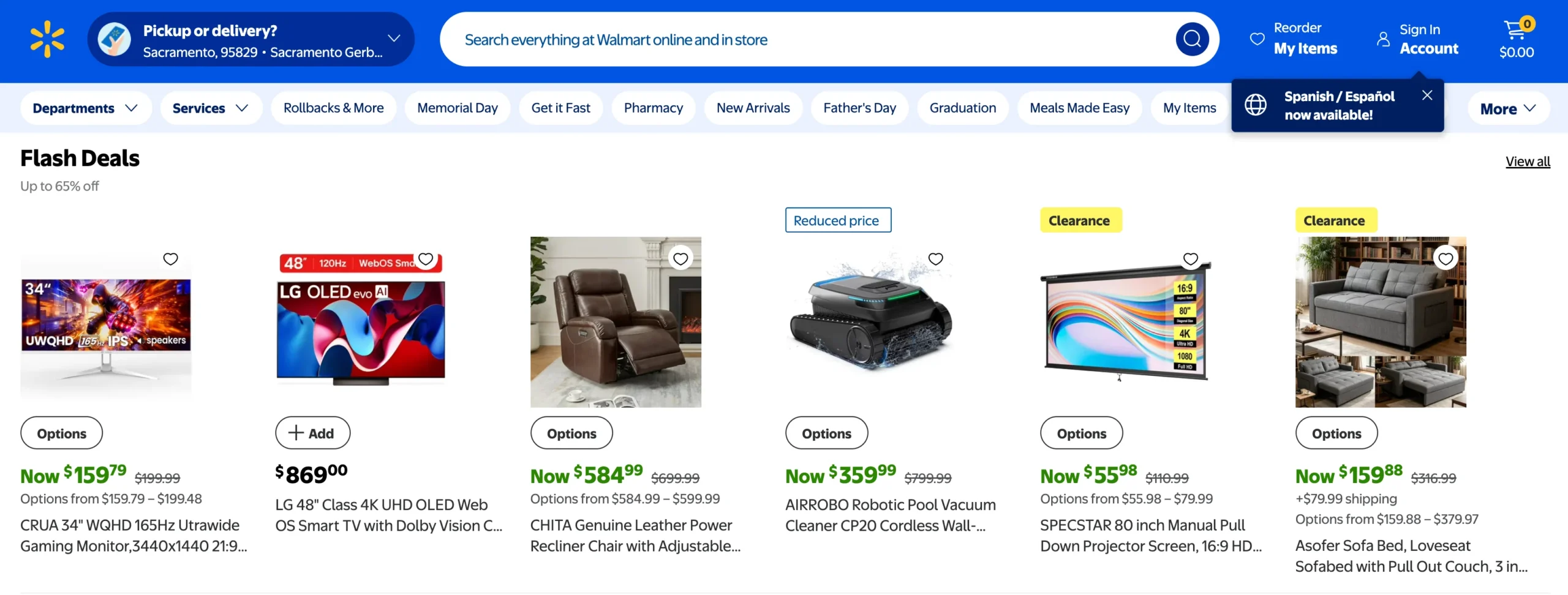
Walmart Marketplace works on a different structure.
- You don’t just sign up and start selling—you go through a screening process before approval.
- Once accepted, you’re selling on a platform that is still expanding its ecommerce presence, especially compared to Amazon’s scale.
- Traffic is growing, but it’s not as concentrated or immediate, which changes how quickly you get visibility on your listings.
Both platforms give you access to large online audiences, but the way you operate inside them is not the same. And we will discuss this in the upcoming sections in detail.
Amazon pushes you into a high-volume, high-competition environment from day one. Walmart Marketplace gives you a more controlled entry point with less saturation in many categories, which directly affects how you approach pricing, visibility, and growth.
Walmart Marketplace vs Amazon — Core Differences at a Glance
Before getting into fees and fulfillment, you need to understand the three factors that decide whether a marketplace actually works for your store:
- Who’s shopping there,
- how crowded the shelves are,
- and how easy it is to get on those shelves in the first place.
Let’s break each one down.
Market Reach and Customer Base
Amazon’s audience is massive — global, multi-segment, and used to buying almost anything online. If your product has demand anywhere, chances are someone on Amazon is already searching for it. That kind of reach is hard to match.
Walmart’s customer base is mostly US-based, but it’s growing fast on the eCommerce side. The shoppers tend to be more price-sensitive and value-driven, which means your positioning matters more than your branding.
In short: Amazon gives you reach. Walmart gives you a focused audience that’s actively looking for value.
Competition Level
This is where things shift quickly.
On Amazon, most popular categories are saturated. You’re not just competing with other brands — you’re often competing with Amazon’s own private label products. Many sellers find that even with strong listings, they struggle to rank without aggressive ad spend.
Walmart Marketplace is the opposite story right now. Many categories still have gaps. Fewer sellers compete for the same keywords, which means it’s easier for newer or smaller stores to get noticed without burning through a huge ad budget.
That doesn’t mean Walmart is “easy.” It means the competition curve is gentler — for now.
Seller Entry Requirements
Amazon’s onboarding is fairly straightforward. You can create a seller account, list products, and start selling pretty quickly. There are categories that need approval, but most sellers can get up and running without much friction.
Walmart takes a different approach. You apply, and Walmart reviews your business — sales history, product quality, customer service track record, and so on. Many sellers get rejected on the first try.
- If you’re leaning toward Walmart, here’s a practical guide to selling on Walmart Marketplace with 6 best practices that helps you avoid common rejection reasons.
So Amazon is open-door. Walmart is invite-style, even if it doesn’t market itself that way.
Walmart Marketplace vs Amazon — Fee Structure and Profit Margins
Here’s something many sellers underestimate: fees don’t just affect your monthly P&L — they decide whether a product business is even scalable in the long run.
Let’s compare both.
Amazon Fees Breakdown
Selling on Amazon comes with a few layers of cost.
- Referral fees: Usually 8% to 15% per sale, depending on the category.
- FBA fees: If you use FBA, you pay for storage, picking, packing, and shipping. These add up fast for low-priced or heavy items.
- Storage fees: Long-term storage fees can quietly eat into your margins, especially for slow-moving SKUs.
- Ad spend: This isn’t technically a “fee,” but for most Amazon sellers, it’s a fixed part of doing business. Without ads, organic visibility is limited.
The fees themselves are reasonable on paper. The problem is that ad spend isn’t optional for most categories, which inflates the real cost per sale.
Walmart Marketplace Fees Breakdown
Walmart’s fee structure is simpler.
- Referral fees: Similar range — usually 6% to 15% based on category.
- No monthly subscription: Unlike Amazon’s $39.99/month Professional plan, Walmart doesn’t charge a recurring seller fee.
- WFS fees (optional): If you use Walmart Fulfillment Services, you pay for storage and shipping, similar to FBA but generally with cleaner pricing tiers.
The catch? Walmart’s fulfillment infrastructure isn’t as wide as Amazon’s, so you may need to handle more logistics yourself depending on your setup.
What This Means for Your Margins
On Amazon, profit margins often shrink faster than expected. You start with a healthy margin, but ads, FBA fees, and competitive pricing pressure slowly chip away at it. Many sellers end up with thinner margins than they planned.
Walmart can give you cleaner margins, especially in less saturated categories where you don’t need to fight for ad placements. You keep more of every dollar earned, even if your total volume is lower in the early stages.
Margins matter more than revenue in the long run. A store earning $100k a month with 8% profit is in a worse position than a store earning $60k with 20% profit. That’s the lens you should use when comparing fees.
Walmart Marketplace vs Amazon Price Breakdown
Fees don’t just affect monthly costs — they decide whether your product business is actually scalable. Here’s how the two platforms compare.
| Cost Factor | Amazon | Walmart Marketplace |
|---|---|---|
| Referral Fees | 8% – 15% (varies by category) | 6% – 15% (varies by category) |
| Monthly Subscription | $39.99/month (Professional plan) | None |
| Fulfillment Fees | FBA — higher, with surcharges | WFS — simpler, cleaner pricing |
| Storage Fees | Standard + long-term storage fees | Standard storage only |
| Ad Spend Dependency | High — often 25%–35% of revenue | Low to Medium — optional in many categories |
| Typical Margin Impact | Margins shrink faster | Cleaner margins, especially in low-competition niches |
Fulfillment and Logistics — FBA vs WFS
Fulfillment isn’t just an operational decision. It directly affects how your products rank, how fast they ship, and how likely buyers are to actually click “buy.”
Amazon FBA (Fulfillment by Amazon)
FBA is one of Amazon’s biggest advantages. Once your products are in FBA, they become Prime-eligible, which significantly boosts visibility and conversion rates.
Many sellers say their conversion rates almost double once they switch to FBA, simply because Prime buyers trust the badge.
- For Amazon-focused sellers, getting your product feed set up correctly is half the battle — here’s a complete guide to Amazon Seller Central product feeds.
The downside: FBA isn’t cheap. Storage fees, removal fees, and seasonal surcharges can add up. And if your products don’t sell fast enough, long-term storage fees start hitting your account.
So FBA is powerful — but it’s a dependency, not just a convenience.
Walmart Fulfillment Services (WFS)
WFS is Walmart’s version of FBA. It’s newer and smaller in scale, but it’s growing.
When you use WFS, your products become eligible for two-day shipping tags, which helps with ranking and conversion on the platform. The fee structure is generally simpler and easier to predict than FBA.
The limitation is reach. Walmart’s fulfillment network isn’t as wide as Amazon’s, so delivery speed in some areas isn’t on the same level. But for sellers in the US, it works well enough to compete.
Which Fulfillment Model Works Better for You
There’s no universal answer, but here’s a clear way to think about it:
- High-volume sellers who can absorb the fees and need maximum reach → Amazon FBA gives the bigger advantage.
- Margin-focused or early-stage sellers who want predictable costs and less complexity → Walmart WFS is often the smarter choice.
If you’re not sure yet, start with the platform that lets you protect your margin while you learn. You can always scale into the other one later.
Product Types — What Sells Better on Each Platform?
Not every product fits both marketplaces equally. Knowing where your category performs better can save you months of trial and error.
Best-Selling Categories on Amazon
Amazon dominates in:
- Electronics and accessories
- Home and kitchen goods
- Beauty and personal care
- Books and media
- Consumables (supplements, snacks, daily-use items)
These categories have huge demand, but they’re also the most saturated. If you’re going into any of these, expect to invest in ads from day one.
Best-Selling Categories on Walmart Marketplace
Walmart performs strongly in:
- Everyday household essentials
- Home and garden products
- Grocery and pantry items
- Apparel and basics
- Value-priced consumer goods
The audience here leans toward practical, affordable purchases. Premium luxury products often underperform on Walmart compared to Amazon.
How to Choose the Right Platform for Your Product
Here’s a simple way to decide:
- Branded products with strong differentiation + budget for ads → Amazon will give you the reach and ranking power you need.
- Underserved categories or value-priced products with cleaner margins → Walmart gives you more room to grow without fighting for every click.
If your product fits both, that’s a different conversation — I’ll cover that further down.
International Selling — Where Each Marketplace Lets You Grow
If part of your growth plan involves selling beyond the US, this is where the two platforms split sharply.
Amazon’s Global Reach
Amazon operates in over 20 country marketplaces, including:
- North America (US, Canada, Mexico)
- Europe (UK, Germany, France, Italy, Spain, Netherlands, Sweden, Poland)
- Asia-Pacific (Japan, Australia, India, Singapore)
- Emerging markets (UAE, Saudi Arabia, Brazil)
You can manage all of them from a unified seller account, and FBA Export plus the Amazon Global Selling program make cross-border logistics far easier than doing it on your own.
For sellers with international ambitions, Amazon is currently the only marketplace with this kind of global infrastructure.
Walmart’s Geographic Reach
Walmart Marketplace is US-focused, with limited international expansion so far.
- Walmart.com Marketplace — US only
- Walmart Canada Marketplace — separate platform, separate approval
- Walmart Mexico (Bodega Aurrera) — limited third-party access
If you want global expansion, Walmart is not the answer right now. If you’re focused on the US market specifically, Walmart is highly competitive — but you’ll need other channels for international growth.
What This Means for Your Strategy
For US-only stores, Walmart is a strong addition to your channel mix.
For sellers who plan to expand to Canada, Europe, or Asia, Amazon’s international infrastructure is hard to replicate elsewhere — and that alone might justify dealing with Amazon’s higher fees and competition.
Advertising and Visibility — Walmart Ads vs Amazon PPC
Visibility on marketplaces isn’t free anymore. On Amazon especially, organic rankings have taken a back seat to paid placements.
Amazon PPC Ecosystem
Amazon PPC is mature, sophisticated, and expensive.
You have Sponsored Products, Sponsored Brands, Sponsored Display, and now even DSP campaigns. Bidding is competitive, CPCs are climbing every year, and many sellers say more than 25% to 35% of their revenue goes back into ads just to maintain visibility.
It works — but it’s a system you have to budget for properly, or it will quietly drain your profit.
Walmart Advertising System
Walmart Ads is less competitive and less developed. CPCs are generally lower, and the ad inventory isn’t as saturated.
The downside is fewer targeting options and less reporting depth compared to Amazon. So while you save on cost, you trade off some control and optimization power.
For many sellers, this trade is worth it — especially early on.
Real Impact on Growth Strategy
On Amazon, ad spend is essentially required. You can’t realistically grow without it, even with a great product.
On Walmart, you can still get meaningful organic traction in some categories. Many sellers see their first wins on Walmart without spending much on ads at all — something that’s hard to imagine on Amazon today.
In short: Amazon forces a pay-to-play model. Walmart still leaves room for organic growth, at least for now.
How the Buy Box Works on Amazon vs Walmart Marketplace
If you’ve sold on marketplaces before, you already know the Buy Box decides who actually gets the sale. Two sellers can have the same product listed, but only one wins the “Add to Cart” button.
The interesting part? Amazon and Walmart use very different rules to decide who wins it.
How Amazon’s Buy Box Works
Amazon’s Buy Box is heavily algorithm-driven and competitive.
The main factors:
- Price — competitive but not always the lowest
- Fulfillment method — FBA listings get a strong advantage
- Seller performance — order defect rate, late shipments, refund rate
- Inventory levels — running out hurts your Buy Box share
- Shipping speed — Prime-eligible listings win disproportionately
The result: even if you have the lowest price, you can lose the Buy Box to an FBA seller with better metrics. This is why most serious Amazon sellers eventually move to FBA — it’s not just convenience, it’s Buy Box leverage.
How Walmart’s Buy Box Works
Walmart’s Buy Box logic is stricter and less forgiving on one specific thing: price.
Walmart actively monitors whether your product is priced lower elsewhere — including Amazon. If it is, Walmart can:
- Suppress your listing entirely
- Remove your Buy Box eligibility
- Flag your account for pricing violations
This is called Walmart’s Price Parity rule, and it’s one of the biggest surprises for new sellers.
The other Buy Box factors are similar to Amazon — fulfillment speed, inventory reliability, seller performance — but Walmart weighs price competitiveness vs other marketplaces much more aggressively.
What This Means for Your Strategy
If you sell on both platforms, you can’t just copy your Amazon pricing to Walmart. You need to either match Walmart’s expectations or risk losing visibility entirely.
That’s a real operational difference most sellers underestimate when they expand.
Walmart Marketplace vs Amazon — Seller Experience and Control
How a platform treats you as a seller affects everything — from how fast you grow to how often you want to throw your laptop out the window.
Account Management and Support
Amazon’s support system is massive but often frustrating. You’ll get answers, but you may go through several rounds of templated responses before reaching someone who actually understands your issue.
Walmart’s support is smaller, but many sellers report it feels more direct. You often get human responses faster, and account managers are more accessible — especially for sellers actively growing on the platform.
Listing Control and Optimization
On Amazon, your listing performance is tied closely to the algorithm. Title structure, keyword density, image quality, conversion rate — all of it affects your ranking.
Walmart’s listing system is simpler but stricter on compliance. You’ll spend less time on advanced optimization, but more time making sure your listings meet exact specifications. Listings can get suppressed quickly if they don’t follow the rules.
So Amazon rewards sellers who master the algorithm. Walmart rewards sellers who play clean.
Walmart Marketplace vs Amazon — Scalability and Long-Term Growth
Now let’s talk about the long game.
Amazon scales fast — there’s no debating that. If your product hits, you can go from a few sales a day to hundreds in a short window. But that scaling comes with a steep cost ladder. As you grow, ad spend grows, FBA fees grow, and competitive pressure grows. Many sellers hit a ceiling not because of demand, but because their margins can’t support further growth.
Interestingly, this is where Amazon itself wins quietly — through tactics like order bumps and one-click upsells that most WooCommerce stores ignore.
- Here’s what Amazon knows that most Woo stores miss and how to apply the same strategies on your store.
Walmart scales slower, but more sustainably for many sellers. The lower competition means you can build steady momentum without constantly burning cash to defend your position. The platform is still expanding, so being early in a less saturated category can pay off over time.
Here’s the honest reality: If you want explosive short-term growth and you have the capital to fuel it, Amazon gives you that runway. If you want long-term, margin-friendly growth where you actually keep what you earn, Walmart is increasingly worth the bet.
Neither is “better.” They’re just built for different growth strategies.
- In fact, multi-channel listings consistently reach buyers 5x faster than store-only tactics — which is what makes diversifying across marketplaces so valuable.
Which Platform Should You Sell On?
Now let’s make this practical. Based on everything above, here’s a decision framework you can use.
Decision Matrix: Which Platform Fits Your Store?
Use this quick matrix to match your current situation to the platform that fits best. No universal “winner” — just the right fit for your stage.
| Your Situation | Best Fit | Why |
|---|---|---|
| New seller with limited ad budget | Walmart | Lower competition, less ad dependency |
| Established brand with ad budget | Amazon | Faster scale, broader audience |
| Testing a new product or niche | Walmart | Lower risk, cheaper visibility |
| Selling in saturated category (electronics, beauty) | Amazon | Demand is already there; ads make it work |
| Margin-first strategy | Walmart | Cleaner fee structure, less ad pressure |
| Volume-first strategy | Amazon | Massive reach, proven scalability |
| Want long-term, sustainable growth | Walmart | Less competition burnout, steady traction |
| Want fast, aggressive growth | Amazon | High-velocity platform if you can fund it |
Choose Amazon If You:
- Want immediate access to high-intent buyers
- Have a strong ad budget you can sustain
- Sell in categories with proven, high-volume demand
- Can absorb FBA fees and competitive pricing pressure
- Are ready to play the algorithm game seriously
Choose Walmart Marketplace If You:
- Want lower competition during your early growth stage
- Prefer protecting margins over chasing volume
- Are testing new products or entering newer categories
- Want a more predictable cost structure
- Don’t want to depend entirely on paid ads from day one
Selling on Both Platforms
You don’t have to pick one forever. Many sellers run both — using Amazon for volume and Walmart for cleaner margins.
The key is not to copy-paste listings between platforms. Each marketplace has different buyer behavior, search patterns, and listing rules. You’ll need separate optimization for each, plus a reliable way to push your WooCommerce products to both marketplaces without managing every SKU manually.
This is where product feed management actually matters more than people realize.
If you’re running a WooCommerce store and planning to sell on both Amazon and Walmart, a tool like Product Feed Manager for WooCommerce (PFM) lets you generate accurate, marketplace-ready feeds for both platforms from one dashboard.
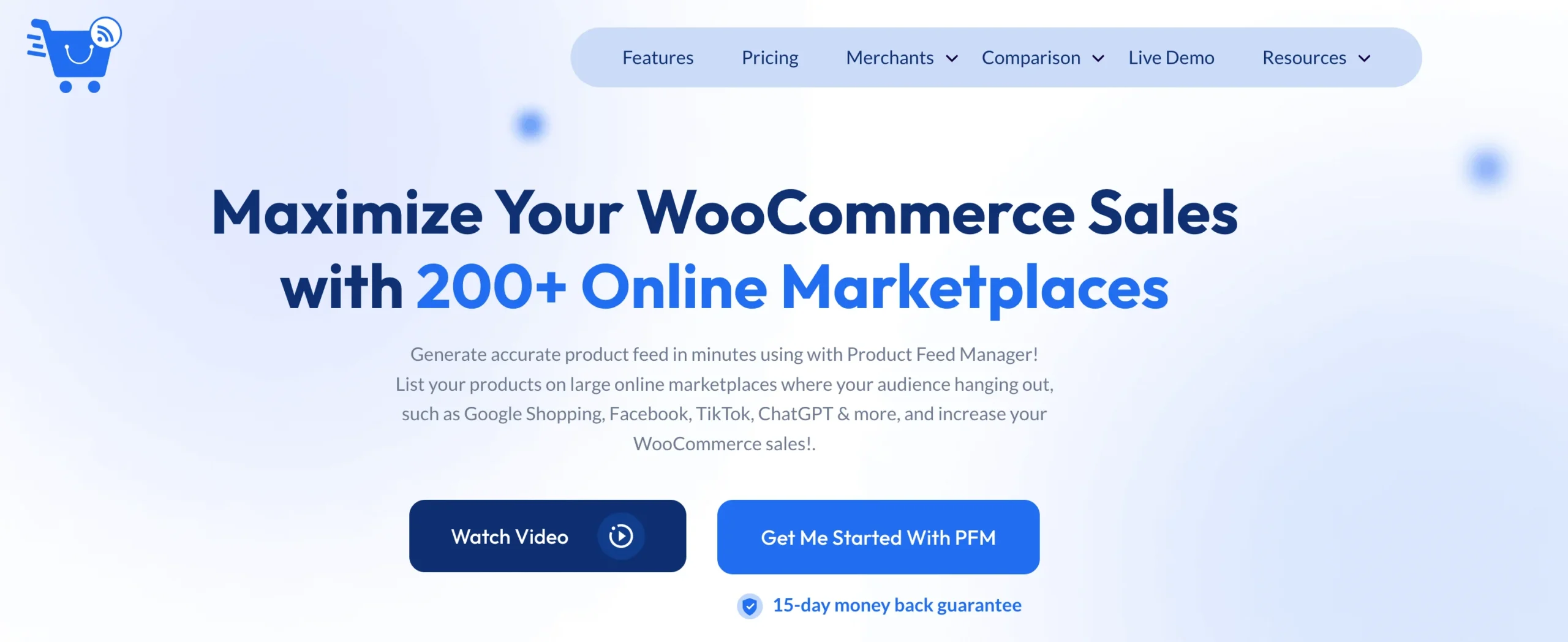
The setup work doesn’t have to be heavy, though —listing WooCommerce products on marketplaces takes minutes, not hours, when you have the right system in place.
It’s the kind of backend setup that quietly saves you hours each week and prevents the small data errors that get listings suppressed.
Done right, multi-channel selling reduces your risk and stabilizes your revenue. The trick is having the right system behind it so you’re not stretched thin trying to manage two marketplaces manually.
Common Mistakes Sellers Make When Choosing Between Amazon and Walmart
A few mistakes show up again and again. Avoiding these alone will put you ahead of most sellers.
- Entering Amazon without an ad budget plan. Many new sellers assume organic growth will carry them. It won’t. If you can’t fund ads, your listings will sit in the back of search results.
- Ignoring Walmart’s approval and compliance requirements. Sellers apply with weak business profiles, get rejected, and assume Walmart “doesn’t work.” It works — you just have to meet the bar.
- Copying listings between platforms. Amazon SEO and Walmart SEO are not the same. Different keyword behavior, different formatting standards, different buyer language.
- Not factoring fulfillment costs into pricing. Many sellers calculate margins based on product cost alone, forgetting FBA or WFS fees, returns, and storage. The result: products that look profitable on paper but lose money in practice.
- Picking a platform based on hype, not fit. Amazon isn’t automatically better. Walmart isn’t automatically the smart underdog play. Match the platform to your product and stage — not to what’s trending on YouTube.
Final Verdict — Walmart Marketplace vs Amazon
Here’s the bottom line.
Amazon wins on scale and traffic. If you have the budget, the right product, and the patience to play the algorithm and ad game, Amazon gives you reach no other marketplace can match right now.
Walmart wins on opportunity and margin. Less competition, a simpler fee structure, and a growing platform make it a strong option for sellers who want to grow without burning cash to stay visible.
But the “best” platform isn’t a universal answer.
It depends entirely on your product type, your budget, your growth stage, and how you want to scale — fast and competitive, or steady and margin-friendly.
Pick the platform that fits your strategy. Not the one with the loudest reputation.
** FAQs **
1. Is Walmart Marketplace better than Amazon for beginners?
For beginners with limited ad budgets, Walmart Marketplace can be friendlier because competition is lower and you don’t need to spend heavily to get visibility. However, Walmart’s approval process is stricter, so you’ll need a clean business profile and existing eCommerce track record to get approved. Amazon is easier to join but harder to grow without paid ads.
2. Which platform has lower fees — Walmart Marketplace or Amazon?
Both platforms charge similar referral fees of 6 to 15 percent based on category. However, Walmart Marketplace does not charge a monthly subscription fee, while Amazon charges $39.99 per month for its Professional seller plan. When you add Amazon’s heavier ad spend and FBA fees, Walmart usually works out cheaper overall, especially for smaller sellers.
3. Can you sell on both Amazon and Walmart Marketplace at the same time?
Yes, and many established sellers do. Selling on both gives you broader reach and reduces dependency on a single platform. The key is to optimize listings separately for each marketplace, since they have different buyer behavior and search patterns. You also need to keep inventory and pricing synced to avoid stockouts or pricing violations, especially under Walmart’s price parity rules.
4. Is Walmart Marketplace harder to get approved for than Amazon?
Yes. Walmart reviews each application carefully and prefers sellers with established business history, quality products, competitive pricing, and strong customer service track records. The approval process typically takes 2 to 4 weeks, and a significant portion of first-time applicants get rejected. Amazon, by contrast, allows most sellers to sign up and start listing within a day.
5. Which marketplace gives higher profit margins — Amazon or Walmart?
Walmart Marketplace typically offers cleaner profit margins because of lower ad dependency, no monthly subscription fee, and less price competition in many categories. Amazon can generate higher total revenue due to its larger audience, but profit margins often shrink under FBA fees, advertising costs, and aggressive pricing pressure from competing sellers.
6. Do you need ads to succeed on Amazon?
In most categories, yes. Organic visibility on Amazon is limited because sponsored placements now dominate search results. Most successful Amazon sellers spend 25 to 35 percent of their revenue on PPC ads just to maintain visibility. If you don’t have an advertising budget, you’ll struggle to gain traction on Amazon regardless of how strong your product is.
7. What sells better on Walmart Marketplace vs Amazon?
Walmart Marketplace performs best for everyday household essentials, value-priced consumer goods, grocery and pantry items, apparel basics, and home and garden products. Amazon dominates in electronics, beauty and personal care, consumables, books and media, and branded specialty items. The right choice depends on whether your product fits a value-driven or premium-branded audience.
8. How long does Walmart Marketplace approval take?
Walmart Marketplace approval typically takes 2 to 4 weeks, though some applications take 6 weeks or longer during high-volume periods. Walmart reviews your business history, product quality, pricing competitiveness, customer service capacity, and tax documentation. If your application is rejected, you generally need to wait at least 30 days before reapplying.