![Why Your WooCommerce Store Isn’t Where the Buying Journey Begins [2026]](https://rextheme.com/wp-content/uploads/2026/04/Why-Your-WooCommerce-Store-Isnt-Where-the-Buying-Journey-Begins.webp)
Most WooCommerce store owners assume one thing — customers start their buying journey on their website.
It sounds logical, right? You build a store, optimize the design, improve UX, maybe even run some ads… and expect people to “arrive” and start shopping there.
But that’s not really how it works anymore.
In most cases, customers discover your products before they ever reach your store — on Google Shopping, Meta ads, TikTok, or even marketplace search results.
And here’s something even more interesting: a ChannelEngine study found that 53% of shoppers compare the same product across multiple platforms before buying, and they browse an average of 3 marketplaces before making a decision.
So if discovery is happening elsewhere, it naturally changes everything about how growth actually works.
In this article, you’ll see where the buying journey begins, why focusing only on your store can quietly slow growth, and how modern product discovery actually shapes sales today.
TL;DR
Your WooCommerce store is not where the buying journey starts anymore. Most customers discover products first on Google Shopping, social media, or marketplaces — then compare multiple options before ever visiting your store.
That’s why improving store design or checkout alone doesn’t increase traffic or discovery. Real growth happens earlier, at the visibility stage.
Key takeaways:
- Buyers usually start with online marketplaces, not your store
- Store optimization improves conversion, not discovery
- Paid ads without visibility often waste budget
- Marketplaces help you reach high-intent buyers faster than SEO
- Product feed quality directly decides whether your products get seen
If your products aren’t visible where discovery happens, your store only gets the final part of the journey, not the beginning.
Review how your products are currently listed across marketplaces and fix your product feed setup so your store can actually show up where buyers start searching.
A Polished WooCommerce Store Doesn’t Mean More Traffic
If you’ve ever seen sales slow down, the first instinct is usually to go back inside your store and start fixing things.
So you end up doing things like:
- improving your product page design
- tweaking layouts and sections
- making checkout smoother
- adding better images or banners
And yes, these changes help. They make your store easier to use and improve conversion when people have already arrived.
But here’s the part that usually gets missed — none of this creates new visitors.
You can think of it like this:
Better store experience helps you convert visitors, not bring them.
So even if your store is perfectly optimized, it still depends on one thing — people actually finding your products in the first place.
That’s where most WooCommerce stores get stuck. You improve everything inside the store, but your product visibility outside the store stays the same.
At this point, there’s a clear split you need to understand:
- Store optimization = improves conversion once users are inside
- Marketplace visibility = brings demand and discovery from outside
Both matter, but they don’t solve the same problem.
And if you keep focusing only on CRO or AOV improvements, you’re optimizing the wrong stage of the journey. Those metrics only start to matter when product discovery is already happening consistently outside your store.
Where the Buying Journey Begins Actually
By now, you already know your WooCommerce store is not where customers first discover products. So the real question becomes — where does the journey actually start?
Let’s walk through a simple situation.
Someone decides they need a wireless keyboard. They don’t go straight to a specific WooCommerce store.
They open Google, type something like “best wireless keyboard,” and start scanning the Shopping results.
While scrolling Instagram or Facebook later in the day, they might also see a few product ads.
Some will even hop between Amazon or other online marketplaces just to compare a few options side by side.
At this stage, the journey looks like this:
Discovery → Comparison → Evaluation → Store visit → Purchase
And what’s important here is that discovery happens long before the store visit. The customer is already building preferences, comparing options, and narrowing choices before they land on any WooCommerce store.
So when they finally click into a store, including yours, the behavior changes.
Your WooCommerce Store Is One of the Final Stages
At this point, your store is no longer a place where customers are figuring things out. It becomes a place where they confirm what they already believe.
Using the same example, once the customer lands on your product page, they are not exploring from scratch. They are checking:
- whether this matches the options they already saw elsewhere
- whether the price feels competitive
- whether the product details and visuals confirm their expectation
- whether this is the final choice before buying
So your WooCommerce store is acting as a decision and conversion layer, not a discovery channel.
It helps them:
- validate their choice
- understand product details clearly
- complete the purchase with confidence
And this is where most store owners miss the gap. If customers are only reaching your store at this late stage, you are not part of the early discovery process at all. That means the moment where interest is created is already happening somewhere else.
Don’t Start With Paid Ads Before Fixing Discovery
Once you understand that customers discover products before they ever reach your store, the next common move is jumping straight into paid ads.
You might have done this already — set up Meta ads or Google Ads expecting quick sales, thinking traffic will fix everything.
But this is where things usually break.
Paid ads don’t create demand. They only push your product in front of people. So if your product isn’t already visible or familiar in discovery channels, ads just expose that gap faster.
What typically happens is:
- you spend money on clicks that don’t convert
- users see your product for the first time and don’t trust it yet
- cost per sale keeps going up without stable returns
So instead of fixing discovery, ads end up amplifying the problem.
This is why relying on ads too early often feels expensive without results. You’re paying to accelerate visibility, but the foundation of product visibility is still missing.
Before you scale ads, your products need to exist where discovery naturally happens — especially in online marketplaces where intent is already built in.
This way, you’re not forcing attention. You’re meeting buyers where attention already exists.
And when you look at the data, this shift starts to make a lot more sense.
See The Math: Marketplaces Deliver Faster Results Than SEO
Let’s break it down simply.
Today, a big part of shopping behavior has already shifted away from search engines and toward marketplaces.
According to marketplace behavior data, the shift is already visible:
- 37% of consumers begin their entire shopping journey directly on online marketplaces
- Only 23% still start with traditional search engines
What this tells you is simple. You are not just competing for traffic, you are competing for attention at the exact place where buying decisions start forming.
This is also why marketplaces move faster than SEO in real terms. SEO requires building authority over time, while online marketplaces already sit where intent exists.
On top of that:
- 34% of shoppers discover new products through sponsored marketplace listings immediately
- and 39% of shoppers expect to increase their use of online marketplaces for product discovery
So instead of waiting months for search visibility to build, online marketplaces put your products directly in front of people who are already comparing and ready to decide.
This is also why relying only on SEO slows down early traction, while marketplaces shorten the path from discovery to decision.
The Pros and Cons of Marketplace-First Visibility
So now that you can see why online marketplaces often bring faster traction than SEO or paid ads alone, it’s worth looking at this from both sides.
Yes, getting your products in front of buyers where they already browse can move things much faster.
But at the same time, this isn’t one of those “just list and forget” channels.
It can work really well for you, especially in the early growth stage. But it also comes with things you need to manage properly if you want results to stay consistent.
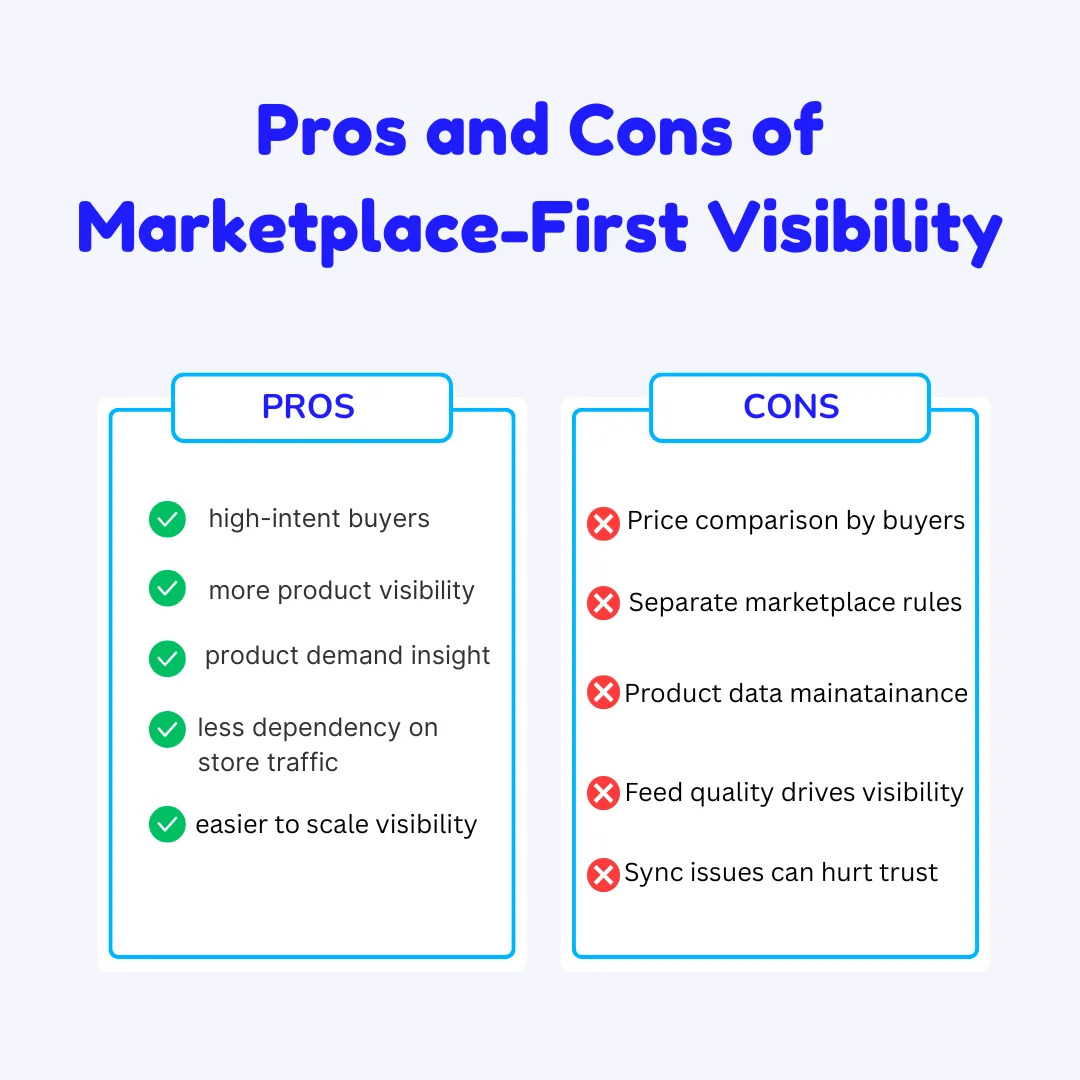
Let’s break down what you actually gain from it first.
Benefits of Marketplace Discovery
When you start listing your products across marketplaces, the biggest advantage is that you stop waiting for buyers to somehow “find” your store.
Instead, you’re putting your products directly in places where people are already ready to buy.
Here’s what that changes for you:
1. You get in front of high-intent buyers faster
The people browsing Google Shopping, Meta Shops, or marketplaces are usually already comparing products.
They’re not in the awareness stage anymore. They’re much closer to making a decision.
So your products start showing up in front of buyers who are already in shopping mode.
2. Your products become visible in more places
Instead of depending only on your website, your listings can appear across multiple platforms.
That means the same product can be discovered through:
- Google Shopping
- Facebook and Instagram Shops
- marketplace search results
- sponsored listings
This naturally increases the chances of discovery.
3. You can test product demand much faster
Let’s say you launch a new product.
Instead of waiting months to see whether it ranks or gets organic traffic, online marketplaces can quickly show you whether people are clicking, comparing, or ignoring it.
That gives you faster feedback on what’s actually working.
4. You stop relying only on direct store traffic
This is a big one.
A lot of store owners depend too much on website visits.
Once your products are visible across external platforms, your traffic sources become more balanced, and you’re no longer depending on a single channel.
5. It becomes easier to scale visibility
As your catalog grows, marketplace visibility grows with it.
More products listed across more platforms means more opportunities for discovery without needing separate campaigns for every item.
Now, while all of this sounds great, this approach also comes with some real challenges that you need to be aware of.
Challenges You Need to Be Aware Of
This is the part many store owners overlook.
Marketplace visibility can drive results, but only if your product data and operations are in good shape.
Here’s where things usually get tricky:
1. Buyers compare prices instantly
The moment your product appears beside five similar listings, the price becomes much easier to compare.
So if your pricing, offer, or shipping doesn’t feel competitive, buyers move on fast.
2. Every marketplace has its own rules
This is where feed issues start showing up.
Some platforms need specific categories, some require GTIN, and some are strict about titles and images.
If your product data doesn’t match their requirements, visibility drops.
3. Your product data needs to stay clean
This part directly affects performance.
Things like:
- titles
- descriptions
- categories
- stock status
- pricing
- attributes
All need to stay accurate.
Because once the feed quality drops, impressions usually drop with it.
4. Sync issues can hurt trust
Let’s say a product shows “in stock” on a marketplace but is sold out in your store.
That creates a bad buying experience and can hurt trust quickly.
5. Visibility depends on feed quality
This is probably the most important part.
Just being listed is not enough.
Your reach depends heavily on how well your feed is structured and optimized.
So yes, marketplace-first visibility gives you
Feed Quality Decides Whether You Get Discovered
Now, this brings you to the part that usually decides whether marketplace visibility works for you or not.
Getting your products listed on marketplaces is only the first step. Once you connect your store through a feed tool or export product data for a platform, the visibility of those listings depends heavily on the quality of the feed being sent.
In other words, the marketplace only knows your product through the data you submit and sync.
That’s why this part matters so much.
Platforms like Google Shopping, Meta, and other online marketplaces use structured feed data to decide where your products appear, which searches they match, and whether they’re eligible to show at all.
This usually comes down to a few key elements in the feed:
- product titles that clearly explain what the item is
- descriptions that support relevance and context
- images that meet platform requirements
- categories so the product appears in the right browsing paths
- GTIN or SKU for accurate identification
- availability so stock status stays updated
- pricing that matches what buyers see on the product page
So even after you list the product, poor feed data can still hold back impressions.
That’s why feed quality directly controls how often buyers actually come across your products.
A Good-Looking WooCommerce Store Won’t Replace A Bad Product Feed
Many store owners spend time fixing the wrong thing.
Let’s say your product page looks great.
You’ve added clean images, detailed descriptions, trust badges, smooth checkout, and even upsell blocks.
But when you check Google Shopping, the product barely gets any impressions.
The reason often has nothing to do with your store design.
For example, if the feed sends:
- an incomplete title
- the wrong category
- missing GTIN
- outdated availability
- mismatched pricing
Google may either limit visibility or not show the product at all.
So even though the product exists perfectly inside your store, buyers never get the chance to discover it outside.
This is the real issue.
And, by the time you notice low sales inside WooCommerce, the actual problem may already be happening much earlier, at the feed level, where impressions and visibility are first decided.
The Smarter Growth Model: Discovery Outside, Conversion Inside
Now that you can see how discovery actually starts outside your WooCommerce store, the next step is understanding how everything fits together into one simple flow.
Right now, most store owners treat growth like one straight line — bring traffic, hope for sales.
But in reality, it works in layers.
You first get discovered outside your store, and only then does your store start doing its job — turning that attention into revenue.
So a more realistic growth flow looks like this: Product Feed Setup → Marketplace Discovery → Store Checkout → Post-purchase Offers → Discount Optimization
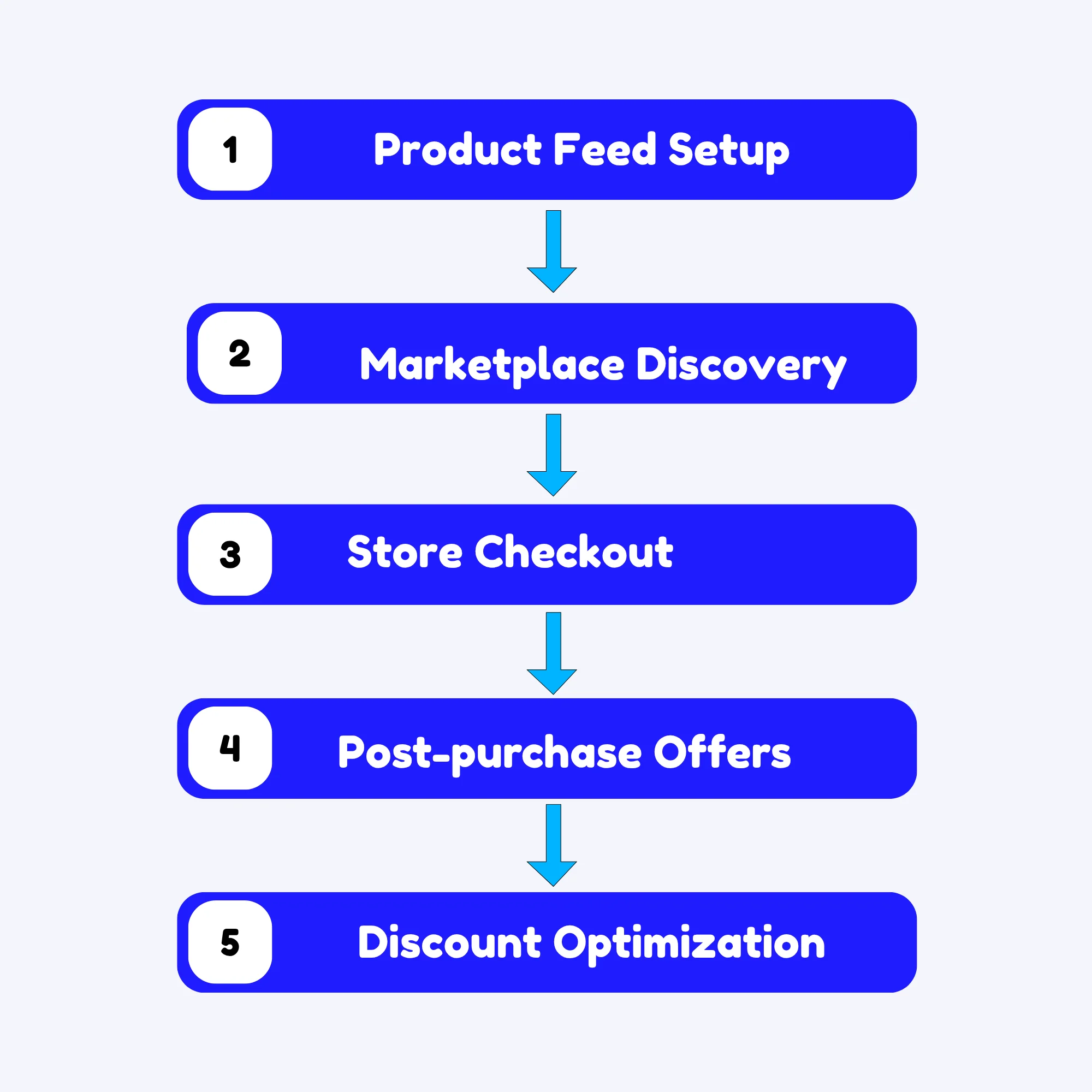
Let’s break that down in a way that actually matches how your store works in real life.
The starting point is your product feed setup.
This is where Product Feed Manager for WooCommerce (PFM) comes in. It helps you take the products already inside your WooCommerce store and list them on 200+ online marketplaces like Google Shopping, Meta, TikTok, and others.
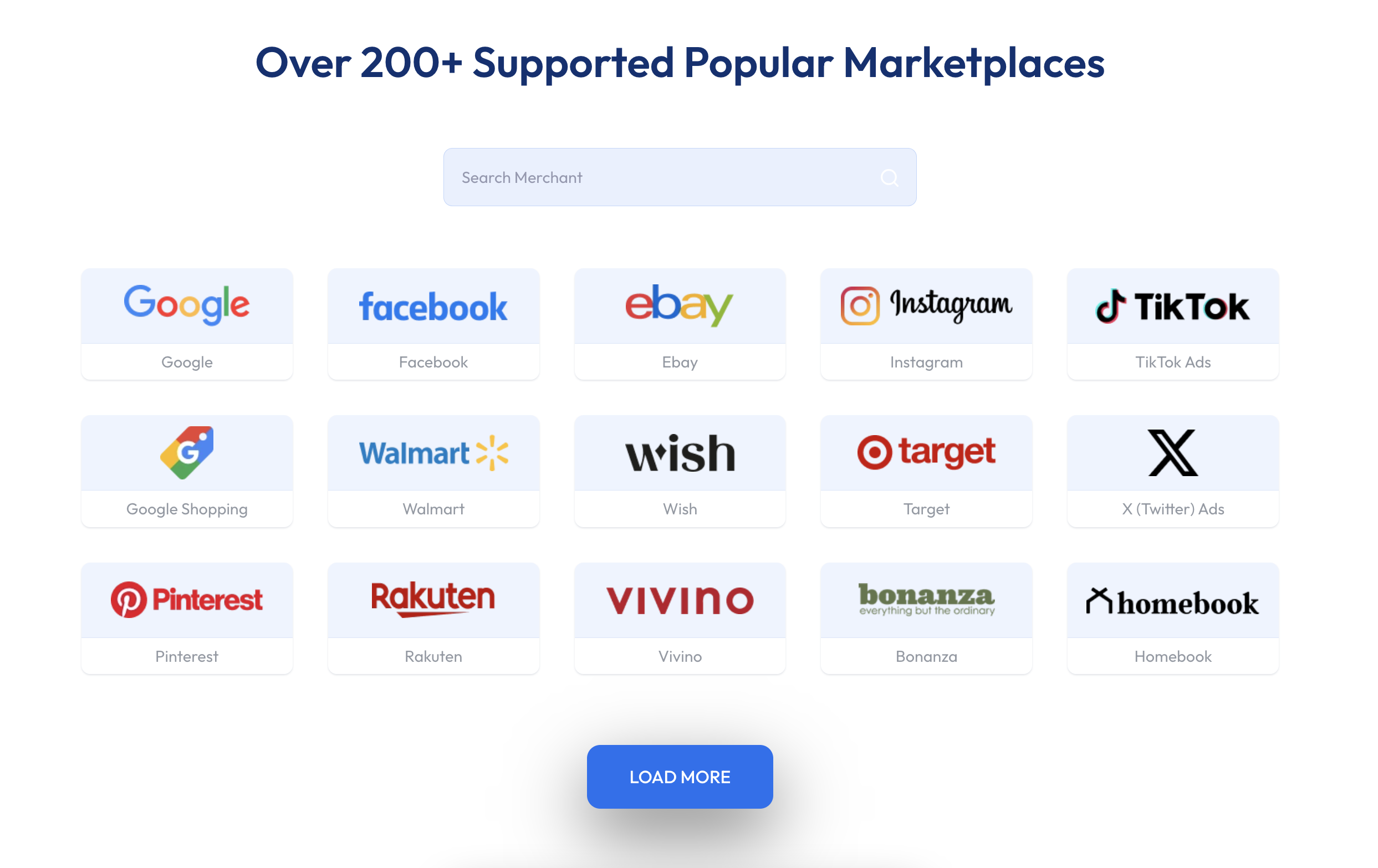
So instead of your products sitting only inside your store, they start appearing where buyers are already searching and comparing.
Once that happens, discovery begins outside your store.
In this guide, I have explained why Multi-Channel Listings Multiply Your Reach 5x Faster Than Regular Tactics
From there, customers click through and land on your WooCommerce store, and this is where conversion starts taking over.
Inside your store:
- your checkout flow makes sure they don’t drop off during payment
- post-purchase offers (like add-ons or related product suggestions) help you increase order value after the main purchase decision is made
- and dynamic discounts help you handle last-minute hesitation that often stops people from completing checkout
So you’re not looking at random tactics here.
You’re building a connected system where:
- PFM brings product visibility
- marketplaces create discovery
- your store handles conversion
- and your post-purchase setup improves revenue per order
That’s the real growth model — discovery outside, conversion inside
Wrap Up
At this point, the main shift should be clear to you. Your WooCommerce store is not where customers begin their journey — it’s where they decide and complete it.
The real discovery happens earlier, across online marketplaces, search, and social platforms, where buyers compare options before they ever reach your store.
Once you accept this, your growth strategy changes. You stop over-focusing on store-only traffic and start building product visibility where demand already exists.
When discovery outside and conversion inside work together, your store stops chasing traffic and starts working with intent that’s already in motion.
FAQs
1) What does it mean that the buying journey starts outside WooCommerce stores?
It means customers don’t usually begin on your WooCommerce store. They start discovering products on Google, social media, and marketplaces before visiting any website.
2) Why isn’t my WooCommerce store getting enough traffic?
In most cases, it’s not a store issue — it’s a visibility issue. If your products are not showing up on marketplaces or search platforms first, your WooCommerce store isn’t part of the early buying journey.
3) How do marketplaces change the buying journey?
Marketplaces like Google Shopping, Meta, and others bring your products in front of buyers during the discovery stage. This shifts the buying journey so customers compare products before they even reach your WooCommerce store.
4) What role does product feed quality play in visibility?
Product feed quality directly decides how your products appear across platforms. If your feed is incomplete or poorly structured, your WooCommerce store products may not show up properly on marketplaces or search results.
5) How does Product Feed Manager help with marketplace visibility?
Product Feed Manager (PFM) helps you connect your WooCommerce store to multiple marketplaces by syncing your product data. This ensures your products are properly listed and visible where the buying journey actually begins.