![How To Offer Free Shipping Profitably? 7 Best Strategies [2026]](https://rextheme.com/wp-content/uploads/2025/12/how-to-offer-free-shipping.webp)
You know that moment at checkout when a customer sees the shipping fee… and just leaves?
You’ve seen it happen. And at the same time, you keep hearing the same advice everywhere: “Just offer free shipping.”
Sounds simple. Until you’re the one figuring out how to make it profitable.
However, the good news is 80% of customers are willing to meet a minimum purchase threshold just to get free shipping.
Because free shipping feels great for customers, but for store owners, it raises a real question- how do you offer it without quietly bleeding money on every order?
That’s what this guide is about.
Here, I’ll walk you through 7 practical ways ecommerce stores are using free shipping, how to offer free shipping, when it makes sense, where to place it, and how to structure it so it helps your revenue instead of hurting it.
Let’s get into it.
What Is Free Shipping in Ecommerce?
So, you know that offering free shipping can make customers stick around instead of abandoning their carts. But let’s break down what free shipping really is and how it works for your store.

Free shipping isn’t actually free for your business. It’s a way to reallocate costs so that customers see value while you still protect your margins. Here, you’re not giving away products; you’re adjusting how the shipping cost is handled, either through pricing, thresholds, or promotions.
Here’s a simple example. A customer adds a product to their cart and sees a $9 shipping fee. Most likely, they leave. The same product with a “Free shipping on orders over $75” offer encourages them to add more items to hit that threshold. The result: a completed order and a higher average cart value.
It’s helpful to think of free shipping in two ways.
First, as a pricing strategy, you might slightly increase product prices to cover shipping costs.
Second, as a conversion incentive, you use it to motivate customers to spend more or act faster at checkout.
Both approaches can work together to keep your margins safe while boosting sales.
Once you understand these basics, it’s easier to start planning free shipping in a way that actually benefits your business, not just your customers.
Why Free Shipping Still Works in 2026
Now that you’ve got a clear picture of what free shipping is, let’s look at why it still makes a difference for your store.
i. Free Shipping Reduces Checkout Friction
You’ve seen it happen—someone fills their cart, reaches checkout, and then hesitates when they see the shipping fee. Most customers don’t mind paying a little extra for the product itself, but a separate shipping cost at the end feels like a stop sign.
Offering free shipping removes that friction. It makes the checkout feel simpler, smoother, and much more likely for them to click “complete order.”
ii. Free Shipping Increases Average Order Value
You can also use free shipping to gently push customers to spend a bit more. A clear minimum order threshold gives them a reason to toss in one more item.
For example, if you set free shipping for orders over $80, you might see the average cart value go from $62 to $84.
That’s not luck but predictable behavior when customers know they can get a perk for adding a little extra.
iii. Free Shipping Strengthens Brand Perception
Free shipping doesn’t just get the sale. It also shows your customers you’re transparent, fair, and thinking about their experience.
When you offer it consistently, people start trusting your store more. That trust leads to repeat purchases and keeps them coming back because they know you treat them well.
The Real Cost of Free Shipping (What Most Guides Don’t Tell You)
Free shipping looks simple on the surface. You might think, “Just remove the shipping fee, done.” But if you’re not careful, it can quietly hurt your profits.
Here’s what usually goes wrong:
- Ignoring margins – You can’t offer free shipping if your product barely covers its cost. Every order with a loss adds up fast.
- Giving it site-wide – Free shipping on everything sounds nice, but it encourages low-value orders that cost you more to fulfill.
- Treating it like a discount – Free shipping is not a one-off promotion. It works when it’s part of a structured plan, not just a temporary giveaway.
There are hidden costs most guides skip:
- Carrier fees that fluctuate with weight and distance
- Packaging costs, often overlooked in calculations
- Returns, which can double your shipping expenses
- Small orders stacking up, increasing shipping frequency and overall cost
The takeaway is simple: profitability depends on how you set up free shipping. It’s not about removing the fee blindly, it’s about creating rules that make customers spend more, order smarter, and still keep your margins safe.
How to Offer Free Shipping- 7 Best Strategies
Now that you understand the hidden costs and how free shipping can backfire, it’s time to look at practical ways to make it work for your store. Each strategy works on its own, but you’ll get the best results when you combine them based on your products, customer habits, and business model.
Strategy 1 – Set a Data-Backed Minimum Order Threshold
Setting the wrong free shipping threshold can quietly hurt your margins. If you set it too low, you’re covering shipping on small orders. And if you set it too high, customers give up before reaching it.
So, what you need to do is start by checking your average order value (AOV).
Look at what your typical customer spends, then identify the “stretch point”, the amount they are likely to add to reach free shipping without feeling pressured.
Here’s a concrete example:
- Your AOV is $62.
- You notice that customers often add one small item worth $18 to their cart when they see a threshold.
- You set free shipping for orders over $80.
The result: customers naturally add an extra item, hitting the $80 mark to qualify. Your revenue increases, shipping is covered strategically, and it doesn’t feel forced.
The key is making the threshold feel achievable, so it nudges behavior instead of turning buyers away.
Strategy 2 – Build Shipping Costs Into Product Pricing (Strategically)
Instead of absorbing shipping fees on every order, you can spread the cost into your product prices. Small, strategic increases, just a couple of dollars per item, cover shipping without making the product feel overpriced.
For example, a bestselling mug priced at $15 could be increased to $16 or $17. Customers rarely notice this small bump, but that $2 increase can cover shipping for many orders.
This approach works best for high-demand or repeat-purchase items, where even minor adjustments add up to cover shipping costs over time.
Strategy 3 – Offer Free Shipping Only on High-Margin Products
Now that you’ve seen how thresholds and pricing adjustments work, the next step is being selective. Free shipping doesn’t have to apply to everything.
Focus on products that have enough margin to absorb shipping. Use it strategically to push your bestsellers or bundles.
For example, a store selling skincare kits might offer free shipping on a $120 bundle of popular items. Customers feel like they’re getting a deal, and you’re covering shipping without losing money.
Avoid offering free shipping on heavy, low-margin products. Shipping large items for free can quickly erase any profit. By being selective, you make free shipping work as a tool for boosting revenue rather than a cost.
Strategy 4 – Use Free Shipping as a Limited-Time Promotion
Another way to protect your margins is to make free shipping temporary. Limited-time offers create urgency, which encourages customers to act faster.
You can run flash free-shipping weekends, tie it to seasonal campaigns, or include it in product launches. The goal isn’t generosity, it’s control.
By limiting the time, you manage costs while motivating higher order volume.
Strategy 5 – Reward Specific Customer Actions With Free Shipping
You can also make free shipping conditional on certain actions. Think of it as a value exchange: customers do something that benefits your business, and you reward them with shipping perks.
For example:
- Creating an account or signing up for email/SMS lists
- Making a first-time purchase
- Reaching a loyalty milestone
This approach not only encourages the behavior you want but also makes free shipping feel earned, rather than given away for free.
Strategy 6 – Limit Free Shipping by Location or Delivery Method
Once you’ve targeted high-margin products and timed your promotions, the next way to protect margins is to control where and how free shipping applies.
You can offer free shipping only within a certain delivery radius, which keeps costs predictable. Another option is free local pickup—customers get the convenience, and you skip shipping fees entirely. You can also use economy shipping instead of express for free orders, which reduces costs without hurting the customer experience.
Carrier rate calculators can help you make these decisions. By running the numbers, you can see exactly where free shipping makes sense and where it could cut into profits.
Strategy 7 – Combine Bundles + Free Shipping to Protect Margins
Finally, bundles are one of the safest ways to offer free shipping. By combining multiple products into a single purchase, you increase the perceived value while lowering the fulfillment cost per item.
For example, a store selling coffee products might create a bundle with a bag of beans, a mug, and a coffee scoop for $85. Free shipping kicks in for the bundle.
Customers feel like they’re getting a deal, hitting the threshold is easy, and you cover shipping costs without hurting margins.
Bundles also make it simpler to guide customers toward higher-value orders. So when you do it right, free shipping becomes a tool that drives bigger carts and more predictable profits.
Fast vs. Free Shipping — What Should You Prioritize?
By now, you’ve seen how free shipping can drive higher order values and repeat purchases. But there’s another factor to consider: speed. Customers don’t always want the fastest shipping—they want predictable and clear shipping options.
In many cases, free shipping with a clear delivery window beats fast shipping that costs extra. You can still offer paid express shipping alongside free standard shipping for those who need it quickly, but the key is giving customers options without confusing or frustrating them.
Here’s a simple table to make it easier to visualize:
| Scenario | Recommended Approach | Why It Works |
|---|---|---|
| Customers are price-sensitive | Free standard shipping only | They respond to cost savings more than speed |
| Customers are buying high-margin products | Free standard + paid express | Covers shipping costs while giving choice |
| Seasonal or time-sensitive products | Paid express prioritized | Fast delivery meets expectations, optional free shipping for higher spend |
| Bundles or multi-item orders | Free standard shipping with clear ETA | Predictable delivery encourages larger carts and reduces complaints |
By thinking in terms of predictability and choice, you make free shipping work without unnecessarily cutting into profits. Customers feel satisfied, and you still control costs.
How to Communicate Free Shipping So It Actually Converts
At this point, you already know free shipping works when it’s set up correctly. But even a solid free shipping strategy can fail if customers don’t see it early enough. Communication matters just as much as the offer itself.
Free shipping should never feel like a surprise at the end. When customers only discover it—or lose it—at checkout, you create hesitation instead of confidence.
Here’s how to place the message so it supports the buying decision at every step:
- Product pages – Mention free shipping close to the price. This sets expectations before the product even goes into the cart.
- Cart page – Reinforce the offer. If there’s a minimum spend, show how close they are to qualifying. This is where customers decide whether to add more items.
- Checkout – Confirm free shipping clearly. This removes last-minute doubt and keeps the flow smooth.
- Header bars – Keep free shipping visible across the site, especially during promotions. It works as a constant reminder while customers browse.
Late communication causes drop-offs because customers don’t like sudden cost changes. When shipping details are clear from the start, checkout feels predictable, and predictable checkouts convert better.
How to Decide If Free Shipping Is Right for Your Store
Now that you’ve seen how communication affects conversions, the next step is deciding whether free shipping fits your store in the first place. This works best when the decision is practical, not emotional. You want a quick check you can apply without overthinking.
Use this checklist to make the call. If most of these points line up, free shipping makes sense for you.
Product type
Lightweight and small products are easier to ship without hurting margins. Heavy or oversized items usually work better with conditional free shipping or paid shipping options shown upfront.
Margin structure
Healthy margins give you room to absorb shipping costs. Tight margins mean you need rules, like minimum order value or free shipping on select products only.
Customer expectations
Some categories already expect free shipping as a standard. If competitors offer it and you don’t, your store feels expensive before checkout even starts.
Order frequency
Repeat purchases make free shipping more valuable. When customers come back often, the higher lifetime value offsets shipping costs over time.
When this checklist checks out, free shipping becomes a growth lever, not a cost problem. You move forward knowing it supports your numbers and your customers at the same time.
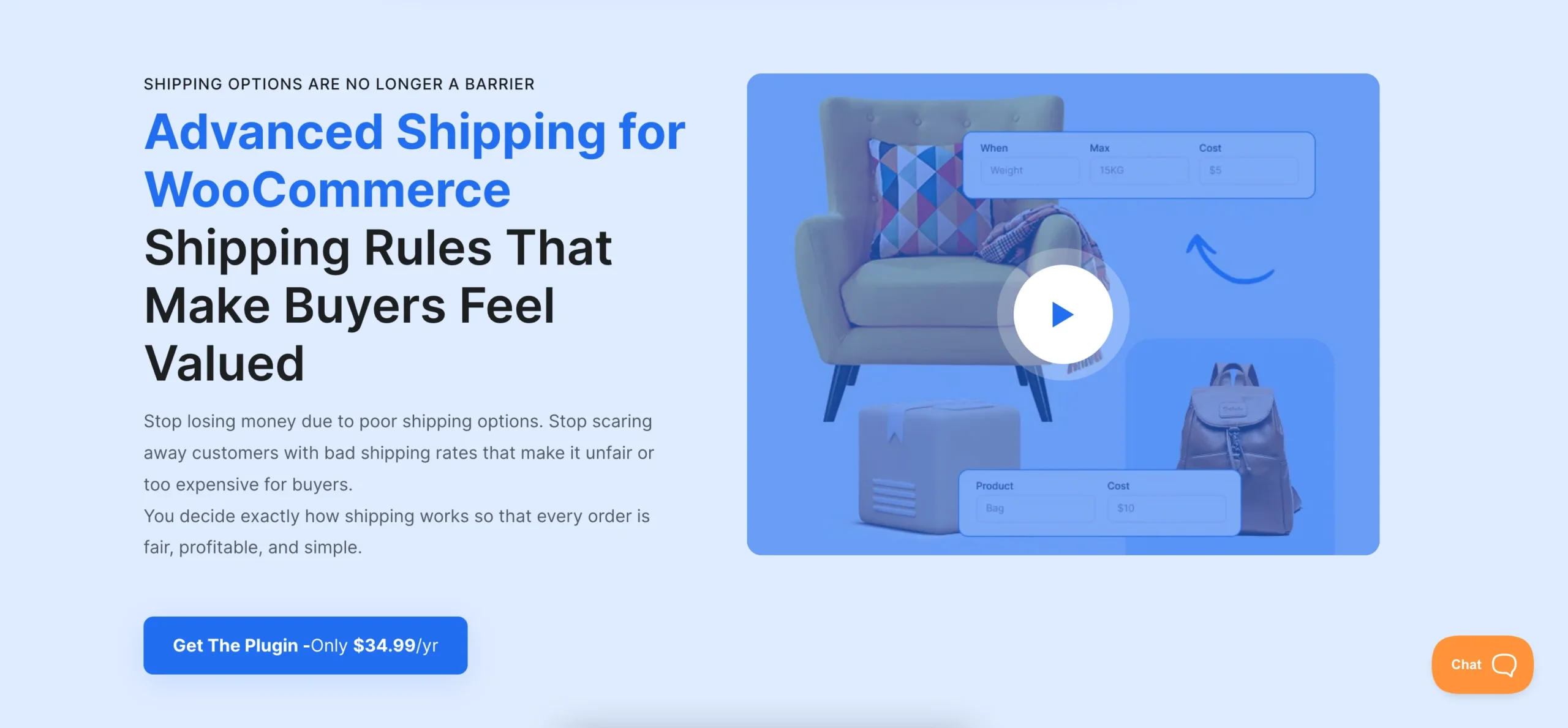
How to Set Up Free Shipping Using Advanced Shipping for WooCommerce
At this point, the strategy is clear. Now it’s about execution. You want free shipping to push higher order values without eating into margins. Advanced Shipping for WooCommerce gives you that control without overcomplicating the setup.
Set clear free shipping conditions
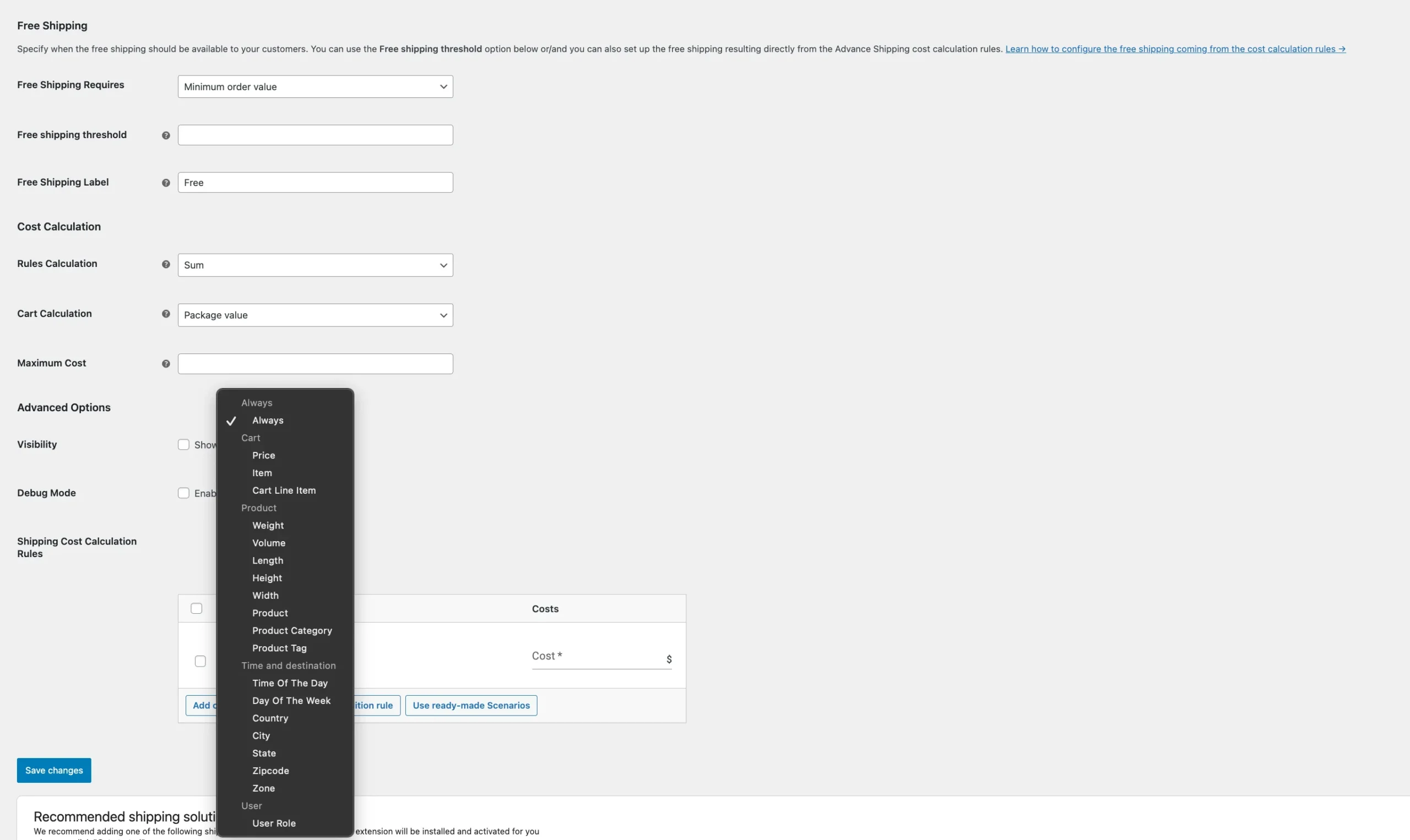
You start by defining when free shipping applies. At the top of the shipping rule screen, you choose a trigger from the Free Shipping Requires dropdown.
Most stores use a minimum order value because it nudges customers to add one more item. You enter the amount once, and the rule applies automatically. You can also edit the free shipping label so customers see the offer clearly at checkout.
Add rules when you need tighter control
Basic thresholds work for many stores. When you need more precision, you move to Shipping Cost Calculation Rules. This is where you control free shipping based on what’s actually in the cart.
You can apply rules using:
- Cart data like total price or item count
- Product details such as weight, category, or tags
- Location including country, state, or shipping zone
- User roles if you want different rules for wholesale or members
This keeps free shipping focused on the orders that make sense for your business.
Control how costs are calculated
Once rules are active, you decide how they behave together. In Rules Calculation, you choose whether costs are combined or if the highest rule applies.
You also control whether shipping applies to the full cart or specific items using Cart Calculation. If needed, you cap shipping fees with a Maximum Cost so totals never go out of range.
The result is simple. You offer free shipping where it drives value, block it where it hurts margins, and keep the experience clean for customers.
Can Free Shipping Be Profitable in 2026?
By now, it’s clear that free shipping isn’t a giveaway; it’s a strategic lever. When you set clear thresholds, target the right products, and control where it applies, it drives higher order values, reduces abandoned carts, and builds trust with your customers.
Start by auditing your current shipping setup. See where free shipping is costing you unnecessarily and where it could help boost sales. Then, pick one strategy from this guide and test it. Track the results, refine the rules, and scale what actually works based on your data.
Free shipping becomes a growth tool when it’s controlled, measurable, and aligned with your margins. Use it wisely, and it stops being a risk and starts being a revenue driver.
FAQs
How are people able to offer free shipping?
People manage how to offer free shipping by using a free shipping strategy that balances costs with profits. Many stores set a free shipping threshold or bundle items to cover shipping without losing money. Proper planning ensures customers see value without hurting margins.
How do I announce free delivery?
You can announce free delivery across free shipping websites using banners, cart reminders, and checkout labels. Clear messaging about your free shipping threshold helps customers know when they qualify. This makes the offer visible and motivates higher order value.
Is free shipping a good idea?
Understanding what is free shipping shows it’s more than a perk—it’s a conversion tool. A well-planned free shipping strategy increases cart size and loyalty. Free shipping works best when it’s targeted, not site-wide, to protect profits
When to offer free shipping?
Offer free shipping when customers meet your free shipping threshold or during targeted campaigns. Align timing with product type, margins, and purchase behavior. This ensures your free shipping strategy drives revenue, not losses.
What is the psychology behind free shipping?
Customers respond strongly to what is free shipping because it reduces perceived friction at checkout. A clear free shipping threshold nudges them to spend more. This psychological effect makes your free shipping strategy a powerful tool for higher AOV.

![Show Your WooCommerce Products on ChatGPT & OpenAI Ads with Product Feed [2026] 2](https://rextheme.com/wp-content/uploads/2026/08/Show-Your-WooCommerce-Products-on-ChatGPT-with-OpenAI-Product-Feed-1-407x213.webp)