![How to Set up a Marketplace Strategy – 10 Actionable Tips for Growth [2026]](https://rextheme.com/wp-content/uploads/2025/02/How-To-Set-Up-A-marketplace-strategy.webp)
One of my friends works closely with marketplace businesses, and one thing is obvious. Marketplaces don’t fail because the idea is bad; they fail because there’s no clear strategy.
From his experience, the same issue keeps coming up. Founders build the platform first, but don’t plan how buyers, sellers, and revenue will grow together.
According to recent data, 83% of shoppers have purchased on marketplaces, yet many platforms still struggle to attract and retain both buyers and sellers.
If you’re here, you want more than just launching a marketplace – you want users, activity, and growth. What works for others won’t always work for you.
That’s why this guide shares 10 simple steps to help you build a marketplace strategy that actually works.
So let’s get started,
TL;DR – Marketplace Strategies
- A clear marketplace strategy helps attract buyers and sellers and grow your platform.
- Pick the right revenue model: commission, subscription, listing fee, or hybrid.
- Keep listings organized, payments secure, and operations smooth for a better user experience.
- Engage users with rewards, referrals, communities, and consistent communication.
- Grow your audience using SEO, social media, paid ads, and email marketing.
- Use data insights to track behavior, test ideas, and personalize the marketplace.
- Plan for global growth: adapt listings, payments, and follow local laws.
- Final verdict: Product Feed Manager helps you to manage listings, expand to 200+ online marketplaces, and boost your product visibility.
![How to Set up a Marketplace Strategy - 10 Actionable Tips for Growth [2026] 1](https://rextheme.com/wp-content/uploads/2025/02/Marketplace-200.webp)
What is Marketplace Strategy & How it Works?
A marketplace strategy is your plan for building, running, and growing an online marketplace. It’s not just about creating a platform and waiting for users to come.
For example, if you launch an online marketplace for handmade crafts, you need to attract both artisans and buyers, manage listings, process payments, and provide customer support.
This ensures transactions happen smoothly and users stay engaged.
Without a clear strategy, growth will be slow, and scaling will be difficult. Even with initial users, your marketplace can struggle to reach its full potential. attract both artisans and buyers, manage listings, process
Why Does Having a Marketplace Strategy Matter?
Launching a marketplace without a strategy is like throwing a party without invitations; you can get a few random visitors, but it won’t turn into a real success.
Without a structured plan, you’ll struggle to attract buyers and sellers, manage operations, and scale profitably.
Here’s why a solid marketplace strategy is non-negotiable:
- High Competition: Competing with platforms like Amazon is part of the reality, and a clear online marketplace strategy helps avoid getting lost in the crowd.
- User Expectations: Buyers expect simple product search and fast checkout, and a reliable customer service app helps respond to questions quickly and keep potential buyers engaged.
- AI Advantage: Modern marketplaces rely on marketplace algorithms to guide discovery, and combining automation with a customer service apps improves speed and accuracy.
- Brand Trust: People return to marketplaces they recognize and trust, which makes building brand equity essential for long-term success.
- Revenue Planning: Marketplace revenue doesn’t happen automatically, and a clear commission model supports steady seller growth.
Have a look at these blogs worth reading in this context:
Now, let’s see what the key benefits of having a proper marketplace strategy in place for your business.
Key Benefits of a Marketplace Strategy
With a solid strategy in place, you’ll see immediate and long-term benefits that help you grow and succeed in today’s competitive world.
Here’s how having a clear plan pays off:
- Stronger Customer Acquisition: A clear strategy helps you understand your target audiences better. You can attract more buyers and keep them engaged with offers and services they actually want.
- Efficient Resource Use: A solid plan ensures your time and money are spent on what truly drives growth. You avoid wasted effort on tactics that don’t work, especially when managing your partner marketplace relationships.
- Better Revenue Opportunities: With a strategy in place, you can spot ways to earn through subscription models, transaction fees, or value-added services and test your MVP effectively.
- Enhanced Trust & Branding: Customers trust marketplaces with a clear purpose. You can position your platform as reliable and professional, using smart brand marketing to strengthen the ecosystem around your marketplace.
- Competitive Advantage: Using data from customer behavior and trends lets you make smarter decisions. You get an edge over competitors still relying on guesswork.
Now that we’ve covered the foundation of why a marketplace strategy is crucial, let’s dive into the actionable steps you can take to build and refine your own.
Key Area of Marketplace Strategy
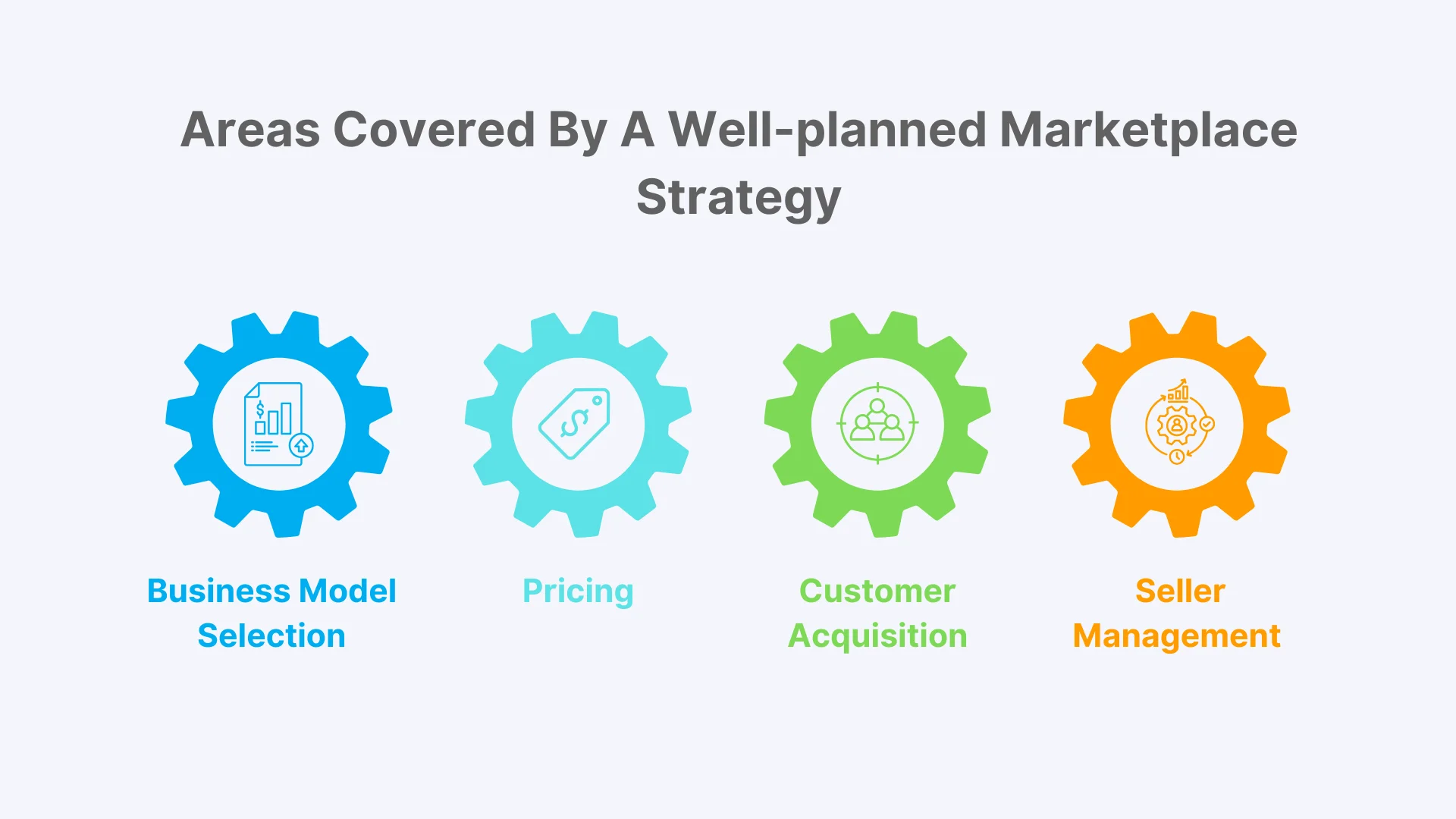
A well-planned marketplace strategy covers key areas like:
- Business Model Selection: Having the right chosen business model is critical for a successful ecommerce marketplace strategy. It sets the foundation for growth and operations.
- Pricing: Defining pricing models helps attract buyers while keeping sellers motivated and your marketplace profitable.
- Customer Acquisition: Understanding target markets ensures your strategies reach the right buyers and keep them engaged.
- Seller Management: Recruiting and supporting new sellers on your service marketplace platform is key to maintaining a thriving marketplace.
It ensures that your platform doesn’t just exist—it grows, stays competitive, and keeps users coming back.
10 Actionable Steps to Set Up a Marketplace Strategy
These steps will guide you through the essentials of marketplace setup & optimization strategies that are ready to scale and succeed.
1. Define Your Marketplace Vision
To start building your marketplace, you first need to define what kind of marketplace you’re creating. Are you focusing on
- B2B (business-to-business),
- B2C (business-to-consumer),
- or P2P (peer-to-peer)?
This will shape how you approach everything from user acquisition to revenue generation.
2. Identify Your Target Audience & Their Needs

- Understand Your Users: A marketplace succeeds when it solves real problems. Know the pain points, demands, and behaviors of your buyers and sellers.
- Research Buyers & Sellers: Study competitor marketplaces, industry reports, and customer reviews to spot challenges and gaps.
- Use Direct Feedback: Social media, forums, and surveys give firsthand insights into what your audience really needs.
- Tailor Your Marketplace Strategy: Align your features, services, and offers with the needs of your target audiences.
- Plan Marketplaces Marketing: Use insights from your research to create marketing strategies that attract and retain buyers and sellers effectively.
3. Choose the Right Marketplace Revenue Model
Now that you know your marketplace type and who you’re serving, it’s time to figure out how you’ll generate revenue. Your business model needs to make sense for both you and your users—otherwise, you’ll struggle to grow.
Let’s break down the most common revenue models, their real-world applications, and the pros and cons of each.
i. Commission Model
The commission model lets your marketplace take a percentage of every sale made on the platform. It’s popular because your success grows alongside your sellers’ success.
For example, platforms like Airbnb or Upwork are a 2-sided marketplace, taking a small cut when a guest books a stay or a client hires a freelancer. Sellers don’t pay upfront—they only pay when they make a sale.
This approach encourages more sellers to join, keeps costs low for them, and ensures your marketplace earns revenue consistently as transactions happen.
✅ Pros:
- No upfront cost for sellers, making it easier to attract them.
- Scales well since revenue grows with transaction volume.
- Encourages quality service—sellers only pay when they succeed.
❌ Cons:
- If transactions are low, so is your revenue.
- Some sellers may try to avoid paying by taking transactions off-platform.
- Setting the right commission percentage can be tricky—too high, and sellers leave; too low, and you struggle to profit.
ii. Subscription Model
A subscription model charges users a recurring fee monthly, quarterly, or yearly for access to your marketplace or premium features. It creates a steady income, even if transactions vary.
For example, LinkedIn Premium and Amazon Prime use this model. LinkedIn charges for enhanced features, while Prime members pay for free shipping and exclusive deals.
This model helps you predict revenue, keep users engaged, and offer premium services that grow loyalty on your platform.
✅ Pros:
- Predictable, consistent revenue stream.
- Encourages user retention since people want to get value from their membership.
- Works well for niche or high-value marketplaces.
❌ Cons:
- Harder to convince new users to sign up, especially if they don’t see immediate value.
- You need strong marketing and engagement strategies to keep subscribers from canceling.
- Users may expect premium features, which require ongoing investment.
iii. Listing Fee Model
A subscription model charges users a recurring fee monthly, quarterly, or yearly for access to your marketplace or premium features. It creates a steady income, even if transactions vary.
For example, eBay and Craigslist use listing fees in certain categories. Posting a job on a job board or selling a high-value item often requires a one-time fee to get listed.
This approach gives your marketplace predictable revenue and works well for high-value or specialized listings where sellers are willing to pay upfront.
✅ Pros:
- Generates revenue upfront, even before transactions happen.
- Works well for marketplaces with high seller demand (e.g., real estate, recruitment platforms).
- Keeps listings relevant—sellers won’t spam the platform with low-quality offers if they have to pay.
❌ Cons:
- Can discourage sellers, especially new ones who aren’t sure if they’ll make a sale.
- Revenue isn’t tied to sales, so your marketplace might profit while sellers struggle.
- Less effective for marketplaces that rely on high transaction volume.
iv. Hybrid Model
A hybrid model combines multiple revenue strategies in one marketplace. You could charge a small listing fee plus a commission on sales or offer a free version with premium subscription upgrades.
For example, Etsy charges both a listing fee and a commission per sale. This keeps it affordable for sellers while ensuring the marketplace earns revenue from successful transactions.
This approach balances revenue streams, attracts more sellers, and helps your marketplace grow sustainably.
✅ Pros:
- Creates multiple revenue streams, making your marketplace more financially stable.
- Gives sellers flexibility—some might prefer paying upfront, while others are okay with commissions.
- Can be customized to fit your marketplace’s needs.
❌ Cons:
- More complex to set up and manage.
- If not balanced properly, it could frustrate sellers.
- Requires continuous testing to see which combination works best.
Which Model Should You Choose?
The best revenue model depends on your marketplace type, audience, and goals. If your platform relies on high transaction volume, a commission model might work best.
If you offer exclusive value, a subscription model could be a great fit. You can also mix and match based on what makes sense for your users. The key is to test and adapt as you grow.
4. Make Your Marketplace Easy to Manage and Scale
Once you’ve decided on a revenue model, your marketplace needs to run smoothly even as it grows. If things get messy, buyers and sellers will leave. Start with
- Organized Listings: Make sure your product categories, filters, and search are easy to use. This way, buyers can quickly find what they’re looking for.
- Reliable Fulfillment: Ensure orders are shipped on time and correctly, whether handled by sellers or your team. You don’t want delays to hurt buyer trust.
- Secure Payments: Use trusted payment gateways and multiple options for smooth transactions. This helps you keep both buyers and sellers confident in your platform.
- Automation: Automate tasks like customer support, pricing, and inventory tracking. Use AI-powered tools to save time and reduce mistakes as your marketplace grows.
- Scalable Operations: Build systems that can handle growth without chaos. This ensures you can keep both buyers and sellers happy as your marketplace expands.
5. Keep Buyers and Sellers Coming Back

Now that you’ve established a solid foundation, keeping your marketplace vibrant is key. A marketplace only works if both buyers and sellers stay active.
- Seller Availability: Without enough sellers, buyers can’t find what they need. Focus on your operating model to attract and retain the right sellers.
- Buyer Engagement: A lack of buyers makes sellers leave. Strategies to bring in new customers keep your marketplace active.
- Strategic Trade-offs: Balancing growth and resources requires smart operational trade-offs. Prioritize what drives the most value for both sides.
- Niche Focus: Targeting one niche can help your marketplace gain traction before expanding. This builds trust and relevance in your category.
- Channel Expansion: Offering products across a broader channel or digital marketplace channel ensures both buyers and sellers find more opportunities to transact.
6. Get More Customers from Multiple Channels
Once your marketplace is running smoothly, you need a steady stream of new buyers and sellers.
Relying on a single source won’t be enough—different people discover list of online marketplaces in different ways. A multi-channel approach brings in more users and keeps your business growing.
i. SEO & Content Marketing

Ranking high on search engines helps people find your marketplace when they need it. Optimize your category pages, product listings, and blog content with relevant keywords.
High-quality guides, case studies, and tutorials can also attract organic traffic. The easier it is for users to find your platform on Google, the more marketplace Sales and sign-ups you’ll get.
ii. Social Media & Influencer Marketing

Social platforms help spread the word about your marketplace. Regular posts, short videos, and user-generated content keep your audience engaged.
Influencers and industry experts can introduce your marketplace to their followers.
Focus on platforms where your target audience spends time, whether that’s Instagram, TikTok, LinkedIn, or Facebook.
iii. Paid Advertising & Retargeting
Paid ads bring in users quickly. Google Ads work well for people actively searching for products, while Facebook and Instagram ads help with brand awareness.
Retargeting ads remind past visitors to return, increasing conversions. Running ads with clear offers, discounts, or benefits makes them more effective.
iv. Email Marketing & Community Engagement
Email keeps your marketplace top of mind. Send newsletters with new products, special deals, or trending items. Personalized recommendations based on past activity improve click-through rates.
An engaged community also helps – forums, live Q&A sessions, and interactive polls make users feel connected to your platform.
7. Make Your Marketplace Safe, Easy, and Reliable
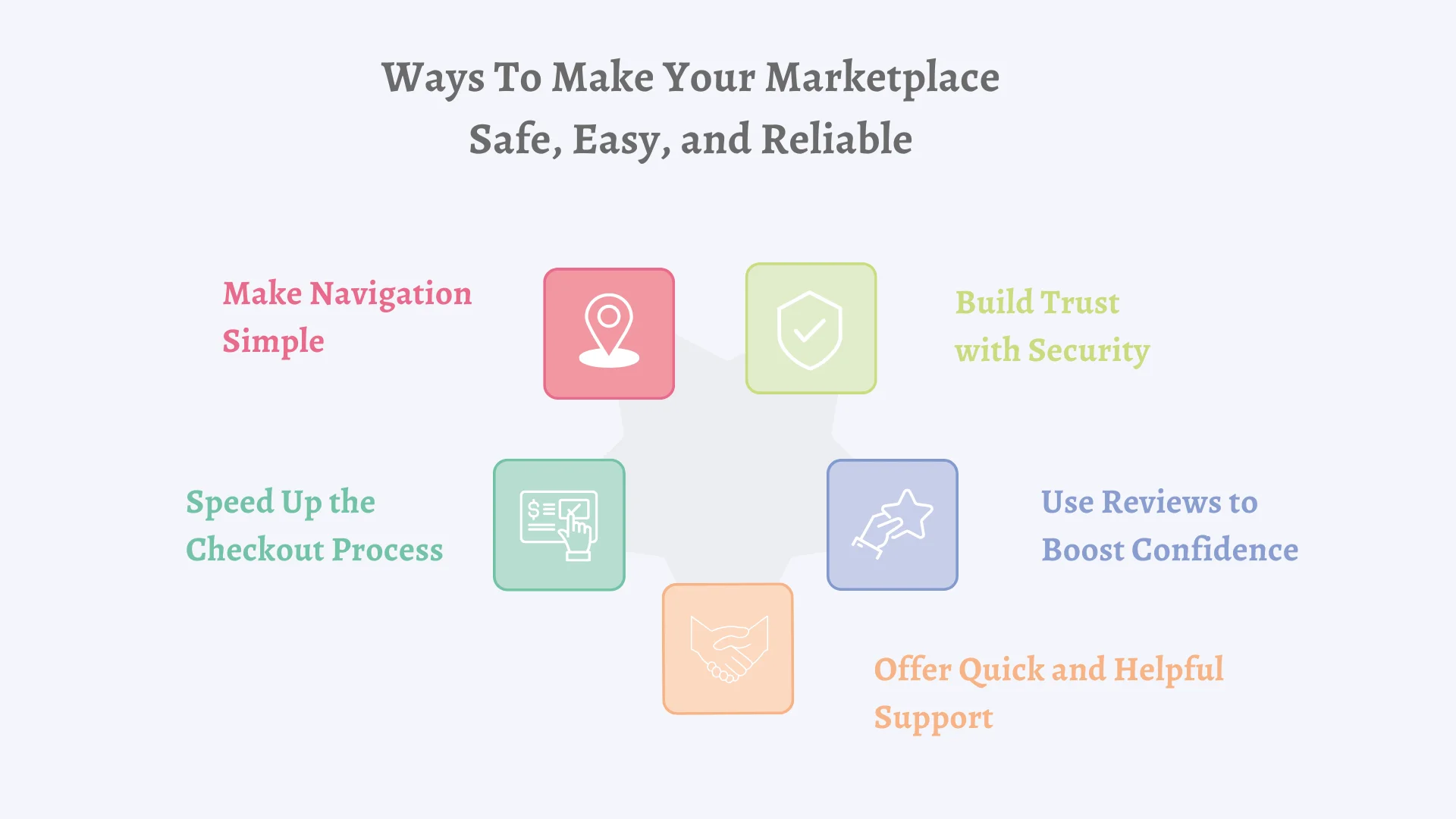
Getting users to sign up is only half the battle. If your marketplace feels confusing or untrustworthy, they won’t stick around. A smooth, secure, and user-friendly platform keeps people coming back.
i. Make Navigation Simple
Nobody likes a confusing website. Buyers should find what they need in seconds, and sellers should manage their listings without hassle. A clear menu, smart search filters, and a clean layout make your marketplace easy to use.
ii. Speed Up the Checkout Process
Slow or complicated checkouts lead to abandoned carts. Keep forms short, support multiple payment methods, and remove unnecessary steps. A frictionless checkout means more completed purchases.
iii. Build Trust with Security
People won’t buy or sell if they feel unsafe. Use secure payment gateways, encrypt sensitive data, and prevent fraud. Clearly display trust badges and policies so users feel protected.
iv. Use Reviews to Boost Confidence
Buyers rely on reviews to make decisions. Allow verified buyers to leave honest feedback and highlight top-rated sellers. This keeps the marketplace fair and helps users shop with confidence.
v. Offer Quick and Helpful Support
When users run into issues, they should get help fast. Provide live chat, email support, or an easy-to-use help center. A well-organized FAQ section can also solve common problems without users needing to reach out.
A smooth and secure marketplace isn’t just good for users—it directly impacts your growth. When people trust your platform, they spend more and recommend it to others.
8. Keep Users Coming Back with Rewards and Freebies
A marketplace isn’t just about transactions – it’s about keeping people engaged. If buyers and sellers stay active, your platform grows naturally.
i. Use Rewards to Encourage Activity

Everyone loves perks. Offer discounts, cashback, or points-based rewards to keep buyers coming back. Sellers can also get incentives, like free listing upgrades for consistent sales.
ii. Referral Programs Bring in More Users
Word of mouth is powerful. Give users a reason to invite friends by offering referral bonuses—like a discount for both the referrer and the new user. This grows your marketplace at a lower cost.
iii. Let Users Try Before They Commit
Free trials and special offers remove hesitation. Let sellers list a few items for free or give buyers their first purchase discount. Once they see the value, they’re more likely to continue using your platform.
iv. Build a Community, Not Just a Marketplace
A strong community makes users feel connected. Features like discussion forums, expert Q&As, and live events keep people engaged beyond just buying and selling. When users feel involved, they stick around longer.
9. Use Data to Improve Your Marketplace
Every action on your marketplace—searches, purchases, clicks—tells a story. Tracking and analyzing this data helps you make smarter decisions, improve the user experience, and boost sales.
Accurate data annotation helps ensure your datasets are well-labeled, leading to clearer insights and smarter decisions.
i. Track User Behavior to Find What Works
Analytics tools show where users drop off, which products get the most views, and how buyers interact with your platform. Heatmaps, session recordings, and conversion tracking highlight areas that need improvement.
ii. Test and Adjust for Better Results
Small changes can make a big difference. A/B testing lets you compare different layouts, pricing strategies, or checkout processes to see what drives more sales. If a small tweak increases conversions, it’s worth rolling out across your marketplace.
iii. Use Data to Improve Personalization
People expect relevant recommendations. By analyzing shopping habits and past interactions, you can suggest products that match their interests. A personalized experience keeps buyers engaged and increases sales.
Data is one of your biggest assets. Using it wisely means better decision-making, improved user experience, and steady marketplace growth.
10. Grow Your Marketplace Beyond Borders
Once your marketplace is running smoothly, expanding to international markets can open up new opportunities. But global scaling comes with challenges, and you need to prepare for them.
i. Make Your Product Listings Ready for Global Buyers
Different regions have different shopping habits. Optimize product feeds with localized descriptions, correct currencies, and relevant keywords. Ensuring accurate translations helps users feel comfortable making purchases.
Learn about these 7 Best Global Online Marketplaces for International Promotion
ii. Offer the Right Payment Methods

Not all countries use the same payment options. Supporting local payment gateways—like Alipay for China or Klarna for Europe—removes barriers for international buyers. Flexible pricing and multi-currency support also improve the shopping experience.
iii. Stay Compliant with Local Laws
Every country has its own tax rules, shipping regulations, and data privacy laws. Researching these requirements early prevents legal issues later. Partnering with local logistics providers also ensures smooth delivery and better customer satisfaction.
Expanding globally isn’t just about selling to more people—it’s about adapting to new markets. A well-planned approach makes it easier to grow without running into unnecessary obstacles.
How Does a Feed Management Tool Help in Your Marketplace strategy
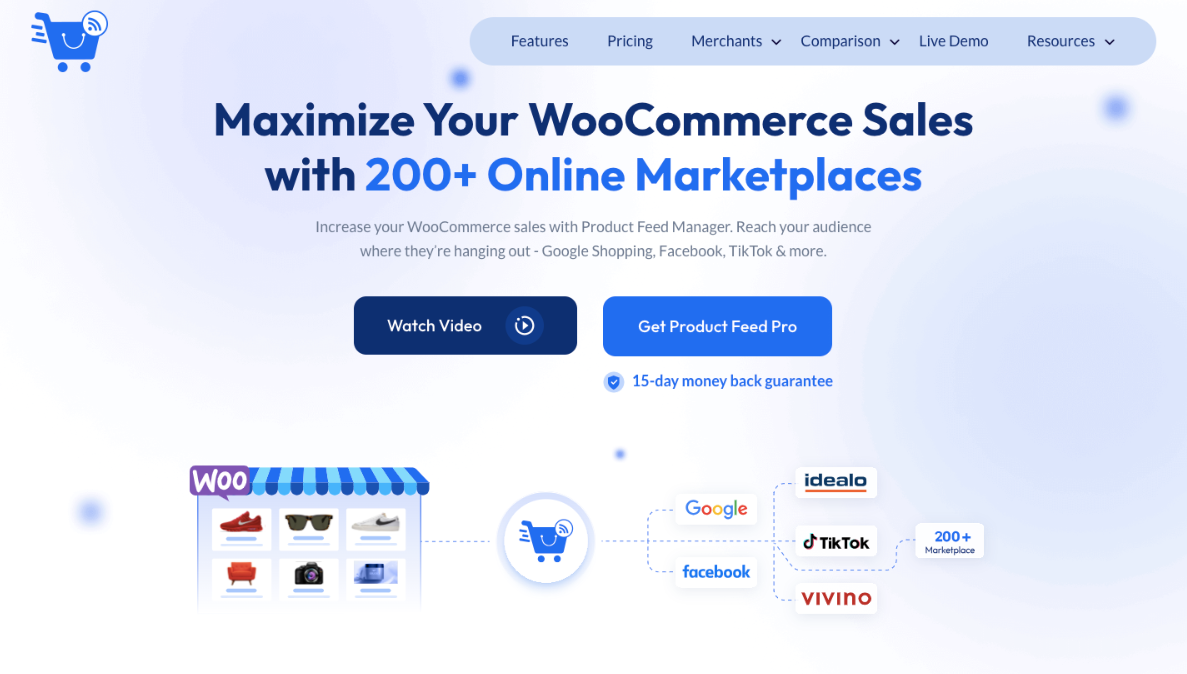
Expanding into new markets means managing product listings across multiple platforms. Keeping everything updated manually is time-consuming and prone to errors.
That’s where the Product Feed Manager for WooCommerce comes in. Let’s see how it helps:
- Access to Multiple Marketplaces: Reach 200+ marketplaces easily and expand your platform’s visibility. This helps attract more buyers and sellers to your marketplace.
- Simplified Product Listings: Automatically organize and upload products across channels. A clean and consistent layout makes your marketplace user-friendly.
- Consistent Pricing & Inventory: Keep stock and prices accurate on all platforms. This builds trust with both sellers and buyers.
- Time-Saving Automation: Automate product feeds, updates, and inventory management. You can focus on growing your marketplace instead of repetitive tasks.
- Enhanced User Experience: A smooth and reliable system keeps your marketplace organized and secure. This encourages users to return and stay active.
Conclusion
Scaling a marketplace needs a clear plan. Choosing the right revenue model and keeping operations smooth makes growth easier.
Without a strategy, things can get messy and slow down progress. A structured approach keeps buyers and sellers happy.
Automating product feeds solves many common problems. PFM helps you keep listings accurate, expand to multiple marketplaces, and improve visibility.
With access to 200+ online marketplaces, you can reach more users, boost sales, and make your marketplace the go-to place buyers and sellers trust.
** FAQs **
How do I find the right solution for my marketplace?
Start by identifying the main problem your marketplace solves for buyers and sellers. A clear solution ensures your platform delivers real value and aligns with your online marketplace strategy.
Should I launch as a B2C marketplace or another model?
It depends on your audience and goals. A B2C marketplace works well if you want to sell directly to consumers, while other models can suit niche or business-to-business markets.
Can my marketplace support multiple categories?
Yes, but plan carefully. Multicategory marketplaces can reach more buyers, but managing diverse products requires strong organization and clear operational processes.
How do I test if my marketplace idea will succeed?
Start small with a Minimum Viable Product (MVP) and gather feedback. Understanding consumer perceptions early helps refine your idea and makes better key decisions when learning how to set up marketplace features.
How can I make my marketplace a trusted brand?
Focus on quality, consistency, and communication with buyers and sellers. Strong brand building, inspired by successful brands in your consumer industry, creates trust and long-term loyalty.


![Show Your WooCommerce Products on ChatGPT & OpenAI Ads with Product Feed [2026] 3](https://rextheme.com/wp-content/uploads/2026/08/Show-Your-WooCommerce-Products-on-ChatGPT-with-OpenAI-Product-Feed-1-407x213.webp)