
I remember the first time I used VR in a construction site, it felt like walking through a building that didn’t exist yet. It instantly showed me errors before construction even began.
VR in construction is growing fast. About 60% of companies use it for safety training, and nearly 50% plan to increase investment in the next two years.
VR solved problems I’d faced for years – design clashes, miscommunication, and safety risks. It’s like a virtual rehearsal before the real work.
Some teams still hesitate, thinking VR is expensive or complicated. I thought the same until I saw how easily it fits into real projects.
Here, I’ll share five ways to use VR in construction to save time, improve safety, and make your projects run smoothly.
So let’s get started,
TL:DR – Ways to Use VR in Construction
- VR turns 3D models into interactive experiences, letting your teams walk through projects and spot issues early.
- It improves planning, collaboration, safety, client engagement, and reduces mistakes, saving your time and cost.
- Top 5 Uses of VR:
- Meaningful Model Visualization: Step inside designs to check details and refine layouts.
- Sensible Floor Plan Demonstration: Explore your room flow and furniture placement in 3D.
- Interactive Proposals: Add tooltips, images, and mini-videos to engage your clients and showcase options.
- Better Collaboration: Architects, engineers, and clients can review your projects together, reducing misunderstandings.
- Easier Safety Training: Simulate hazards in VR for hands-on experience without real-world risk.
- Project Stage Benefits:
- Design & Planning: Spot errors and refine ideas early.
- Collaboration & Communication: Keep all stakeholders aligned.
- Safety & Training: Prepare workers safely for on-site conditions.
- Cost & Time Savings: Reduce rework and delays.
- Marketing & Client Engagement: Impress clients with immersive walkthroughs.
- Impact Statistic: According to VR Tech, 30% of construction teams reported faster project approvals using VR demos.
- Final Verdict: Use WPVR for professional VR tours on WordPress, It’s interactive, detailed, and easy to share with clients and teams.

What is VR in Construction and How it Works
Virtual reality (VR) creates a computer-generated environment that feels real. You can look around, move objects, and experience spaces as if they already exist.
For example, you can walk through a construction site virtually to spot design issues or clashes before building begins. VR in construction helps you make better decisions early and avoid costly changes.
It’s not just for design; VR also supports planning, training, and safety, letting teams practice scenarios and improve workflows without real-world risks.
Why is it a good idea to use VR in the construction industry?
VR construction brings your projects to life before they even start. Here’s how it makes a difference:
- Stay Ahead of Competitors: Using mainstream virtual reality shows clients you’re innovative. Your projects stand out when you are pitching new designs.amwork, and safety measures. It’s a practical, forward-thinking approach that can elevate the quality and efficiency of your construction work.
- Catch Design Issues Early: You can walk through your virtual reality model of your project before construction. This helps you spot potential issues and save time and money.
- Enhance Client Engagement: Let your clients explore the space in VR. They get visual references and a deeper understanding of the proposed project. It helps them to make confident decisions.
- Improve Team Collaboration: Bring your project teams and clients together in a virtual room. Everyone can agree on designs and refine project workflows without confusion.
- Boost Safety Training: Act out real risks for your team in VR. It enhances project training and keeps everyone safer on the modern job site.
- Simplify Planning and Design: Test design models and layouts virtually before building. You’ll avoid costly mistakes and optimize material quantities.
- Test Materials and Finishes: See how different colors, furniture, or materials look in your project. You can make choices that reduce labor costs and rework.
- Reduce Rework Costs: Catch errors before they happen on-site. This improves project efficiency and leads to significant cost savings.
Ways to Use VR in Construction for Efficient Execution
When it comes to efficiently executing construction projects, VR opens up some powerful new techniques. Here they are:
1. Meaningful Model Visualization
VR helps you visualize construction projects before a single brick is laid. It lets you walk through the design virtually and experience the layout and space like it’s already built.
For example, during a virtual walkthrough, you might realize a living room feels too narrow or a window placement affects lighting – things you can fix early.
This immersive preview also makes client presentations more engaging. It also ensures everyone shares the same vision and reduces costly mid-project changes.
2. Sensible Floor Plan Demonstration
VR turns a simple floor plan into a fully immersive experience. Instead of just seeing a flat diagram, you can walk through the layout of a concept house.
For example, you can explore how each room connects to the next, feel the flow of the space, and even check out views from different windows. It makes the layout much easier to understand.
This realistic walkthrough helps you make smarter decisions about room sizes, furniture placement, and overall design, ensuring the final build matches your vision.
3. Creating Interactive Proposals
VR takes construction proposals to the next level by making them interactive. You can add tooltips, clickable images, and mini-videos to your virtual tour.
For example, these elements can show design options, highlight specific features, or provide detailed information about materials and layouts. Clients can explore the project at their own pace.
This approach keeps clients engaged and gives them a clear understanding of the project’s scope. It’s a practical way to present plans and ensure everyone knows what to expect in the final build.
4. Better Collaboration Among Architects, Engineers, and Clients
VR improves collaboration by letting architects, engineers, and clients explore a project together in a shared virtual space. Everyone can see the design clearly and discuss ideas in real time.
For example, it’s like being on the actual construction site, you can review structural details, aesthetic choices, and layouts together, making decisions faster and more accurately.
This shared perspective reduces misunderstandings and keeps the team aligned throughout the project. You can even work with software engineering company to customize your virtual tour, enhancing the experience for clients and stakeholders.
5. Easier Safety Training Programs With Advanced VR for Construction
VR makes construction safety training safer and more effective by letting workers experience realistic job site environments. Trainees can practice responding to hazards without any real-world risk.
For example, they can learn how to handle emergencies, from minor incidents to major accidents, in a controlled virtual space.
This hands-on approach builds confidence and skills, making workers better prepared for real construction sites while complementing electrical engineering degree programs..
How VR in Construction Improves Every Stage of a Project

Now, I’ll show you step by step how VR in construction improves every stage of a project. You’ll see how you can make planning, training, and client engagement faster and more efficient.
Stage 1: Design and Planning
- Improved Visualization: Walk through your project before building with virtual reality in construction. This helps you spot design flaws and understand layouts clearly.
- Faster Collaboration: Stakeholders can meet in shared virtual spaces. Feedback is faster, and decisions are made more efficiently. It helps you keep the project on track.
- Clash Detection: Conflicts between building components can be identified early. This prevents costly rework during actual construction and saves you time.
Stage 2: Collaboration and Communication
- Shared Virtual Spaces: Teams and clients can come together in one immersive VR environment. Everyone sees the same designs in real-time, making it easier for you to manage approvals.
- Real-Time Feedback: Instant feedback can be provided on your designs. This keeps the project moving smoothly while letting you address concerns quickly.
- Team Alignment: Ensure all team members are on the same page. Misunderstandings and delays are minimized, giving you confidence in project execution.
Stage 3: Safety and Training
- Immersive Safety Training: Workers can practice high-risk tasks safely in a virtual environment. This prepares them for real-world hazards and allows you to improve safety standards.
- Hazard Identification: Potential risks can be spotted before they occur using VR simulations. You can reduce accidents on-site and protect your team.
- Emergency Simulation: Emergency procedures can be practiced virtually. Teams gain confidence and respond faster. It helps you maintain a safer work environment.
Stage 4: Cost and Time Savings
- Reduced Errors: Mistakes can be detected early using vr construction tools. This saves time and lowers costly rework, letting you stay on schedule.
- Optimized Workflows: Sequences of construction phases and equipment movement can be tested virtually. This helps you improve project efficiency.
- Lower Labor Costs: Better planning reduces unnecessary labor. You can control expenses while keeping the project on track.
Stage 5: Marketing and Client Engagement
- Virtual Tours: Show clients an immersive preview of their project with virtual tours for building construction using WPVR. They experience the space before a single brick is laid, giving you better engagement.
- Interactive Presentations: Layouts and finishes can be showcased dynamically. Clients can interact with your designs. It helps you get faster approvals.
- Design Customization: Clients can test different options virtually. This increases confidence and satisfaction, making it easier for you to finalize the project.
Reliable VR Tools For Amateur Construction Modeling
When you’re stepping into the world of virtual reality for construction modeling, having the right tools can make all the difference.
Here are five VR tools that are perfect for creating virtual tours and integrating them into your website:
1. WPVR
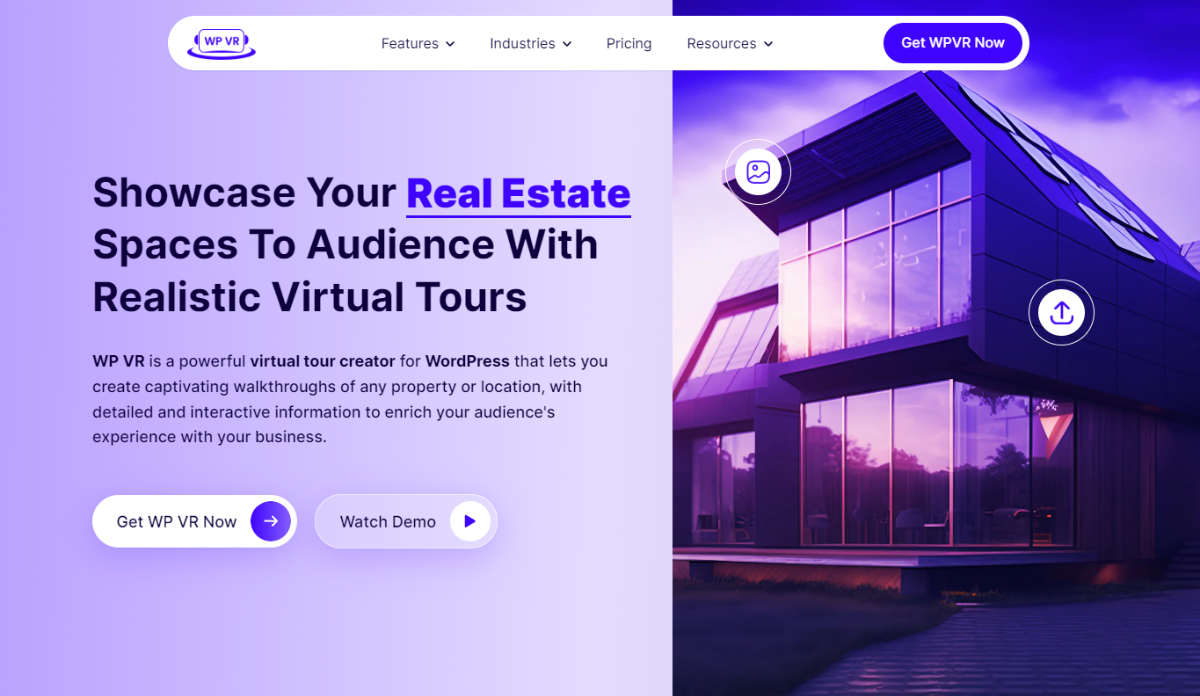
WPVR is one of my favorite tools for making virtual tours on WordPress. It’s super easy to use, you just need to upload your 360° images, and it turns them into a cool, interactive tour in minutes.
For example, I tried it with a friend’s café project, and we were able to create a full virtual walk-through where people could “step inside” and look around just like in real life. It looked really smooth.
You also love that it includes interactive floor maps and hotspots to make your tour more engaging. The basic plan starts at $79.99 a year, which is pretty fair for what it offers.
2. SketchUp VR

SketchUp is a great tool for 3D design because it’s easy to use and really fun to explore. With its VR feature, you can step inside your designs and see them like they’re real.
For example, when you design a small studio, walking through it in VR helps you notice tight spots or areas that need more light. It’s a really hands-on way to bring your ideas to life.
You’ll also find that SketchUp makes detailed modeling simple. Whether it’s a single room or a big building, you can see every detail clearly before making any changes.
3. Enscape

Enscape is one of the best tools for turning designs into life like virtual experiences. With just a click, you can step inside your own project and explore it as if you’re really there.
For example, when you design a new room or building, Enscape lets you walk through it in VR and see how the lighting, layout, and materials feel in real time. It’s like getting a sneak peek of your finished work.
You’ll love how simple and fast it is to use. Enscape helps you bring your ideas to life instantly, making your designs more realistic and exciting to explore.
4. Unity Reflect

Unity Reflect is a effective tool that turns your design data into real-time 3D experiences. It makes it easy to visualize your projects in full detail and interact with them in a realistic way.
For example, when you’re working on a building design, Unity Reflect allows you to walk through the space virtually and see how every element fits together.
It’s also great for collaboration. You and your team can review the project together in real time, make adjustments on the spot, and ensure everyone is on the same page.
5. Unreal Engine

Unreal Engine is not just for games, it’s an incredible tool for VR architectural visualization. It lets you create stunning, realistic spaces with high-quality graphics and interactive elements.
For example, when you design a building, Unreal Engine allows you to walk through it in VR and see how light, textures, and layouts really feel. It makes your designs come alive in a way that’s hard to achieve on a flat screen.
You’ll also find it great for experimenting and presenting ideas. Its tools let you adjust designs on the fly and create immersive experiences that impress clients and collaborators alike.
Each of these tools offers unique features and capabilities, allowing you to choose the one that best fits your project’s needs and budget.
Conclusion
Virtual reality (VR) is changing the way you approach construction projects. You can walk through your designs before building, spot issues early, and save both time and money.
With VR, collaborating with project teams and project stakeholders becomes easier. Everyone can see the same virtual designs and agree on decisions. It reduces misunderstandings on the job site.
It also improves safety and training. By simulating real hazards, you can prepare your team for challenging situations without risking anyone’s well-being.
If you want to use VR on your projects, WPVR makes it easy to create virtual tours and walkthroughs. It helps you work smarter and faster.
** FAQs **
How can VR help my team understand complex designs?
With virtual reality technology, you can let your team members explore virtual designs and get clear visual references. It spotted potential project intricacies early.
Can VR prevent mistakes in the building design phase?
By using BIM models and VR in the building design phase, you can catch design issues before construction starts. It saves you time and reduces costly rework.
How can I keep all project stakeholders on the same page?
VR allows project stakeholders to view the same virtual designs in one immersive space. It helps you make faster decisions and avoid misunderstandings.
Can VR help reduce my labor costs and track progress?
Yes, you can use VR to visualize project workflows and track work progress, which helps you lower labor costs and improve overall project efficiency.
Do I need special equipment to use VR?
Some projects require special headsets, but you can also use cloud computing and immersive technologies to access VR easily for construction and pitching projects.to identify spacing, sizing, accessibility or layout issues early, when changes are cheaper.



With VR, construction professionals can visualize projects in a more immersive and interactive way, leading to better planning, design, and collaboration. The use of VR in construction technology is a game-changer, enabling teams to identify and resolve issues before construction even begins. Overall, the adoption of VR in construction can lead to cost savings, increased efficiency, and higher quality outcomes.
Hi there, Thanks for your input in using VR in Construction technology.
We appreciate your interest in this subject.
Cheers.