![7 Best Channable Alternatives For WooCommerce [2026]](https://rextheme.com/wp-content/uploads/2026/06/Best-Channable-Alternatives-1-1.png)
Running a WooCommerce store means constantly looking for ways to distribute your products in front of as many potential buyers as possible.
And one way to do it is listing your products on multiple online marketplaces. Why not? That’s where shoppers are already looking for similar products you sell. It gives you easy access to buyers who, otherwise, you probably couldn’t reach.
Now, to list products on marketplaces like Google Shopping, Meta, eBay, OpenAI Commerce, etc., it’s crucial that you manage your product feeds well.
And Channable is considered one of the best to do so. But if you are here, you are probably trying to find out if there are other options that are either more affordable or more convenient for you in terms of ease of use and flexibility.
Frankly speaking, Channable was a solid tool when it came out. And it still is. But over the years, people seem to have found it more and more complicated and expensive. The more channels and products you distribute, it all gets very congested and difficult to keep track of. Plus, the bills keep rising as you add more products and variations.
Well, today, we decided to deep dive into some of the best Channable alternatives that you might want to consider instead of Channable, especially if you are running your online store on WooCommerce.
And it’s all based on deep research, public opinions, and trying them out myself to some extent.
Hopefully, after reading this, you will be able to make an informed decision.
TL;DR – Which Channable Alternatives Are Best For You
- Channel follows an item-based monthly bill; the more items you add, the more you pay.
- Product variations are a hidden cost driver for Channable; each variant is considered 1 item.
- If you want a low-cost, self-hosted option to list WooCommerce products on multiple marketplaces, RexFeed Product Feed Manager and CTX Feed are a prime options for you.
- In case most of your sales come from marketplaces like Amazon or Walmart and you need orders and stock to sync in real time, ChannelEngine and Lengow are great SaaS option.
- When managing several stores on different platforms, as agencies often do, DataFeedWatch offers a great option.
- For managed product feed solution, you may consider working with Feedonomics who offer enterprise solutions.
- If Google is the only place you advertise, the free Google for WooCommerce extension may be all you need.
Find Your Best Channable Alternative in 30 Seconds
Not every store needs the same tool. Use this table to quickly match the best Channable alternative to your goal.
| Name | URL | Best Alternative For |
| Product Feed Manager | https://rextheme.com/best-woocommerce-product-feed/ | WooCommerce stores that want a self-hosted product feed manager to list products on 200+ channels and any country, with validation and auto-sync for accuracy, and yearly plan for affordability. |
| Feedonomics | https://feedonomics.com/ | Large businesses that want a specialist team to build and fix their feeds instead of doing it in Channable themselves |
| DataFeedWatch | https://www.datafeedwatch.com/ | Agencies and merchants running several stores on different platforms who want one account and advanced editing rules |
| GoDataFeed | https://www.godatafeed.com/ | US stores that want the cheapest monthly cloud tool with a support team they can reach |
| ChannelEngine | https://www.channelengine.com/ | Marketplace-heavy sellers who need orders, stock and shipping updates to sync automatically between WooCommerce and marketplaces |
| Lengow | https://www.lengow.com/ | Stores selling across several European countries that want feeds, marketplace orders and competitor price tracking in one tool |
| Google for WooCommerce | https://woocommerce.com/products/google-listings-and-ads/ | Stores that only advertise on Google and want a free, official setup |
Why Would You Consider A Different Option Than Channable?
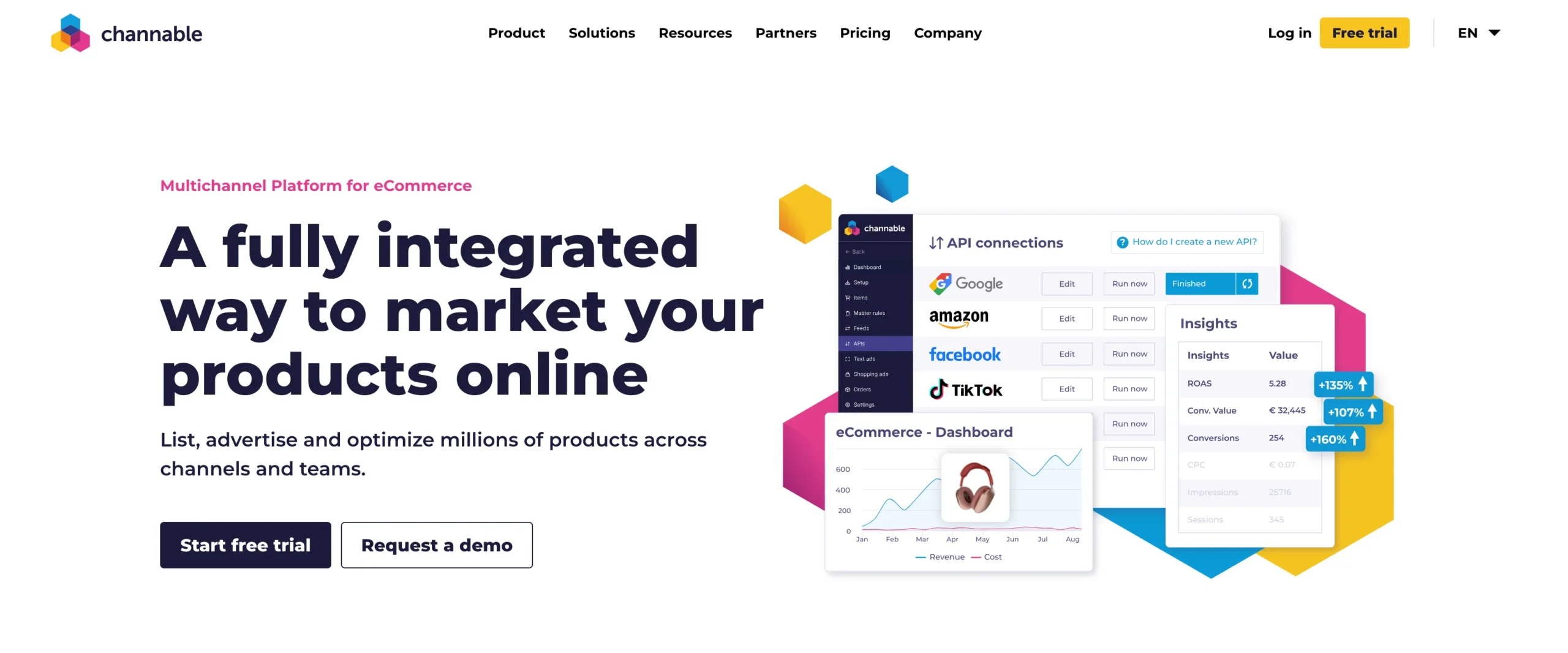
Before comparing alternatives, it helps to know exactly what Channable offers and where you might want to move away from it.
For WooCommerce stores, the major reasons to not use Channable are usually complex UI, and high bills as you scale.
Channable was founded in 2014 in Utrecht, the Netherlands, and now serves over 12,000 brands and 1,300 agencies across 3,000+ online channels. Over the years it has broadened its marketplace API connections, deepened its PPC and ad automation, and layered in newer AI-powered features and analytics.
It’s a cloud platform that combines three jobs
- A powerful IF/THEN rule engine to enrich and transform product data
- Automated Google and Microsoft ad campaign generation from live feed data
- Direct marketplace API connections with two-way order sync
How Channable’s Pricing Grows With Your Store
Channable’s lists in it’s pricing, a starting bill of just $49/month, which feels quite affordable.
But if you look closely, the plan includes only 500 items, 1 project, and 3 channels.
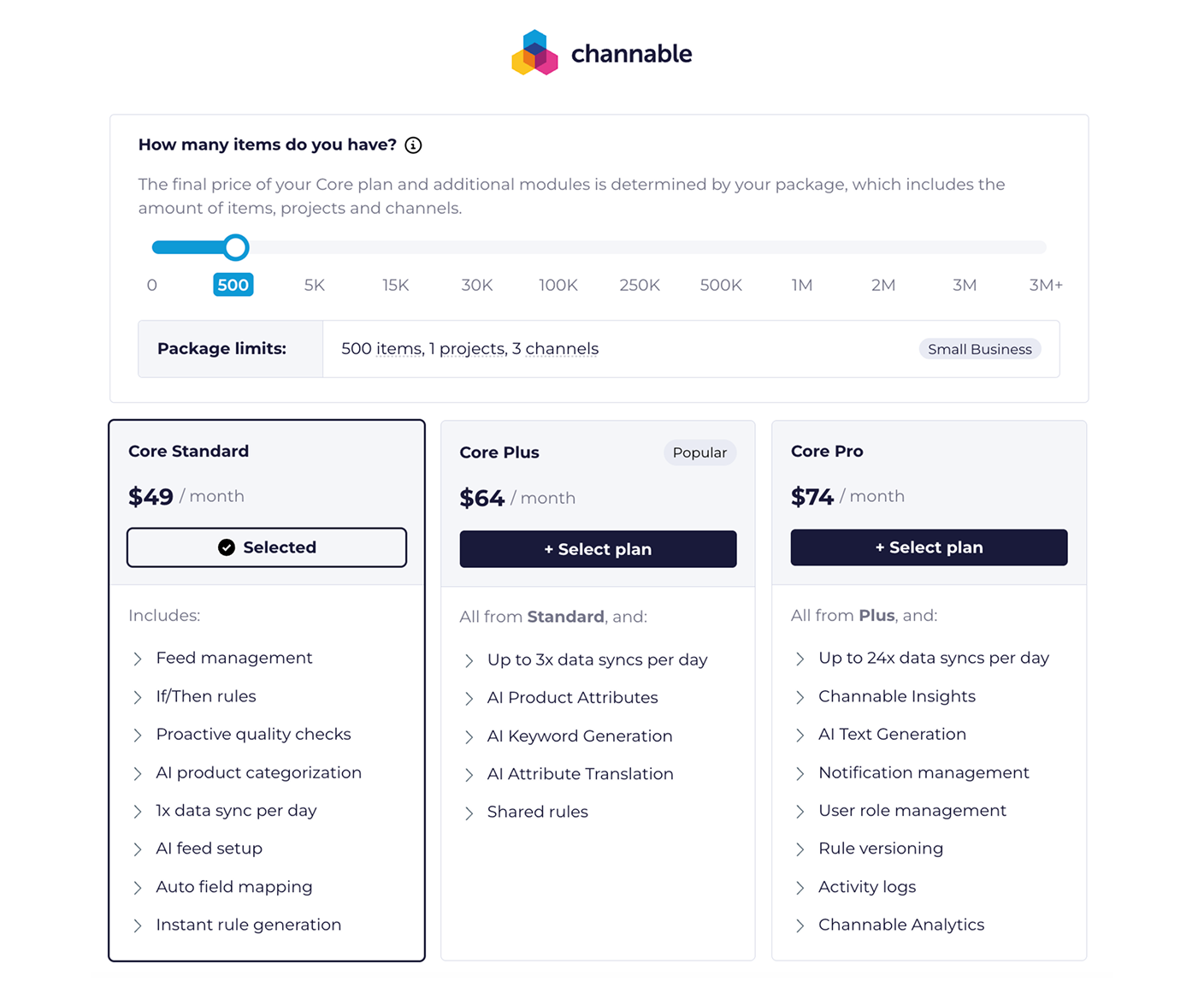
If you have more than 500 product items, you immediately have to move to the next plan.
What’s more is each variant of a product is considered a single item.
For example, if you sell a t-shirt with 3 colors, then Channable will count it as 3 items. Now if you consider 3 sizes for each color, that’s 9 items!
On top of that, if you use any additional modules like PPC or more marketplaces, you will have to pay extra. Plus, every country counts as a separate channel. Listing products on Google Shopping in the US, UK and Germany is three channels, not one.
So all together, without realizing, you might be looking at 3-4 times higher bill.
How Channable Fits A WooCommerce Workflow
Channable connects to WooCommerce by importing your catalog into its own platform. From there you build rules, map categories and manage feeds in a separate dashboard, and your data syncs on a schedule.
Howwever, from Capterra, we found reviewers stating that initial feed setup feels easy, but as you add more rules and go for more marketplace connections, it takes a lot of time and feels quite complex.
From a WooCommerce store owners’s perspective, since you manage everyting within WordPress, this will be a tool outside that dashboard for you to learn newly and manage.
When Channable Is Still The right Choice
Well, despite the drawbacks mentioned above, Channable is still a solid tool. If you want feeds, marketplace orders and automated Google and Microsoft ad campaigns in one place, and you have the budget and the team to run it, Channable is actually great.
So the real question is which parts of Channable you need, and whether another tool does those parts better for your store within a smaller budget.
The tools listed here have the ability to serve as different prive Channable Alternatives depending on your situation.
Top 7 Channable Competitors & Alternatives To Look At For WooCommerce Stores
Now, let’s look closely at each of the best Channable alternatives and why you might want to choose each one instead.
1. RexFeed Product Feed Manager For WooCommerce
The first one on the list is built closest to WooCommerce itself.
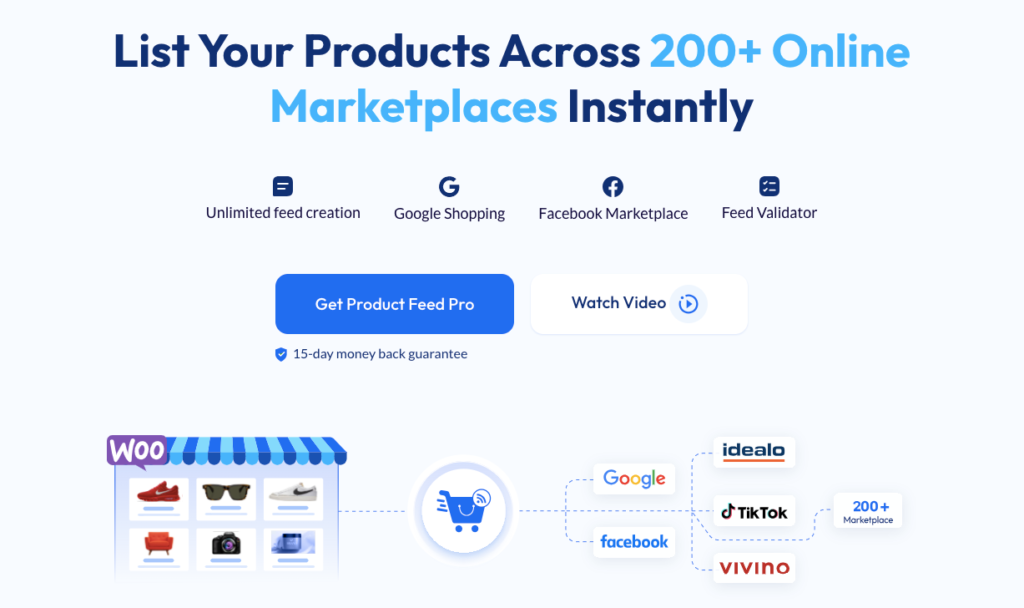
RexFeed Product Feed Manager is a WordPress plugin by RexTheme that helps to create product feeds for 200+ channels, including Google Shopping, Facebook and Instagram, TikTok, Pinterest, Amazon, eBay, OpenAI Commere, etc., for any country you sell in.
You can create and manage every feed inside your WordPress dashboard, using the product data, categories and variations already in WooCommerce, so there’s nothing to import and no second platform to learn.
PFM makes feed management simple with three-click feed generation and built-in validation. It also helps catch feed errors before you submit them.
A Little About RexFeed Product Feed Manager
RexFeed is developed by RexTheme, who have been around for over a decade, offering WooCommerce solutions. The plugin is built specifically for WooCommerce, with a focus on generating accurate feeds that get approved faster and rejected less often.
With 17,000+ users and a 4.8/5 rating, PFM is a strong choice for WooCommerce stores. It gives you wide channel reach without the monthly SaaS cost of Channable.
Key Features of RexFeed Product Feed Manager
- Templates for 200+ channels, including Google, Facebook, TikTok, Pinterest, Amazon, eBay, Walmart and OpenAI Commerce
- Specialized Google formats: Dynamic Remarketing (DRM), Local Products Inventory, Manufacturer Center
- Direct auto-sync with Google Merchant Center on a schedule (via GMC API)
- Built-in feed validator that catches errors before you submit
- Granular filters by category, tag, price, or custom fields
- Full control over variations: include all, only the default, or the lowest or highest priced
- Feed rules, combined attributes and price adjustments without changing your store data (Pro)
- Custom fields for unique identifiers (GTIN, MPN, UPC, EAN, and more)
- 5 file formats: XML, CSV, TEXT, TSV, RSS
- Batch processing for large catalogs to avoid server overload
- Works with WPML, Polylang, TranslatePress, currency switchers, ACF, Yoast and Rank Math
Best Use Cases of RexFeed
- Listing across many marketplaces from one WooCommerce store
- Generating error-free Google Shopping and Facebook feeds
- Running multi-destination Google campaigns (DRM, Local, Manufacturer Center)
- Keeping large catalogs synced on scheduled invervals.
- Optimizing product titles and categories in feed without changing store data.
Pros of using PFM
- 200+ marketplaces with pre-built templates
- Clean, structured UI with 3-click feed generation
- Accurate category and attribute mapping
- Batch processing keeps large catalogs stable
- Built-in feed validation reduces rejections
- Reliable support, documentation, and video tutorials
Cons of using PFM
- Works only with WooCommerce stores (though advantageos if that’s what you are looking for)
- Free version is capped at 200 products per feed
- No automated ad campaign building like Channable’s PPC module
- Feeds are generated on your own server, so speed of generation for very large catalogs depend on your hosting
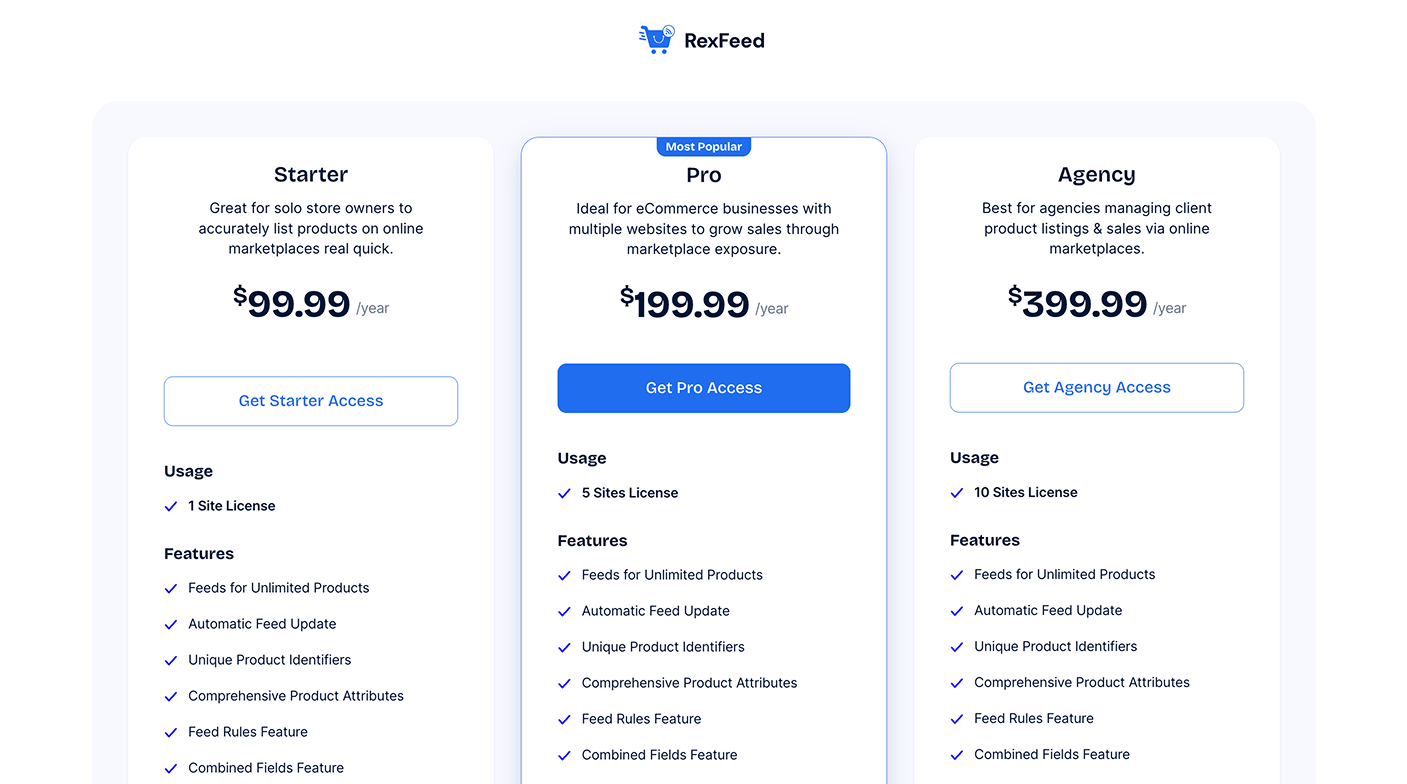
RexFeed Pricing
Free Plan:
- Free on WordPress repo – Core feed generation for up to 200 products (View free plugin)
Pro Plans:
- Yearly plans Starting at ~$7 per month (Billed annually – $79.99) for unlimited products.
- Lifeimt plans tarted at $249 (one-time payment ) for unlimited products.
Quick Comparison: RexFeed vs Channable
Channable is a powerful platform, but it can be more than a WooCommerce store needs. Its monthly pricing can also increase as your products and channels grow.
PFM gives you 200+ channels directly inside WordPress without a monthly SaaS fee. You also get simple feed mapping, validation, and three-click feed generation.
If you need PPC ad automation, Channable is the better choice. But for simple and affordable WooCommerce feed management, PFM is a better fit.
| Tool | Product Feed Manager | Channable |
|---|---|---|
| Best at | Feed generation for WooCommerces stores with high accuracy | Feeds, marketplace orders and ad campaigns in one platform |
| Where you work | WordPress dashboard | Separate cloud dashboard |
| Channels and countries | 200+ channels, any country | 3,000+ channels, each country billed as a channel |
| Variations | Handled natively, not billed | Each variation billed as an item |
| Prijs | Free up to 200 products; Pro from $79.99/year | Core from $49/month plus item and channel package |
2. Feedonomics
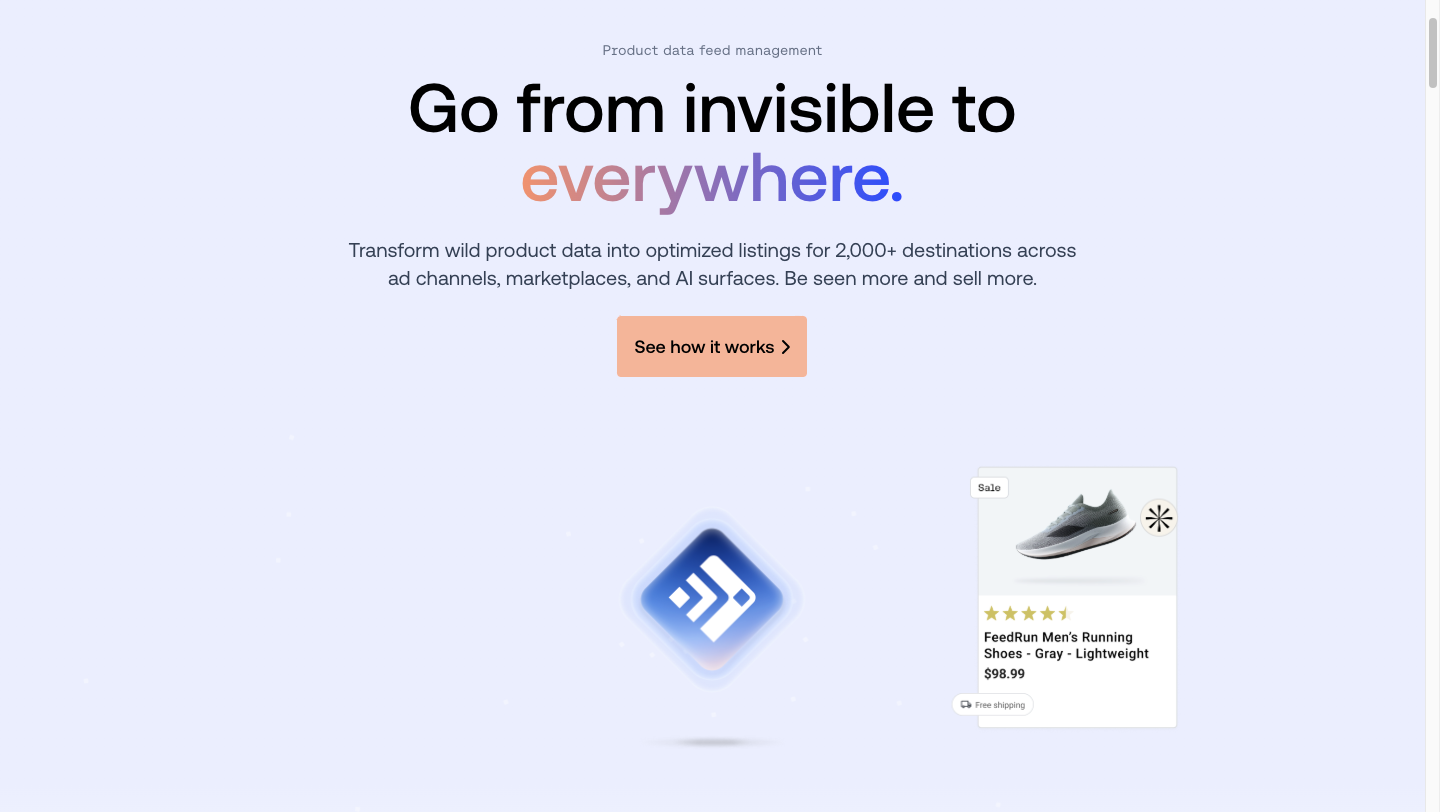
RexFeed suits stores that want to manage their own feeds. Some businesses would rather not touch feeds at all, and that’s where Feedonomics fits.
Feedonomics is a feed management platform owned by Commerce, the parent company of BigCommerce.
Instead of giving you a tool and leaving you to build rules, as Channable does, it assigns a team of specialists who set up, clean and maintain your feeds for you.
That’s the advantage for large stores with thousands of products, messy product data and frequent rejections from Google or marketplaces.
It’s also the drawback for everyone else: pricing is by quote only and aimed at enterprise budgets.
Key Features of Feedonomics
- Enterprise-grade data cleansing
- Automated protection against listing suspensions
- Massive scalability across hundreds of global channels
- Sophisticated algorithmic data normalization
- Dedicated Feed Manager (fully managed service)
- Omnichannel feed and marketplace coverage
Best Use Cases of Feedonomics
- Enterprise brands with huge, messy catalogs
- Companies wanting feeds fully managed rather than self-served
- Multi-channel sellers needing suspension protection
- Brands normalizing data across hundreds of channels
Pros of using Feedonomics
- Fully managed: a dedicated team does the work
- Enterprise-scale data cleansing and normalization
- Suspension protection across channels
- Handles catalogs other tools can’t
Cons of using Feedonomics
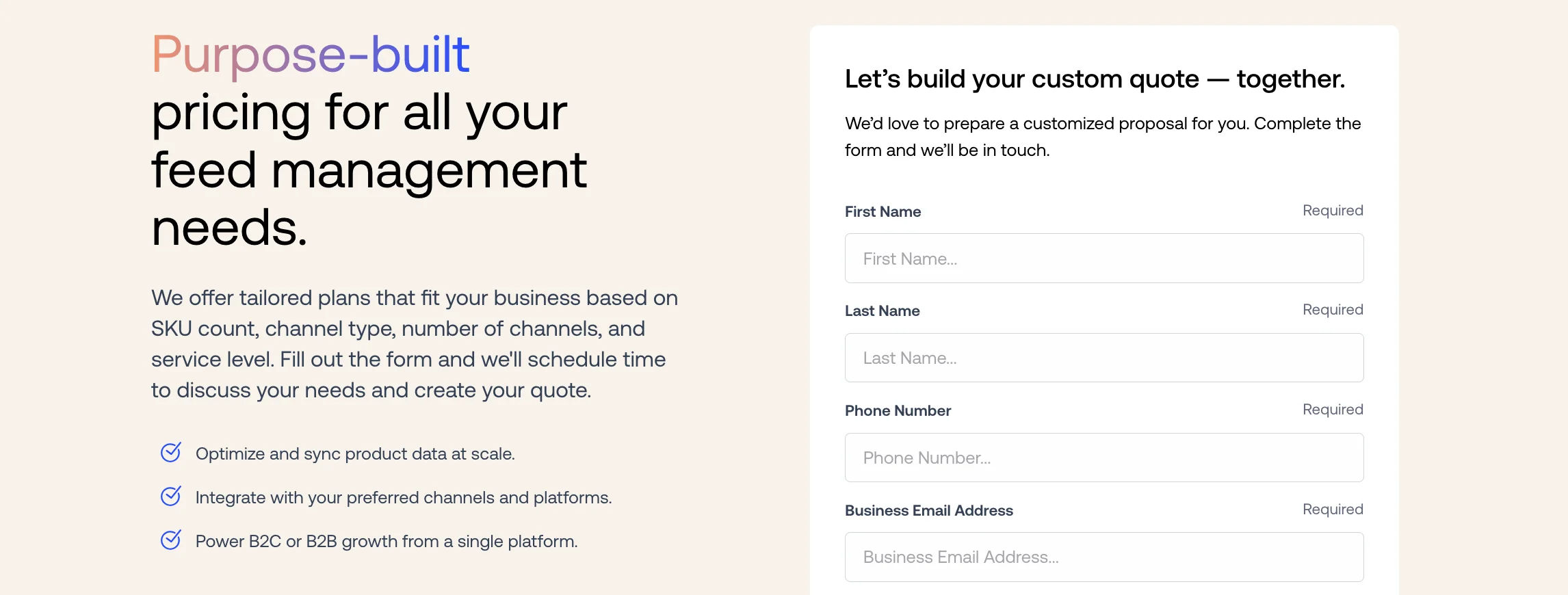
- Quote-based / custom pricing (no public pricing available, you fill out a form for a custom quote)
- Significant overkill (and cost) for small-to-mid stores
Feedonomics Pricing
Feedonomics operates in custom, quote-based pricing only. There’s no public pricing page: you complete a form (“Get my quote”), and their team builds a tailored plan based on SKU count, channels, and service level.
Quick Comparison: Feedonomics vs Channable
It depends on how you want to manage your feeds. Channable gives you direct control, while Feedonomics offers a more managed service.
Feedonomics is better for large businesses that want experts to manage complex product catalogs. Channable is better if you prefer to manage feeds yourself and need PPC automation.
So, neither is better for everyone. Feedonomics suits enterprises looking for a hands-off solution, while Channable suits businesses that want more direct control.
| Tool | Feedonomics | Channable |
|---|---|---|
| Best at | Getting your feeds managed by specialist, you only pay and deal with customers. | You keep full control and do it yourself |
| Model | Platform plus managed service | Self-service software |
| Suitable For | Enterprise-level online stores | Mid-to-large eCommerce brands |
| Ad campaign automation | Not the focus | Built in (PPC module) |
| Prijs | Custom quote | Core from $49/month plus package |
3. DataFeedWatch
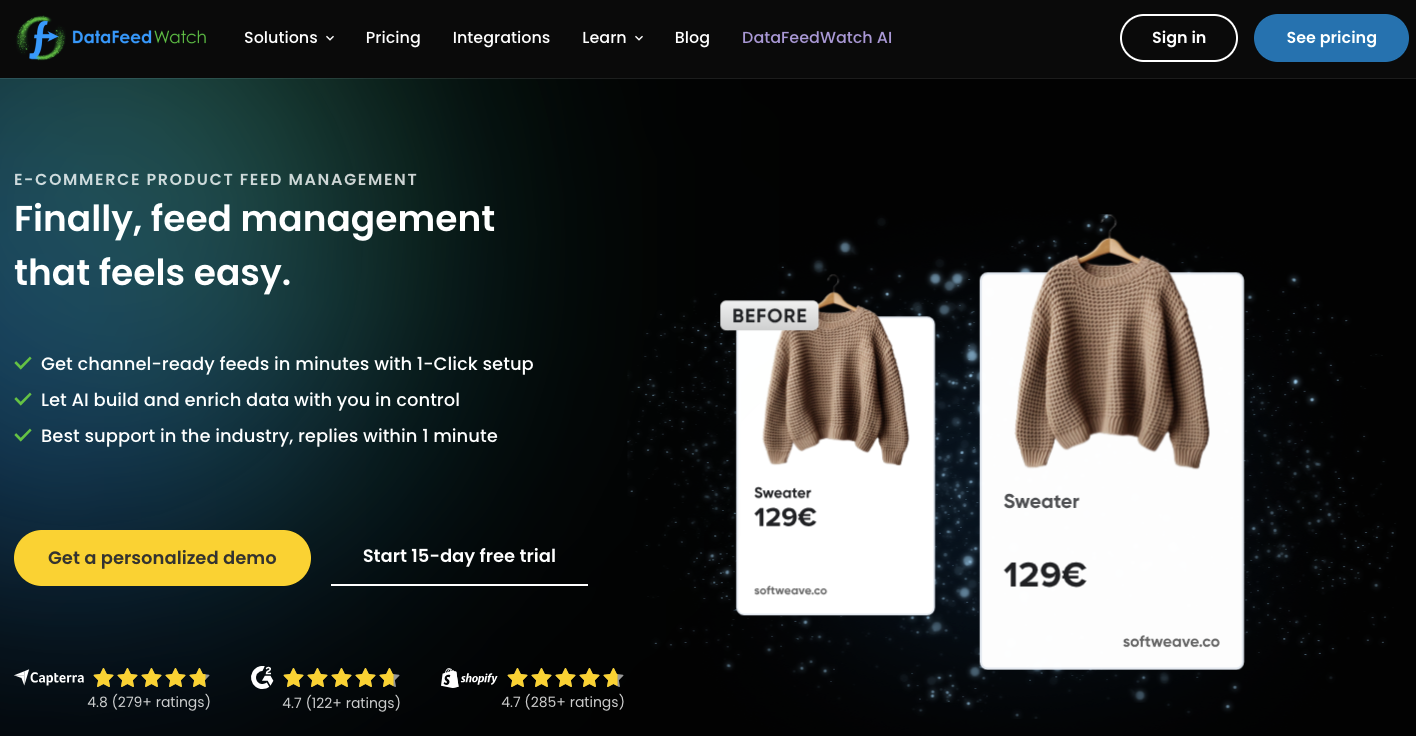
If you manage several stores, possibly on different platforms, DataFeedWatch is built for that situation.
DataFeedWatch is a cloud feed tool that connects to WooCommerce, Shopify, Magento and other platforms and sends feeds to 2,000+ channels.
It beats Channable in two ways.
Its editing rules go further, so you can automatically rewrite titles or fix product data across thousands of items, and you can test two versions of a product title to see which performs better.
Its pricing is also simpler to predict: each plan has a published price and a set number of products, feeds and stores, with no separate modules to add.
The company says 18,000+ brands use it. What you give up is Channable’s automated ad campaigns and marketplace order handling.
Key Features of DataFeedWatch
- Unlimited, complex rule-based data mapping (including RegEx)
- Title A/B testing to improve feed performance
- Platform-agnostic source connections (Shopify, WooCommerce, Magento, and more)
- Automated feed audits with optimization scores
- Product-level performance analytics
- Support grows with the plan (from email on Shop to 24/7 monitoring and a dedicated success agent on Agency)
- 24/7 support across multiple languages (for higher plans)
- Distribution to 2,000+ channels worldwide
Best Use Cases of DataFeedWatch
- Agencies managing feeds for many clients at once
- Multi-platform retailers selling beyond WordPress
- Stores needing deep, large-scale data cleaning
- Performance-focused teams tracking product-level results
Pros of using DataFeedWatch
- Massive channel coverage (2,000+ channels, 60 countries)
- Powerful, granular data manipulation with RegEx
- Automated audits and optimization scoring
- Strong multilingual support on higher plans
Cons of using DataFeedWatch
- Not WordPress-native (cloud dashboard)
- Subscription cost and a steeper learning curve than a simple plugin
DataFeedWatch Pricing
Free Plan:
- A 15-day free trial available.
Pro Plans:
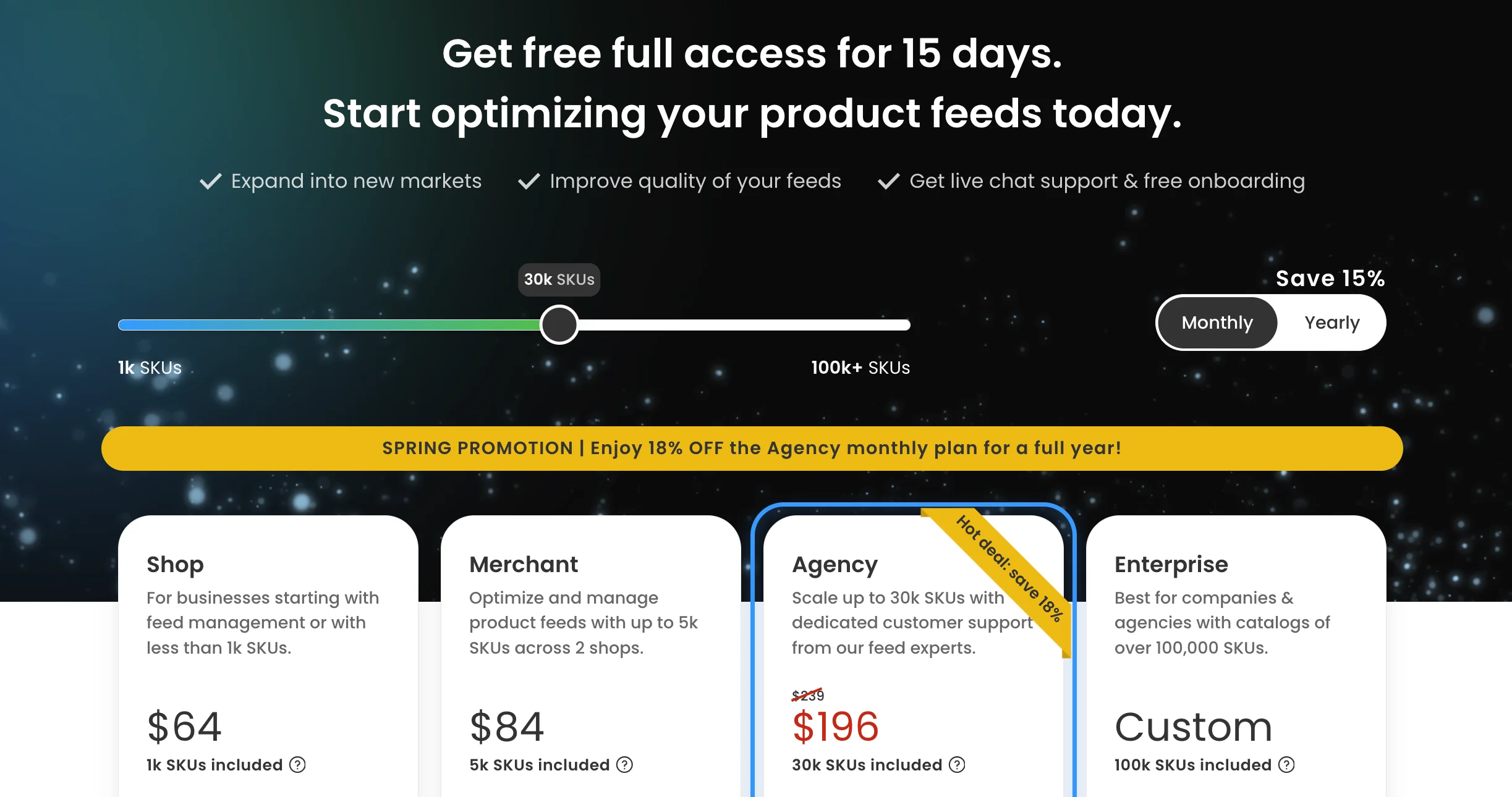
- Monthly plans startring at $64/month for 1000 products.
Quick Comparison: DataFeedWatch vs Channable
For pure feed data control, DataFeedWatch is hard to beat: its RegEx rules and title A/B testing give agencies a level of granular control that’s its main calling card. If your priority is deep feed optimization across many clients and platforms, it’s a strong fit.
Channable’s edge is the bundled PPC and marketplace automation layered on top of feeds. So the choice comes down to scope: pick DataFeedWatch if feed optimization and multi-store management are the job, and Channable if you want feeds, ads, and marketplaces tied together in one pipeline.
| Tool | DataFeedWatch | Channable |
|---|---|---|
| Best at | Several stores in one account, advanced editing rules, title testing | Feeds plus ad campaigns and marketplace orders |
| Store platforms | WooCommerce, Shopify, Magento and more | WooCommerce, Shopify, Magento and more |
| Channels | 2,000+ | 3,000+ |
| Pricing style | Fixed plans with set limits | Core plan plus package plus modules |
| Prijs | Starting at $64/month | Core from $49/month plus package |
4. GoDataFeed
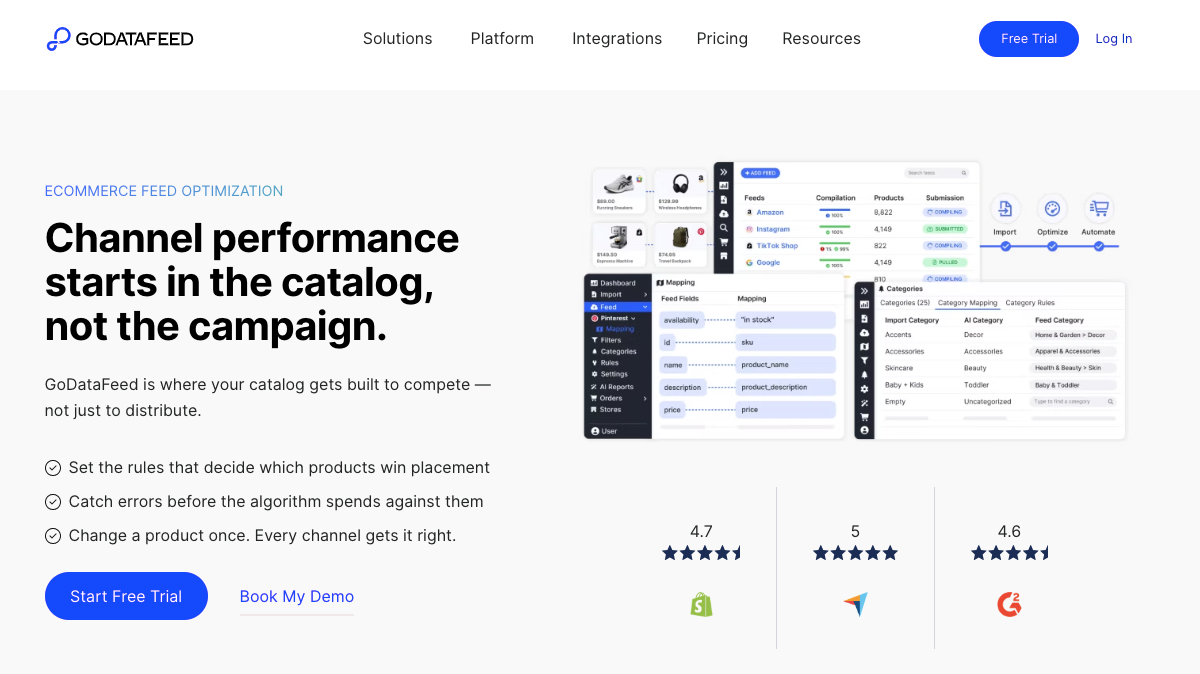
GoDataFeed is a highly trusted, US-based SaaS platform designed to free product data from the constraints of rigid e-commerce store structures.
For example, a retailer can pull product data from its e-commerce platform, transform attributes such as titles, prices, and categories,
and then create channel-specific feeds for Google Shopping, Amazon, Facebook, and other sales channels without changing the original store data.
About GoDataFeed
GoDataFeed pairs high-frequency, high-volume automation with top-tier US-based support. It works like a CMS for product data, sending optimized feeds to 200+ ecommerce channels without custom dev work.
Key Features of GoDataFeed
- Custom data exports to 200+ channels
- Comprehensive feed compliance audits
- Parent-variation grouping systems
- Two-way marketplace order sync back to your cart
- Platform-neutral integrations (Shopify, WooCommerce, Magento, and more)
- Standalone cloud architecture (no drain on your site)
Best Use Cases of GoDataFeed
- US-focused retailers needing affordable syndication
- Stores with complex variation structures (color/size to unique images)
- Sellers wanting feed compliance audits before submission
- Teams that prefer cloud processing over a site-based plugin
Pros of using GoDataFeed
- Budget-friendly entry point ($39/mo)
- Elegant handling of complex variations
- Compliance audits reduce rejections
- Excellent live, US-based phone support
Cons of using GoDataFeed
- Primarily US-focused (less suited to global expansion)
- Costs climb faster than some rivals as catalog and channels grow
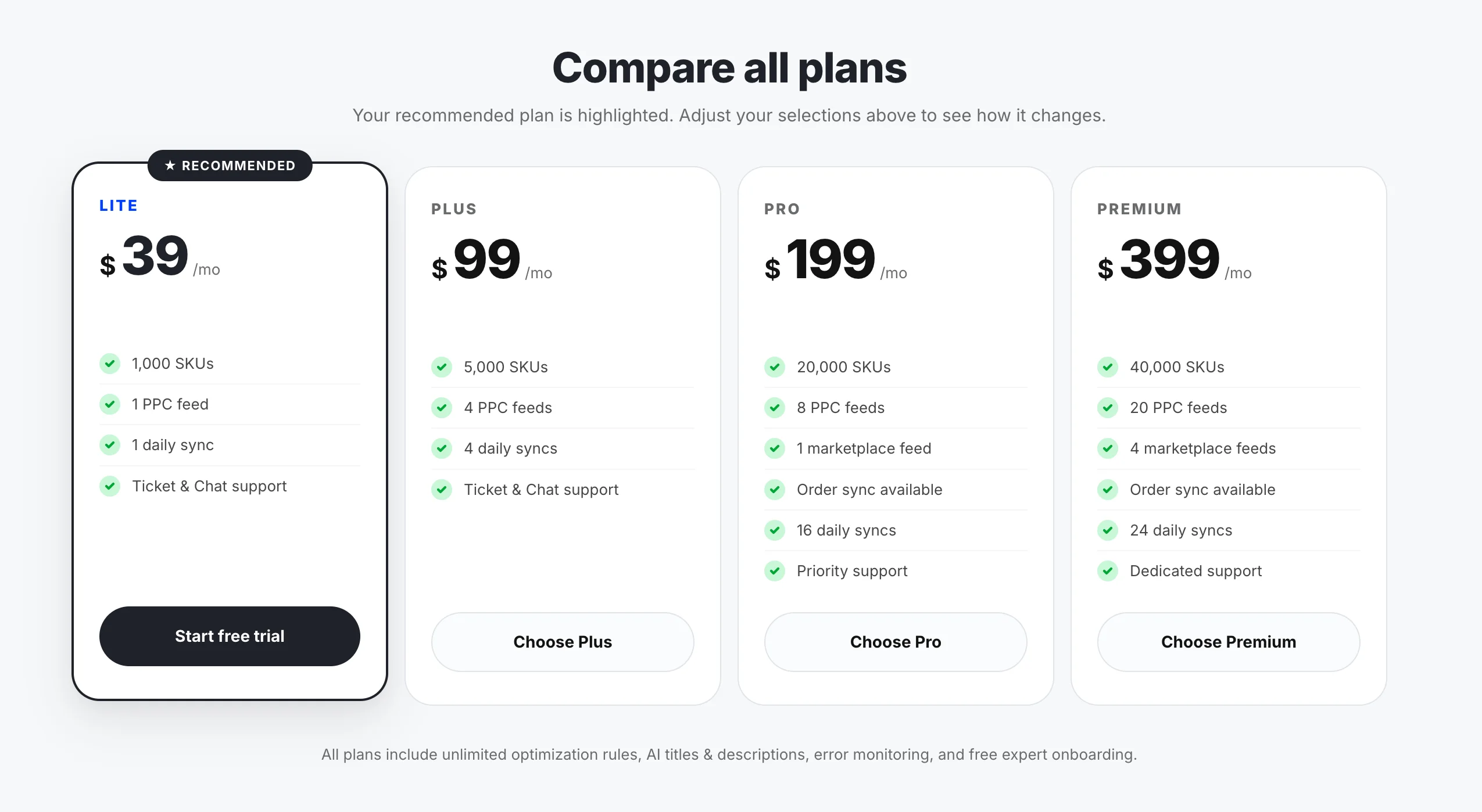
GoDataFeed Pricing
- Lite: $39/month
- Plus: $99/month
- Pro: $199/month
Dedicated Support and Fully Managed plans are also available with custom pricing.
Is GoDataFeed Better than Channable?
For US retailers who want a low-cost, no-nonsense feed tool with real human support on the phone, GoDataFeed is a great pick, and its entry price undercuts most rivals.
Channable, by contrast, reaches further internationally and adds PPC automation. If you’re scaling globally or want feeds and ads in one place, Channable has the broader toolkit. But if your focus is the US market and predictable, affordable feed management, GoDataFeed is the leaner choice.
5. ChannelEngine
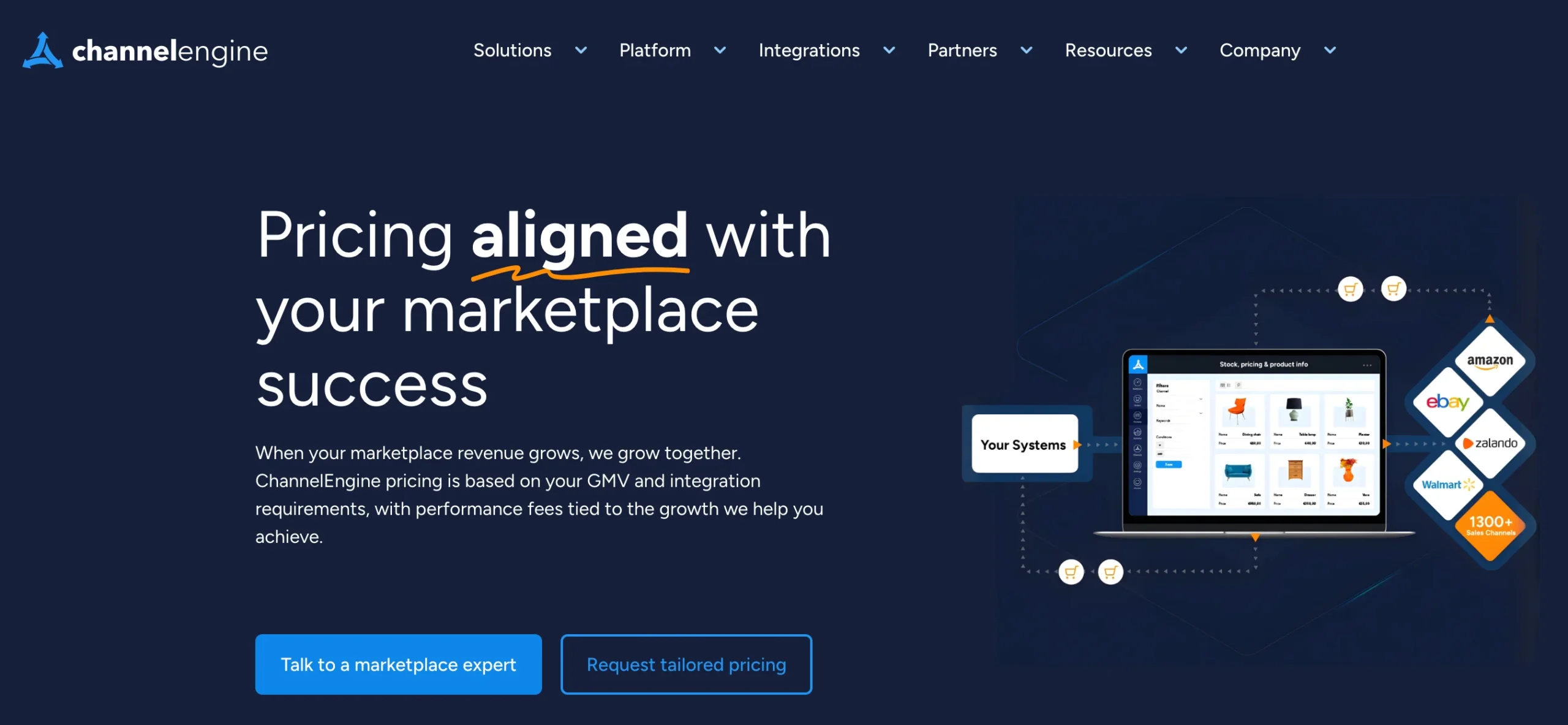
ChannelEngine, based in Europe and scaling worldwide, is an elite marketplace integrator and management platform.
It helps retailers connect their stores with multiple marketplaces and manage product listings, inventory, and orders from one place.
For example, a retailer selling across Amazon, eBay, and regional marketplaces can use ChannelEngine to synchronize stock and product information automatically.
This reduces manual updates and makes managing multiple sales channels much easier.
About ChannelEngine
While Channable balances feeds, ads, and marketplaces, ChannelEngine focuses intensely on selling directly on global marketplaces — Amazon, Walmart, Zalando, Lazada, and more — with deep operational control.
Key Features of ChannelEngine
- Access to a global network of marketplaces
- Real-time automated data and pricing flows via fast API connections
- Dynamic repricing across channels
- Centralized order routing
- Unified international selling dashboard
- Automatic currency conversion and marketplace tax handling
Best Use Cases of ChannelEngine
- Brands selling directly on global marketplaces
- International sellers needing currency and tax handling
- Operations teams centralizing order routing across channels
- Sellers managing live stock across a large marketplace ecosystem
Pros of using ChannelEngine
- Deep marketplace integration and reach
- Real-time API data and pricing flows
- Centralized order and inventory management
- Built for international, multi-currency selling
Cons of using ChannelEngine
- Not WordPress-native; enterprise-oriented pricing
- Marketplace-selling focus rather than ad-feed optimization
ChannelEngine Pricing
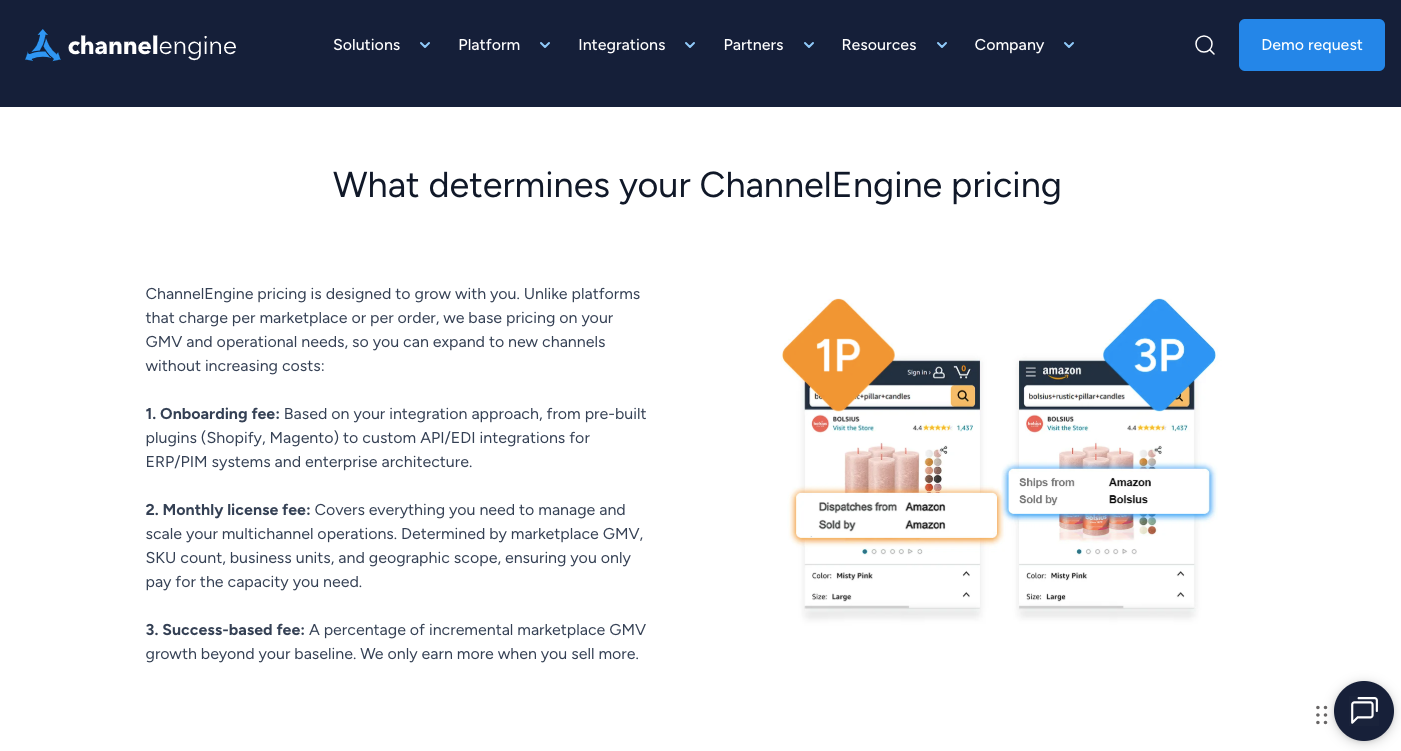
Custom, quote-based pricing, typically linked to your GMV (gross merchandise value) and the channels you need.
Is ChannelEngine Better than Channable?
It comes down to what you’re optimizing for. Channable is feed-and-ad-centric with marketplace connections bolted on; ChannelEngine is a full marketplace selling operations hub first and foremost.
If your business lives on global marketplaces and you need repricing, order routing, currency conversion, and live stock sync across them, ChannelEngine goes deeper than Channable on that front. But if advertising feeds and PPC are central to your strategy, Channable remains the more rounded all-in-one platform.
6. Lengow
Lengow, founded in France in 2009, is a mature e-commerce platform that helps brands and retailers manage and optimize product distribution across the digital shelf.
It supports businesses selling across multiple channels and marketplaces.
For example, a fashion brand selling in several countries can use Lengow to distribute product catalogs across marketplaces, comparison sites, and advertising channels.
This helps the brand manage product data and expand into new markets from one platform.
About Lengow
Lengow is a comprehensive suite rather than a single tool. It spans feed optimization, marketplace management, and competitor price intelligence, making it a strong Channable rival, particularly for European and international retailers.
Key Features of Lengow
- NetAmplify: optimize product feeds across 400+ ad platforms (1,400+ ad channels) like Google, Meta, TikTok, and Criteo
- NetMarkets: manage listings, pricing, and orders across 70+ marketplaces in 40+ countries (Amazon, Zalando, Cdiscount, and more)
- NetRivals: competitor price tracking and dynamic pricing
- NetMonitor: brand monitoring across reseller and marketplace sites
- No-code custom channel builder
- Dedicated onboarding and customer success teams
Best Use Cases of Lengow
- European and international multi-channel retailers and brands
- Sellers needing both advertising feeds and marketplace management
- Brands wanting competitor price intelligence built in
- Teams expanding across many countries and channels at once
Pros of using Lengow
- Very broad channel and marketplace coverage across regions
- Built-in competitor price intelligence (via NetRivals)
- Strong feed optimization with a no-code channel builder
- Praised onboarding and responsive support
Cons of using Lengow
- Pricing can run high, especially for large catalogs
- Not WordPress-native; some channel attribute mapping needs manual checking
Lengow Pricing
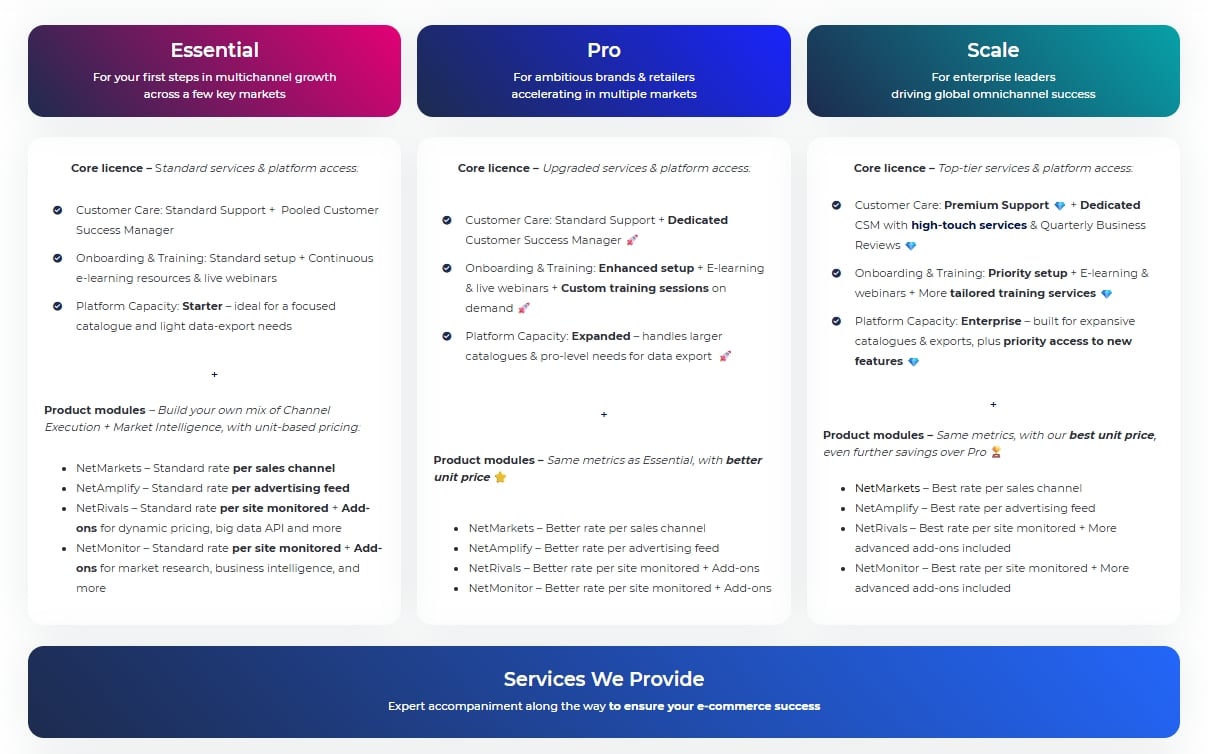
Custom, quote-based pricing, tailored to your catalog size, the products in the suite you need (NetAmplify, NetMarkets, NetRivals, NetMonitor), and channel volume. You request a demo to get a quote.
Is Lengow Better than Channable?
For European and international sellers, Lengow is one of Channable’s closest head-to-head rivals. Its combination of 1,400+ ad channels, 70+ marketplaces, and built-in competitor price intelligence makes it a genuine all-in-one for cross-border growth.
Channable is often praised for a more straightforward interface and strong PPC automation, while Lengow leans into breadth and market intelligence. If price tracking and wide European marketplace coverage matter most, Lengow pulls ahead; if you want simpler feed-plus-PPC management, Channable is lighter to operate.
7. SellerChamp
SellerChamp is a cloud-based multi-channel e-commerce platform built around fast, high-volume listing and inventory management across major marketplaces.
It helps sellers centralize product listings, inventory, and orders across multiple sales channels.
For example, a seller managing thousands of products across Amazon, eBay, and Walmart can use SellerChamp to publish listings in bulk and keep inventory synchronized.
This reduces manual work and helps prevent overselling when products sell across multiple marketplaces.
About SellerChamp
Where Channable centers on feeds and ads, SellerChamp centers on listing operations: getting large catalogs onto Amazon, eBay, Walmart, Shopify, Etsy, and more quickly, then keeping inventory synced to prevent overselling.
Key Features of SellerChamp
- Bulk listing via barcode scanning, CSV upload, or supplier feeds (API/FTP)
- AI-powered listing generation (titles, descriptions, bullet points)
- Real-time inventory synchronization across all connected channels
- Dynamic repricing for the Buy Box and competition
- Automated order fulfillment (Amazon FBA, Flexport, ShipStation, ShipRush)
- Multi-channel integrations: Amazon, eBay, Walmart, Google, Etsy, TikTok, Temu, and more
Best Use Cases of SellerChamp
- High-volume marketplace sellers and resellers
- Drop shippers and brand owners managing large catalogs
- Sellers needing fast bulk listing across many marketplaces
- Merchants wanting tight inventory sync to avoid overselling
Pros of using SellerChamp
- Extremely fast bulk listing and catalog uploads
- Reliable real-time inventory sync across channels
- AI listing tools cut down manual data entry
- Highly praised, responsive support team
Cons of using SellerChamp
- Quote-based pricing with a relatively high entry point
- Marketplace-listing focus rather than advertising-feed optimization
SellerChamp Pricing
Custom, quote-based pricing based on sales volume and features. Reported plans start around $199/month at the entry level and scale up significantly for higher tiers and added tools (repricer, fulfillment, more integrations). Yearly billing is reported to save around 20%.
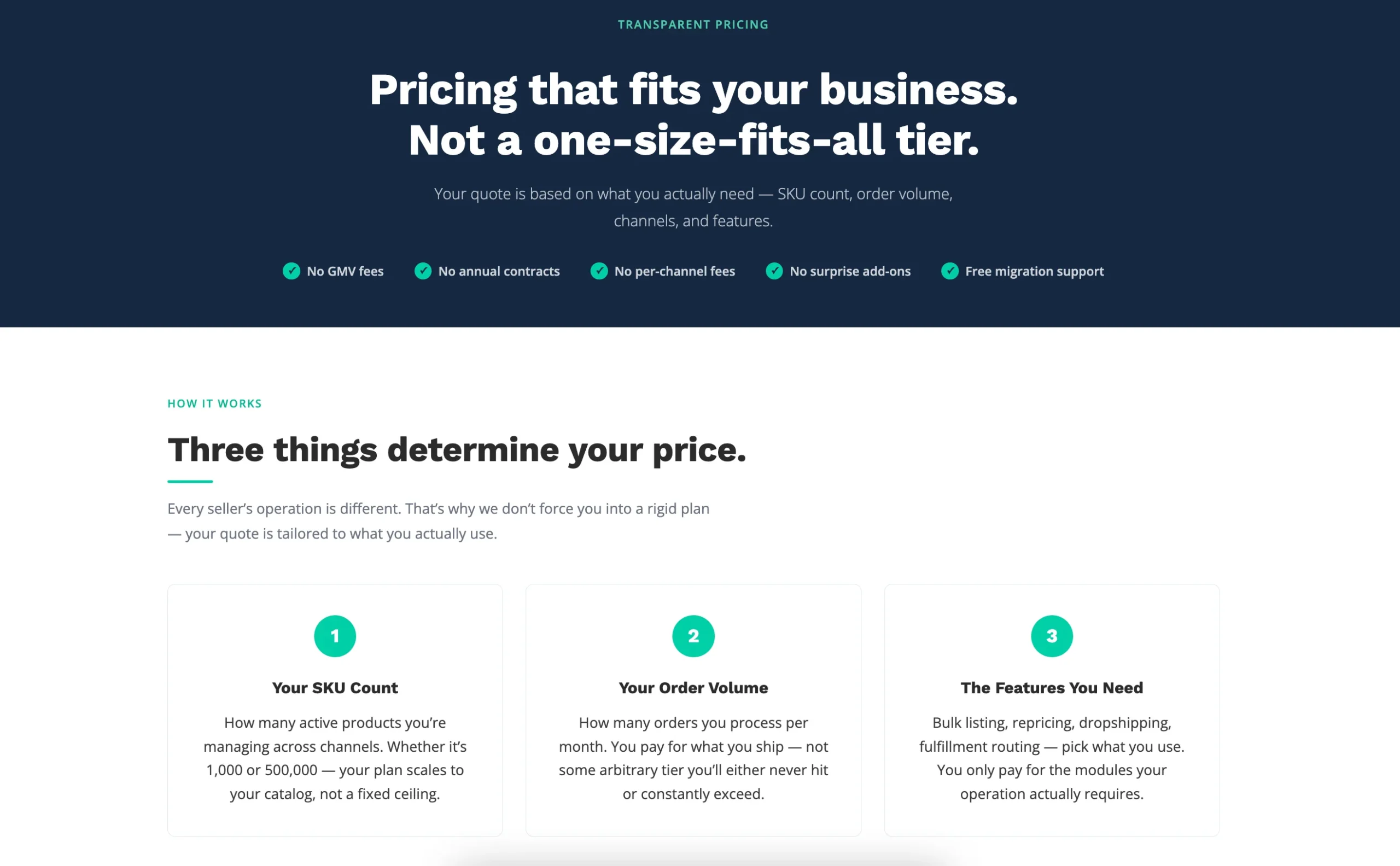
Is SellerChamp Better than Channable?
For sellers whose core challenge is listing — getting thousands of products live across marketplaces fast and keeping stock in sync — SellerChamp is purpose-built for exactly that, in a way Channable isn’t.
Channable’s strength is feed optimization and PPC automation across advertising and marketplace channels. So if your bottleneck is bulk listing and inventory management across Amazon and eBay, SellerChamp fits better; if it’s feeds and ads, Channable is the right tool.
All 7 Channable Alternatives At A Glance
| Platform | Deployment Type | Starting Price | SKU / Scale | Capability | Best For |
| PFM | WordPress Plugin | Free to ~$79.99/yr | 200 products (free version) | 200+ templates and Google Content API sync | Cost-conscious WooCommerce merchants |
| Feedonomics | Cloud SaaS (managed) | Custom Quote | Enterprise scale | Fully managed white-glove feed service | Enterprise brands with complex catalogs |
| DataFeedWatch | Cloud SaaS | ~$64/mo | 1,000 SKUs (entry tier) | RegEx rules, title A/B testing, 2,000+ channels | Agencies and multi-store operators |
| GoDataFeed | Cloud SaaS | $39/mo (Lite) | Tiered by products/channels | Compliance rules and US-based phone support | US-focused retailers scaling platforms |
| ChannelEngine | Cloud SaaS | Custom (GMV-linked) | Enterprise scale | API integration, dynamic repricing, stock routing | Global brands running marketplace sales |
| Lengow | Cloud SaaS | Custom Quote | Tiered by catalog/channels | 1,400+ ad channels, 70+ marketplaces, price intelligence | European multi-channel retailers and brands |
| SellerChamp | Cloud SaaS | Custom (~$199/mo entry reported) | Tiered by sales volume | Bulk listing and real-time inventory sync | High-volume marketplace sellers |
Which of These Tools Are Best for WooCommerce / WordPress?
If you’re running your store on WordPress, you already know the pain of juggling multiple tools. The good news? Some of these Channable alternatives work natively inside WordPress, or at least play nicely with it.
Here are the top picks that make WordPress feed management feel effortless:
i. Product Feed Manager – Built for WooCommerce. Period.
PFM runs inside your WordPress dashboard, not outside it. No extra logins, no separate platform, just a smooth, 3-click feed generation experience right where you work.
Why it stands out:
- 200+ pre-built templates and multi-destination Google formats
- Native WooCommerce integration with granular filters
- Auto-sync, feed validation, and deep integrations (Yoast, ACF, multi-currency)
If you want everything in one place and reach across 200+ marketplaces, PFM is the no-brainer pick.
ii. DataFeedWatch / GoDataFeed – Best if You’re Multi-Platform Beyond WordPress
These aren’t WordPress-native, but they bridge well if WooCommerce is just one of several storefronts. Both pull from WooCommerce alongside Shopify, Magento, and others, then push optimized feeds out from the cloud, so you manage everything centrally without taxing your site.
iii. Feedonomics / ChannelEngine – Best if You’ve Outgrown Self-Serve Tools
For stores that have scaled well past plugin-level management, these operate at a different tier. Feedonomics hands your feeds to a managed team, while ChannelEngine runs full marketplace selling operations, both useful when WordPress is one piece of a much larger commerce stack.
Which Channable Alternative Is Best for Scaling & Multi-Marketplace Sellers?
Now, if you’re scaling fast, pushing into more marketplaces, managing bigger catalogs, or running feeds across clients, your needs go beyond basic platform compatibility. You need tools that help you expand, optimize, and operate at scale.
Here are the 3 Channable alternatives that do that best, and why.
1. Product Feed Manager — Best for WooCommerce Stores Wanting Reach Without SaaS Cost
If your store is on WooCommerce and you want exposure without leaving WordPress, PFM is the standout.
Strongest reason it’s better than Channable: PFM gives you 200+ marketplaces natively inside WordPress at a flat annual price, with no monthly SaaS bill or SKU-tier escalation.
With PFM, you can:
- Generate feeds for 200+ marketplaces from pre-built templates
- Run multi-destination Google campaigns (DRM, Local, Manufacturer Center)
- Catch errors before submission with the built-in validator
2. Feedonomics — Best for Enterprise Brands Wanting Fully-Managed Feeds
If you’re an enterprise with a massive, messy catalog and no desire to manage feeds in-house, Feedonomics is built for exactly that.
The strongest reason it’s better than Channable: Feedonomics hands you a dedicated Feed Manager and enterprise-grade data cleansing, a fully managed service Channable’s self-serve model doesn’t attempt.
With Feedonomics, you can:
- Offload feed optimization and troubleshooting to a dedicated team
- Clean and normalize catalogs of hundreds of thousands of products
- Protect against listing suspensions across hundreds of channels
3. ChannelEngine – Best for Global Marketplace Selling Operations
If you’re selling directly across global marketplaces and need full operational control, ChannelEngine goes where feed-and-ad tools stop.
Strongest reason it’s better than Channable: ChannelEngine combines dynamic repricing, order routing, currency conversion, and live stock sync across marketplaces in one selling hub.
With ChannelEngine, you can:
- Sell and manage orders across global marketplaces in real time
- Reprice dynamically to stay competitive on each channel
- Sync stock and route orders from one international dashboard
My Personal Rating for Best Channable Alternative
Here’s how I’d rate the Channable alternatives based on usability, optimization power, channel reach, and real-world results.
| Feedonomics | ⭐⭐⭐⭐⭐⭐⭐⭐⭐✰ (9/10) | Enterprise-grade and fully managed — a dedicated team cleans and maintains your catalog for you. Unbeatable at scale, but quote-based pricing puts it out of reach for most small stores. |
| DataFeedWatch | ⭐⭐⭐⭐⭐⭐⭐⭐⭐✰ (9/10) | Agencies love it for a reason — RegEx-level data control, title A/B testing, and 2,000+ channels from one dashboard. The trade-off is a learning curve and subscription cost. |
| ChannelEngine | ⭐⭐⭐⭐⭐⭐⭐⭐✰✰ (8/10) | A marketplace powerhouse with repricing, order routing, and stock sync. Brilliant for global sellers, though it’s enterprise-oriented and not built for ad feeds. |
| Lengow | ⭐⭐⭐⭐⭐⭐⭐⭐✰✰ (8/10) | A broad, mature suite with 1,400+ ad channels, 70+ marketplaces, and built-in price intelligence. Especially strong for European expansion, but pricing climbs with catalog size. |
| GoDataFeed | ⭐⭐⭐⭐⭐⭐⭐✰✰✰ (7/10) | Affordable, US-focused, with excellent live phone support. Great value for US retailers, though less suited to global expansion. |
| SellerChamp | ⭐⭐⭐⭐⭐⭐⭐✰✰✰ (7/10) | Outstanding for fast bulk listing and inventory sync across marketplaces. A listing-and-ops tool more than a feed optimizer — different job, done well. |
** FAQs **
What is the best Channable alternative for WooCommerce?
Product Feed Manager is a strong choice for WooCommerce stores that mainly need product feed management. It works directly inside WordPress and supports 200+ feed templates and channels. It is especially useful if you want to manage product feeds without adding another SaaS platform.
What should I use if Channable is too expensive?
GoDataFeed can be a more affordable option for businesses that mainly need product feed syndication. Product Feed Manager is another option for WooCommerce stores because it offers a free version and annual pricing. The right choice depends on your catalog size and the channels you need.
How can I manage Google Shopping feeds without Channable?
You can use a dedicated product feed tool such as Product Feed Manager to create and manage your Google Shopping feed. It can handle product data, attribute mapping, filtering, and automatic feed updates. This can be a simpler approach if Google Shopping is your main focus.
What is the best Channable alternative for agencies?
DataFeedWatch is a strong option for agencies managing multiple stores and product catalogs. It provides advanced feed rules, RegEx controls, and title testing for more detailed feed optimization. Feedonomics is another option when agencies or their clients prefer a fully managed service.
How do I choose the right Channable alternative for my business?
Start by identifying whether you mainly need feed management, marketplace operations, PPC automation, or dynamic pricing. Then compare the platforms based on your ecommerce platform, number of products, required channels, and budget. Choose the tool that solves your main problem without paying for features you do not need.
Conclusie
As you’ve seen, each Channable alternative solves a slightly different problem, from WooCommerce feed management to enterprise marketplace operations.
For WooCommerce stores, Product Feed Manager is a strong choice, while DataFeedWatch and GoDataFeed work well for agencies and multi-store businesses.
For enterprise brands and global sellers, Feedonomics, ChannelEngine, and Lengow offer more advanced managed services and marketplace capabilities.
Ultimately, the right choice depends on your catalog, channels, budget, and how much of the work you want to manage yourself.
If you’re a WooCommerce store owner, we recommend trying Product Feed Manager by RexTheme for a simpler way to manage and distribute your product feeds.


![Show Your WooCommerce Products on ChatGPT & OpenAI Ads with Product Feed [2026] 2](https://rextheme.com/wp-content/uploads/2026/08/Show-Your-WooCommerce-Products-on-ChatGPT-with-OpenAI-Product-Feed-1-407x213.webp)