![What Not To Fix When Selling Your House [2026]](https://rextheme.com/wp-content/uploads/2026/06/What-Not-To-Fix-When-Selling-Your-House.webp)
So you’re about to list your home, and your gut is telling you to “fix everything first.” I get it. Most of us think a polished, repaired, renovated home will sell for more.
But I am telling you something most sellers find out too late:
According to Opendoor, the average homeowner spends $15,000–$20,000 on pre-sale improvements and gets back less than 60 cents on every dollar.
That’s not a small loss.
- That’s a vacation
- A car.
- Even part of a college tuition fee… gone.
You Need to Know Where to Pause
Before you start planning upgrades, just take a moment and pause.
If you’ve been looking at your kitchen thinking, “Maybe I should redo these cabinets before putting up the ‘For Sale’ sign,” stop right there.
Not every fix adds value.
In fact, many buyers would rather move into a home they can customize themselves than pay extra for updates that don’t match their taste.
- So instead of asking, “What should I fix?”
- Ask this: What should I NOT fix before selling my house?
Because skipping the wrong upgrades can save you a lot of money
In the next few minutes, you’ll learn the 7 repairs you can skip, what to do instead, and one simple move smart agents use to sell faster without picking up a hammer.
So let’s get started,
TL;DR – What Not to Fix When Selling Your Home
- Don’t overthink it; you don’t need to fix everything
- Big, expensive renovations usually don’t pay off
- A clean, simple home often beats fancy upgrades
- Spend a little, and you can still get a better return
- Buyers are checking your home online first
- Virtual tours help you get more views and interest
- Final Verdict: Use WPVR to show your home without overspending on renovation

The “Fix Everything First” Idea Isn’t Always Right
Let’s start with something most people believe when selling a house.
The more I fix, the more I’ll sell for.
It sounds right… but it doesn’t always work that way.
Take this for example. Someone spent $52,000 on a brand-new kitchen – quartz countertops, custom cabinets, everything looked perfect.
But when it came time to sell, the house went for about the same price as a similar one nearby that wasn’t even renovated.
In the end, only a small part of that money came back. The rest? Gone.
Here’s what most people don’t realize.
Kitchen and bathroom remodels often bring back less than half of what you spend; in major kitchen remodels, it goes to 38%.
So that dream kitchen you poured $80,000 into? It might only add $30,000–$40,000 to your sale price. That’s a big gap.
So instead of thinking you need to fix everything, it helps to shift your mindset a bit.
- You’re not really selling a renovation.
- You’re selling how your home feels.
Buyers want to walk in or even just scroll through photos and picture their life there. They don’t want to feel like they’re paying extra for someone else’s style.
So before you start fixing everything, let’s look at the 7 home repairs that are usually not worth it before selling.
7 Things You Should NOT Fix Before Selling Your House
By now, you know this: you’re not selling a renovation, you’re selling a feeling. So let’s keep it simple. I have given 7 things you’re better off leaving as they are:
1. Major Kitchen & Bathroom Renovations
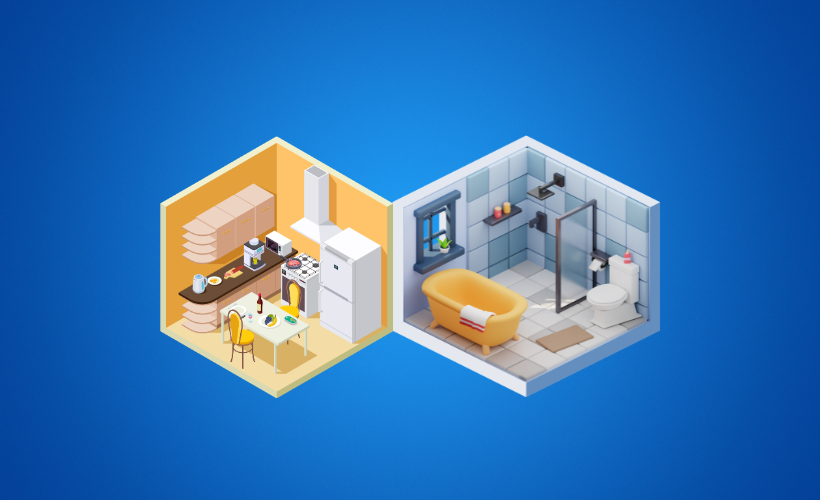
Kitchens and bathrooms are personal spaces. What looks perfect to you might not be what a buyer wants.
You might love white shaker cabinets, but someone else is picturing navy. You could install brand-new tiles, and the next owner might still replace them.
It happens more often than you think: people change things simply because their taste is different.
So instead of going all in, keep it simple. Focus on making everything work well and feel clean. Small updates can do a lot.
- Swap out cabinet handles for around $30 to $100.
- Update a light fixture for about $100 to $200.
- Replace an old faucet, usually $80 to $150.
That’s really enough. The space will feel fresh without you spending a fortune.
Think of it like this: you wear your nicest clean shirt to a job interview… you don’t go out and buy a whole new suit.
2. Working Appliances (But Outdated)

If your appliances still work, replacing them usually isn’t worth it.
- A new fridge can easily cost $1,500 or more.
- A decent stove: another $1,000+.
And here’s the thing: the buyer might have their own plans anyway. They could prefer a different brand or want smart appliances, and yours might get replaced sooner than you think.
So instead of spending that money, keep it simple.
- Give everything a deep clean.
- Make it look as good as possible.
That alone can make a big difference.
If the appliances feel a bit too old, there’s a smarter move – offer a small credit at closing or a home warranty. That way, the buyer can choose what they actually want.
Think of it like this – it’s better to give someone the option than decide for them.
Like handing them $50 for dinner instead of making them eat at your favorite restaurant. They’ll appreciate the flexibility.
3. Tiny Wear & Tear
Not every little flaw needs your time.
Small nail holes, light scuffs on baseboards, tiny marks on the wall- this is normal. Buyers expect a home to look lived in.
In fact, most people spend just a few minutes looking through a home, so the tiny details you stress over often go unnoticed.
So spending an entire weekend fixing every little mark? Usually not worth it.
For example, you don’t iron a T-shirt nobody’s going to inspect.
Instead, keep it simple. Fix what actually stands out.
Fill in bigger dents or holes.
Touch up paint where it’s obvious.
And if the walls feel a bit worn, a fresh coat of light, neutral paint can instantly make the space feel clean and bright.
That’s more than enough.
4. Custom Window Treatments & Smart-Home Tech
This is one area where doing less actually works better.
Heavy curtains and custom blinds might feel like an upgrade, but they can make rooms look darker and a bit outdated. Plus, they’re expensive, and buyers don’t always see the value in them.
The same goes for smart-home tech. Things like smart locks, thermostats, or cameras sound great, but you’re likely taking them with you anyway.
So installing new ones right before selling doesn’t really make sense.
Here’s a simple way to think about it: when windows are open and clear, the whole room feels bigger and brighter. It’s like gaining extra space without spending anything.
So instead of adding more, just simplify.
- Take down the heavy curtains,
- Let the natural light come in, and
- Keep the setup basic.
- Leave the standard fixtures as they are.
It’s a small change, but it can completely change how your home feels to a buyer.
5. Unfinished Basements or Bonus Rooms
This is where a lot of sellers overspend.
Finishing a basement or bonus room can easily cost $25,000 to $50,000. And here’s the tricky part – the next owner might want something completely different.
- You build a home theater, they want a gym.
- You turn it into an office, they see a playroom.
So that big investment? It might not stick.
Think of it like this: when you give someone a blank canvas, they can imagine exactly what they want. That’s powerful and effective.
So instead of finishing the space, keep it simple.
- Clean it up
- Add good lighting
- Make it feel open and usable
Then let the buyer picture what it could become. You’re not selling a finished room, you’re selling the potential.
6. Big Landscaping & Outdoor Projects

This is another place where it’s easy to overspend.
Outdoor kitchens, new driveways, fancy landscaping they look great, but they rarely give you your money back.
An outdoor kitchen alone can cost $30,000 to $60,000, and you might only recover a small portion of that when you sell.
So instead of going big, keep it simple.
- Mow the lawn.
- Pull the weeds.
- Add some fresh mulch.
- Clean up the front entry so it feels welcoming.
If you do want to spend a bit on curb appeal, put it where it actually pays off.
For example, a steel entry door can cost around $2,000 to $2,500 and often brings back more than what you spend.
Think of it like this – tidy always beats fancy. A clean, well-kept exterior makes a stronger impression than expensive upgrades most buyers didn’t ask for.
7. Old Code Stuff That Isn’t Actually a Problem
This is where a lot of sellers overthink things. Rules change all the time.
So just because something doesn’t match today’s standards doesn’t mean you have to fix it, especially if it’s working fine and isn’t dangerous.
Before you do anything, just ask your real estate agent.
Most of the time, you only need to fix real issues like
- exposed wires,
- a loose handrail,
- a leaking roof,
- or anything that could cause harm.
Everything else? You can usually leave it alone.
For example, you wouldn’t redo your whole house just because the “rulebook” got updated.
Focus on what’s actually a problem, not what just sounds outdated
So What SHOULD You Fix?

Okay, so we’ve covered what not to repair before listing your house. But you can’t just do nothing. Here are the things to fix before selling your house that actually pay off:
- Safety items first. Exposed wiring, leaky roof, broken stairs, missing smoke detectors. These are non-negotiable.
- Fresh neutral paint. Around 50% of realtors recommend painting the whole home before listing (NAR 2025 Remodeling Impact Report). It’s the highest-impact, lowest-cost upgrade you can make.
- Deep clean everything. Baseboards, grout, windows, light switches. Buyers notice.
- Declutter ruthlessly. Empty space looks expensive. Cluttered space looks small.
- Boost curb appeal cheaply. New front door, fresh mulch, working porch light, a clean welcome mat.
That’s it. That’s the list. Five things. Cheap, fast, and effective.
What Smart Agents Do Instead of Renovating

The smart real estate agents who sell homes faster, especially in tough markets, aren’t telling you to renovate everything. They’re telling you to present your home better.
Why?
Because buyers aren’t making decisions in your living room anymore. They’re making them on their phone… late at night… scrolling through listings in bed.
So what actually works? Simple: make your home stand out online with virtual tours.
According to statistics,
- Listings with virtual tours get 87% more views
- Buyers are 71% more likely to reach out when they can explore a home virtually
- 73% of buyers now prefer seeing a virtual tour before visiting in person
Let that drop in for a second. A full kitchen renovation might cost you $40,000, take weeks, and still not give you your money back.
A 360° virtual tour? You can create one in minutes, spend almost nothing, and reach way more buyers, including the ones who can’t visit in person.
For example, suppose you’re a business coach helping a client sell their home. Instead of suggesting a full remodel, you guide them to create a simple virtual tour using their phone.
Within a day, their listing looks more engaging online, gets more views, and starts attracting serious buyers who already feel connected before stepping inside.
And let me tell you what’s amazing: you don’t need anything fancy.
- You can take 360° photos with your phone,
- upload them to a tool like WPVR,
- and have your virtual tour ready the same day.
This is what smart sellers are doing now. They turn their 360 photos into a virtual tour easily. Not bigger renovations but better presentation.
A Quick Real-Life Example
Let’s make this real. Assume two sellers on the
- Same street
- Same size house
- Same build year
- Same neighborhood
Seller A decides to “do it right.”
She spends $35,000 fixing up the kitchen, waits 6 weeks for everything to finish, and lists at $415,000. Two months later? She sells for $410,000.
Now here’s Seller B. He skips the renovation.
Instead, he spends a little on the basics: $1,800 for fresh paint, $400 for a deep clean and takes a few minutes to set up a simple virtual tour that cost $100/yearly.
He lists just 4 days after deciding to sell… and closes in 21 days for $408,000
Now look at what they actually walk away with:
- Seller A: $410,000 − $35,000 = $375,000
- Seller B: $408,000 − $2,300 = $405,700
That’s a difference of $30,700. And Seller B didn’t just make more; he sold over a month faster.
So what’s the takeaway? Doing more doesn’t always mean earning more. But doing the right things usually does.
Conclusion
Selling your house isn’t about fixing everything. It’s about fixing what actually matters and making your home look its best.
The sellers winning in 2026 aren’t the ones doing big renovations. They’re the ones focusing on simple presentation that helps buyers connect instantly.
Most buyers will see your home online before they ever step inside. If it looks clean, clear, and easy to explore, you’re already ahead.
That’s why a simple virtual tour can make a big difference. With WPVR, you can showcase your home better, reach more buyers, and sell faster without overspending.
** FAQs **
1. I’m tempted to renovate before selling; is there a simple rule to know when to stop spending?
Yes, the 30% Rule keeps you safe. Don’t spend more than 30% of your home’s current value on pre-sale fixes, and you’ll avoid the trap most sellers fall into. Stick to that cap, and you’ll protect your profit instead of giving it away.
2. Everyone tells me a renovated house sells faster; is that actually true?
Not really, no. A great virtual tour does more for your home’s visibility than a renovation ever will, since buyers are scrolling listings online long before they book a showing. Presentation sells your house faster than a remodel does.
3. I don’t have a big budget for fixing up my house before listing, what should I prioritize?
Start small and strategic. A steel entry door swap returns close to 188% ROI, while fresh paint and a deep clean cost almost nothing and make the biggest visible difference. Put your limited budget there instead of anywhere else.
4. How much time am I actually losing by renovating before I sell my house?
More than you’d think. A kitchen remodel can take 6–8 weeks before your house even hits the market, while a virtual tour takes about 15 minutes to set up. Skipping the renovation gets your property listed and sold much sooner.
5. Two homes on my street are listed at the same price; how do I make mine stand out without renovating?
Show your home better instead of rebuilding it. A clean, well-presented house with a virtual tour attracts more serious buyers than a renovated one with weak photos. Let your property’s presentation do the selling for you.