![The Psychology Of Buying A Home: 7 Triggers That Drive Real Estate Sales [2026]](https://rextheme.com/wp-content/uploads/2026/02/The-psychology-of-buying-a-home.webp)
Buying a home is not an entirely logical decision. People often talk about price, square footage, or neighborhood statistics, but in real life, the decision usually starts somewhere else.
Most buyers first picture what it would feel like to live in the property. They imagine morning sunlight coming through the windows, safety at night, or coming back to a place that feels comfortable after a long day. The numbers usually come later to justify what the heart already wants.
If you understand the psychology of buying a home, you can design listings, property visuals, and virtual experiences that naturally guide buyers toward inquiry without sounding salesy. When the presentation matches how buyers actually think, marketing tends to feel more effortless.
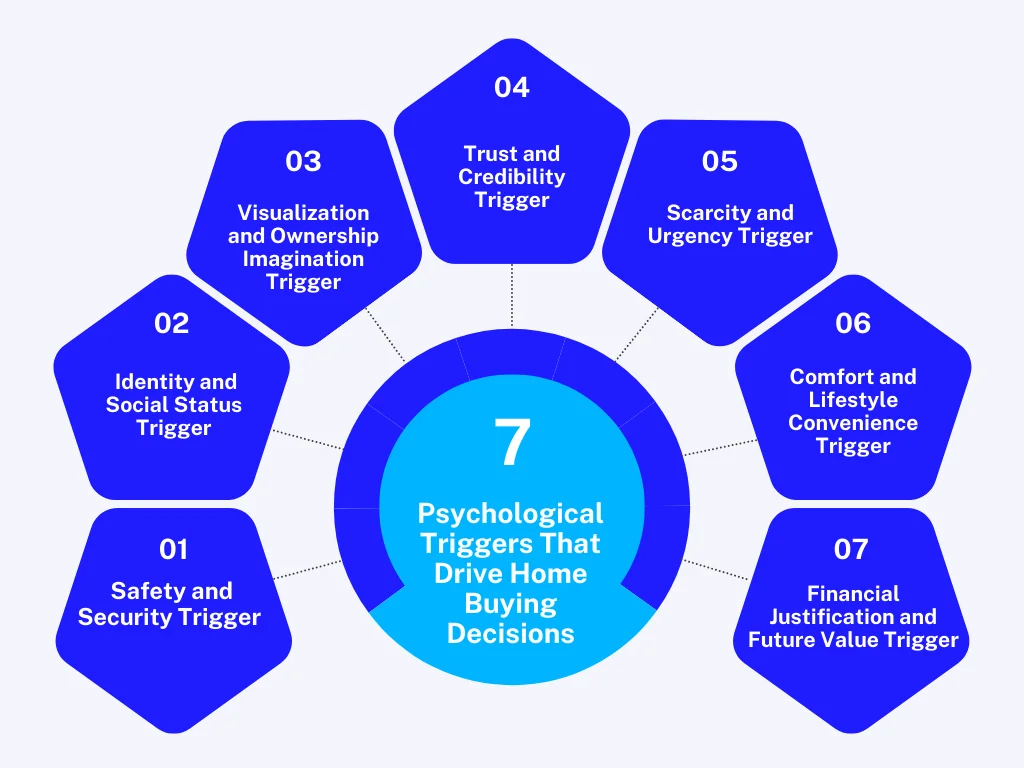
In this guide, I’ll share 7 psychological triggers that influence home buying behavior in 2026 and how you can use them to improve real estate sales.
Let’s start by looking at what really drives the emotional side of home buying.
TL;DR – The Psychology Of Buying A Home: 7 Triggers
This blog explains how the Psychology Of Buying A Home influences real estate sales and how you can design listings that match buyer thinking patterns.
There are 7 psychological triggers that drive home buying behavior:
- Safety and security – Buyers want a neighborhood that feels protected and stable.
- Identity and social status – Properties often reflect how buyers want to present themselves.
- Visualization and ownership imagination – Helping buyers mentally live inside the property increases attachment.
- Trust and credibility – Clear data, honest presentation, and testimonials reduce hesitation.
- Scarcity and urgency – Natural demand signals encourage faster decisions.
- Comfort and lifestyle convenience – Buyers check how daily life will work around the home.
- Financial and future value – Buyers want to feel their purchase will stay smart over time.
Modern real estate marketing works best when listings help buyers explore properties emotionally and visually before they contact an agent. Start applying these psychological triggers to your property listings to improve engagement and inquiry rates.
Why Understanding Buyer Psychology Matters In Real Estate Sales
Let me be straight with you. Real estate is not a low-effort buying decision. When someone looks for a home, they are thinking about lifestyle, comfort, safety, and long-term value all at once. Price matters, but it’s usually not the first thing that drives interest.
Most buyers don’t open listings because they are ready to buy. They open listings because they are curious. They scroll through photos, check neighborhood information, and imagine what it would feel like to live there.
Here are the main reasons buyer psychology matters in your real estate marketing:
- People make emotional judgments first – A buyer may decide whether they like a property within the first few minutes of browsing.
- Listings are often evaluated visually before being read – Photos, virtual experiences, and layout presentation usually get attention before description text.
- Interest depends on feeling comfortable with the property – If the space does not feel right, buyers move to another option quickly.
- Trust influences whether a visitor becomes an inquiry – Clear information, honest presentation, and good visuals help reduce hesitation.
- Modern buyers prefer experience-based exploration – Many people want to explore properties virtually before scheduling a visit.
From what I’ve seen in real estate marketing, a buyer may stay on a property page for about 5 to 20 minutes. During that time, they are deciding silently whether the property feels like a place they could belong to.

That is why modern real estate marketing is shifting toward experience-focused presentation. Better visuals, natural storytelling in property descriptions, and strong trust signals help buyers feel comfortable before they reach the inquiry stage.
The next section I will share 7 psychological triggers you can use directly in your marketing to improve real estate sales outcomes.
7 Triggers That Influence The Psychology Of Buying A Home
Now that you know why buyer psychology matters, let’s talk about the actual things that influence how someone decides to buy a home.
1. Safety and Security Trigger – The Primary Emotional Driver
When someone looks for a home, safety is usually in the back of their mind even if they don’t say it directly. A home is where people want to feel relaxed after work, sleep peacefully at night, and know their family is comfortable.
In real buyer behavior, you will often see people checking neighborhood safety before spending time studying property details. Things like street lighting, surrounding activity, and general community condition matter more than you may expect.
So when you present a property, show the neighborhood, not just the building.
- Share photos or videos of the street environment
- Highlight nearby schools, hospitals, or daily necessity stores
- Mention signs of a stable community, like maintained roads or active local facilities
- Keep lighting, cleanliness, and open space visible in your visuals
Once buyers feel a place is safe, they naturally start thinking about how the home fits their personal lifestyle.
2. Identity and Social Status Trigger
People often buy homes that match how they want to see themselves.
Some buyers may not openly say this, but they are influenced by how the property reflects their personality or social image. That is why architectural style, interior finishing, or overall prestige feel can matter more than you think.
Here is what usually works when you market a property:
- Show what makes the property visually different
- Highlight premium design details if they exist
- Write property descriptions like you are telling a small story, not listing features
- Focus on lifestyle feeling rather than only technical property data
For example, instead of just saying the house has large windows, you can describe how natural light fills the living space during the day.
When your listing connects the property with the buyer’s aspiration, it usually brings more interest and inquiries.
3. Visualization and Ownership Imagination Trigger
Let’s move one step deeper because this is where many real estate listings lose attention. The truth is simple: buyers don’t really buy properties. They buy the life they imagine living inside those properties.
You want to help buyers mentally picture themselves moving into the space. Think about small details that help them answer the question, “Can I really live here?”
Traditional photo listings sometimes struggle here because photos only show what the property looks like, not how it feels to live there. A set of pictures may show a bedroom, but it does not always help the buyer imagine waking up there in the morning.
When you write listings or design property presentation, try to guide the buyer’s imagination.
- Show living spaces in a way that feels natural and usable
- Include multiple angles so buyers can understand room flow
- Highlight spaces where daily life actually happens, like kitchen or balcony areas
- Write description lines that describe living experience, not just construction details
The idea is to help buyers feel like they have already moved in before they contact you.
How Virtual Experience Improves Visualization
This is where immersive property presentation becomes very useful. When buyers can explore a property on their own, they usually spend more time understanding the space and feeling connected to it.
Interactive walkthroughs, 360-degree interior exploration, and perspective control help simulate the feeling of visiting the property in real life. Instead of just scrolling photos, buyers can look around the space, move between rooms, and check details from different angles.
For example, 360° property tours help reduce uncertainty because buyers can evaluate the property without waiting for physical visits. When people feel they already know the property, their decision confidence usually improves.
Providing a self-guided exploration experience also helps filter interest. People who reach the inquiry stage after a virtual tour are often more serious because they have already spent time emotionally connecting with the property.
Tools like WPVR can help real estate businesses present properties in a more experience-driven way, but the main goal is helping buyers feel comfortable exploring before they contact the seller.
4. Trust and Credibility Trigger
Moving from imagination to decision making, trust becomes the next big checkpoint for you to think about. Real estate is a high-value purchase, so buyers usually spend time checking whether they can believe what they are seeing.
Even if buyers don’t say it directly, they are quietly looking for credibility signals while browsing listings. If something feels unclear, exaggerated, or inconsistent, they will likely move to another property.
You can build trust in a simple, practical way:
- Show accurate property details without stretching the truth
- Make the pricing structure easy to understand
- Highlight agent or company reputation if you have it
- Add real buyer testimonials instead of generic praise
- Avoid using marketing lines that sound too good to be real
In real browsing behavior, trust is often the moment where a visitor decides whether to keep exploring your listing or leave and check another option.
5. Scarcity and Urgency Trigger
Scarcity is one of the oldest factors that influences buying decisions. When something feels limited, people tend to pay more attention to it.
But here is something important for you to remember. Scarcity works best when it feels natural. If urgency looks forced, modern buyers usually ignore it because people are used to marketing tricks.
You can apply scarcity in a more honest and practical way:
- Mention if similar properties in the area are not widely available
- Highlight neighborhoods where demand is naturally high
- Show recent interest signals if your platform allows it
- Avoid fake countdown timers or pressure messages
Today’s buyers are smarter than before. They can usually tell when urgency is created only to push a quick sale. Instead of forcing pressure, show why the property is valuable and why availability may be limited over time.
6. Comfort and Lifestyle Convenience Trigger
After trust and urgency, buyers usually start thinking about how the property fits into their daily life. This is where lifestyle convenience matters a lot.
When someone is planning to buy a home, their mind often calculates practical living details without them noticing. They may wonder how long it will take to reach work, whether commuting is simple, and whether daily needs are easy to access.
So when you present a property, try to include lifestyle context along with the listing.
- Show distance-based information such as travel time to key locations
- Add map visualization if you can
- Describe what daily life looks like around the property
- Mention nearby places like schools, hospitals, shopping centers, or transport points
Your listing content should feel like it is helping the buyer imagine living their normal routine inside that neighborhood.
7. Financial Justification and Future Value Trigger
Even when buyers feel emotionally connected, they still want logical reasons to support their decision. At some point, they start thinking about whether the property is a smart financial move.
You will notice that many buyers try to justify their choice by looking at investment potential. They may check location development plans, market trends, or long-term value stability before making a final decision.
Here is what you can highlight:
- Long-term value stability of the location if data is available
- Basic market insight that shows why the area has growth potential
- Practical reasons the property makes financial sense rather than hype
Good listings help buyers answer a quiet but important thought in their head: whether this property will still feel like a good decision five years from now. That kind of reassurance often plays a big role in closing the deal.
How Real Estate Businesses Can Apply These Psychological Triggers in 2026
Now let’s move from understanding psychology to actually using it in your real estate marketing.
Here is how you can start applying these ideas in real life:
- Use immersive property experiences when possible– Let buyers explore the property at their own pace. Interactive exploration often keeps people interested longer than static listings.
- Focus on buyer feeling first, property data second– Start with what life inside the home looks like. Then add technical details like area size, price, or construction information.
- Tell small lifestyle stories inside your listing– Write description lines that help buyers imagine daily living. Talk about sunlight in the living room, comfort in the bedroom, or convenience around the neighborhood.
- Reduce friction in the inquiry process– Make it easy for buyers to contact you. Remove unnecessary steps between interest and conversation.
- Optimize mobile property presentation– Many buyers search homes using phones, so make sure photos, text, and exploration tools work well on smaller screens.
- Offer some level of interactive exploration before contact– Buyers today usually like to look around the property virtually before talking to an agent. When you allow that, they feel more confident starting a discussion.
The Future of Real Estate Marketing Psychology
As you apply these triggers today, it also helps to understand where buyer behavior is heading. Real estate marketing is becoming more experience-driven every year.
Buyers no longer want to just view listings. They want to feel involved in the exploration process. That means your presentation style needs to match how people now consume information online.
Here are a few practical trends shaping buyer psychology in 2026:
- Personalized property presentation– Buyers respond better when listings feel relevant to their needs. Showing properties based on browsing behavior, budget range, or preferred location helps them feel understood.
- AI-assisted listing optimization– Data can now show you which photos get more engagement, which descriptions keep people reading, and where visitors drop off. You can use that insight to adjust listings and improve performance.
- Interactive exploration environments– Static images are slowly becoming less effective on their own. Buyers expect to move through spaces, check room flow, and explore layouts digitally before scheduling visits.
- Behavior-based marketing signals– When someone spends more time on certain properties or interacts with specific areas, you can use that behavior data to follow up more strategically.
The future is not about adding more information. It is about presenting the right experience in a way that matches how buyers think and explore properties today.
Turning Psychology Into Real Estate Sales Growth
Now you can see how everything connects.
Home buying decisions start with emotion — safety, comfort, belonging — and then move toward logical validation like price, value, and long-term stability. When your listings support both sides of that process, buyers move forward with confidence.
Instead of just presenting property details, you guide buyers through a mental journey. You help them picture daily life. You build trust. You show clear financial sense. That combination turns casual browsers into serious inquiries.
Modern real estate marketing works best when buyers already feel at home before they ever schedule a visit. The more realistic and immersive your presentation feels, the easier it becomes for them to take the next step.
If you want to deliver these psychological triggers consistently and at scale, virtual presentation is no longer optional. It helps you create stronger first impressions, deeper engagement, and faster decisions.
FAQs
1. What is the Psychology Of Buying A Home?
The Psychology Of Buying A Home refers to the emotional and behavioral factors that influence how people decide to purchase a property. Buyers usually feel first and think about price justification later.
2. What are the emotional stages of buying a house?
The emotional stages of buying a house typically include curiosity, visualization, trust building, and decision confidence before final purchase action. Understanding these stages helps you design better property marketing.
3. How does Home buying psychology affect real estate sales?
Home buying psychology influences how buyers react to property presentation, neighborhood signals, and lifestyle storytelling during browsing. Applying Home buying psychology correctly can improve inquiry and conversion rates.
4. Why is home buying behavior important in property marketing?
Studying home-buying behavior helps you understand what motivates buyers to explore listings, stay longer, and contact agents. Marketing strategies aligned with home buying behavior usually generate stronger engagement.
5. How can real estate businesses use Psychology Of Buying A Home?
By applying Psychology Of Buying A Home, you can create listings that focus on emotional connection, trust signals, and visualization experience. This approach makes property presentation more persuasive and natural.