![Why Some Real Estate Buyers Ask More Questions But Never Take Action [2026]](https://rextheme.com/wp-content/uploads/2026/05/Why-Property-Buyers-Keep-Asking-More-Questions-But-Still-Dont-Take-Action.webp)
You may have seen this scenario before.
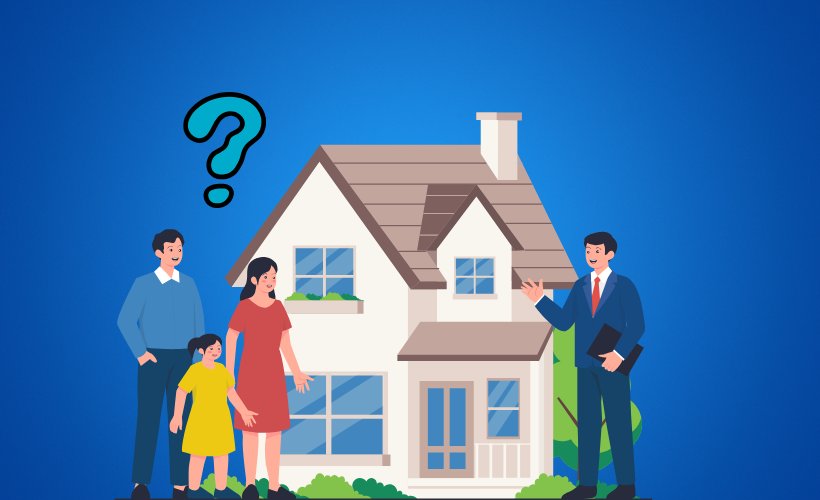
A buyer messages you on a Tuesday morning. They ask about all things related to your property, like square footage, parking, schools, maintenance fees, etc.
You reply quickly, clearly & professionally. And then… nothing. By Friday, they’ve gone quiet. A week later, they’ve bought a property elsewhere.
If this sounds familiar, you’re not alone. Most real estate agents are in the same cycle, answering more questions than ever, but closing fewer deals.
So, Why Does This Happen?
A person doesn’t just readily look at a property online and reach out. They take time to carefully choose from various listings before getting in touch with you.
According to Zillow, buyers usually check average 14+ properties online before even reaching out an agent.
But the reason they take this time is mostly due to hesitation. And eventually, spend more time asking questions than actually deciding to take action. And you end up answering more and more questions, hoping they will eventually make an offer.
Many realtors never think about it this way, but more answers don’t always create faster decisions.
In many cases, too much back-and-forth keeps buyers stuck thinking instead of moving forward.
And in this scenario, buyers don’t disappear because they lack information. They step back because they still don’t feel clear enough to decide.
In this article, you’ll see why such buyer indecision happens, what’s really happening behind those repeated questions, and the tactics to help you turn hesitant leads into confident buyers.
So let’s get started,
TL;DR
- More questions often signal hesitation, not serious buying intent.
- Information alone doesn’t create decision confidence.
- Buyers move faster when they can see and experience the property, not just read about it.
- Just answering more won’t fix this. You need to remove the reasons why buyers keep asking.
- You can improve clarity with a real estate virtual tour without more back-and-forth questions.
- A virtual experience upfront will remove several doubts and help grow buyers’ confidence.
You Think They Are More Interested, But Sometimes, It’s A Sign of Doubt
Let’s start with the belief most agents quietly hold, maybe you too:
“If they’re asking, they’re interested.”
It feels right. After all, why would someone waste time asking about a property they weren’t planning to buy?
But let’s think about the psychology here.
Every question a buyer asks is them trying to reduce risk. They’re not collecting information for fun; they’re trying to feel safer about a huge decision.
And when someone asks repeated questions, especially the same kind, (“Are you sure about the square footage?” “What about the noise?”), it is usually a sign that they have more uncertainty than confidence. They are interested, but they fear that the property may not be the ideal one.
Think about it like this. When you’re confident about a purchase, you ask one or two clarifying questions and take action.
When you’re unsure, you keep poking, hoping that one more answer might magically make the doubt disappear. (It rarely does.)
In short, you’re asuuming it’s curiosity. But they’re feeling hesitation leading to more delay.
The More You Explain, The More They Delay (And Eventually Disappear)
Now let’s see where it gets more painful.
You enter what I call the answer-more loop:
- Buyer asks a question → you answer thoroughly.
- Your answer triggers a new question → you answer again.
- That answer raises another concern → you answer once more.
- And they either ask more… or go silent out of hesitation.
In a real scenario like this, you would be spending two hours on calls, sending six WhatsApp voice notes, and emailing a full property breakdown. Then they tell you:
I just need to think about it. or I’ll call you back later.
Let me explain something interesting here.
You see, the more detailed the explanation you give, the more it forces the buyer to imagine the property in their head. And imagination is hard work.
The more they have to mentally construct the space, the more friction they feel. Eventually, another listing comes along with a clearer presentation, maybe a video walkthrough or a 360° virtual tour, and they jump ship without telling you.
According to a research by Panoee, listings with virtual tours get 87% more views than those without.
Why? Because they remove the mental load. Buyers don’t have to imagine; they can simply see.
So when you’re wondering how to convert property leads more reliably, the answer isn’t just “explain better.” You also need to consider “explain less, show more.”
Because only information can’t give them full mental peace.
Information Isn’t the Problem; Lack of Clarity is

Now you have to ask a question to yourself that do your buyers actually lack information?
Probably not. They’ve Googled the area. Checked the listing 15 times. Read your description twice. Compared it with three competitors.
What they lack isn’t data. It’s:
- Visualization: a clear picture of what living there feels like.
- Spatial understanding: how the rooms connect, how light flows, how big “1,200 sq ft” actually feels.
- Confidence: the gut-level “yes” that turns a maybe into a meeting.
You can answer 50 real estate questions flawlessly and still not give them any of those three things. That’s because words describe a property; they don’t deliver it.
A floor plan tells them where the kitchen is. A photo shows them the cabinets. But neither makes them feel like they’re standing in their future home.
Information helps, but it rarely removes doubt on its own.
This is why buyer trust in real estate has shifted in the last few years. Trust isn’t built by knowing more; it’s built by experiencing more before committing.
The agents who get this are quietly winning. The ones who don’t are still typing long replies at midnight. Because they know how home buyers decide.
Buyers Decide When It Feels Clear, Not When It’s Fully Explained
This is the most important part of this article. Read it slowly because you will know their current behavior, which is totally different from the past.
It’s 2026, and in the future, this psychology will close more deals. You just need to adopt it.
- Old belief: More answers = more trust = more deals.
- New psychology: Clarity creates confidence. Confidence creates decisions.
Decisions, especially big ones like buying property, aren’t made by logic alone.
Neuroscience research has shown for years that emotional confidence is what closes the gap between “thinking about it” and “doing it.” Logic justifies the choice after the feeling makes it.
So when a buyer says, “I need more time,” what they really mean is: “I don’t feel sure yet.” And no amount of information will fix a feeling problem. Only experience can.
This is also why two buyers can receive the same property details and one books a viewing within hours while the other disappears for weeks. The information was identical. The clarity wasn’t.
The agents who solve real estate buyer indecision stop trying to convince through explanation. They start creating experiences that let buyers convince themselves.
So you may have a question, when they decide faster and do not take more weeks! I am going to explain it in the next section.
When Buyers Can See It Clearly, They Stop Asking and Start Deciding

Now you understand that you don’t need more explanation if your property listing feels clear, Now here you will know at which point they can see it clearly.
Let’s have a scenario:
A buyer landing on your listing, exploring your entire property at their own pace, walking through the living room, peeking into the master bedroom, checking the view from the balcony, before they ever message you.
By the time they reach out, they’re not asking, “How big is the kitchen?” They’re asking, “When can I see it in person?”
You see how the question pattern has been changed here?
That’s the ability of an interactive visual experience. Virtual tours do something different descriptions can’t: they let the buyer step inside your property mentally, which is the closest thing to standing there in real life.
A research found that 95% of buyers say they’re more likely to inquire about a listing with a virtual tour.
When buyers can see your property clearly, they stop asking and start deciding.
Stop Answering More, Start Removing the Reason They Keep Asking

You may have heard earlier that be responsive, be detailed, be available. All good qualities.
But responsiveness alone doesn’t close your deals anymore, at least not in a market where buyers are comparing 10 listings before they even text you.
The new theory looks like this:
- Add visual experience early: Don’t make buyers wait for a viewing to “feel” your property. Show it the moment they land on your property page.
- Let buyers explore before contacting you: The fewer barriers between curiosity and clarity, the warmer the lead arrives. So let them explore your property on their own.
- Reduce friction, not communication: You should still be available and follow up with your leads, but you shouldn’t be the only way buyers can understand your property.
Now it’s high time you should change your behavior. Instead of answering the same five real estate questions for the 30th time this month, you let your listing answer them automatically.
Your phone starts ringing for real conversations – pricing, paperwork, scheduling – not basics question that help to make your buyers disappear.
Conclusion
Buyers asking questions doesn’t always mean they’re interested. In many cases, they’re still unsure. So even if it feels like progress to you, they’re still trying to decide.
Also, giving more information doesn’t always build their confidence. Instead, it can keep them stuck in thinking. As a result, too many details can slow their decision rather than help it.
Meanwhile, when they have too many options, simple and clear matters more. They move forward when things feel easy to understand.
So don’t just give more generic answers again and again. Make it easier for them to feel your property with a virtual tour before asking any questions.
Frequently Asked Questions
1. Why do real estate buyers ask so many questions but never commit?
Add a visual experience like a virtual tour to your listing. When buyers can explore your property themselves, they stop asking the obvious questions and only reach out when they’re ready for the next step.
2. How do I know if a buyer is genuinely interested or just wasting my time?
Genuinely interested buyers usually ask logistics questions, viewing times, paperwork, and financing. Hesitant buyers tend to circle the same topics (size, condition, neighborhood) without progressing. If the questions aren’t moving toward action, it’s a sign of indecision, not intent.
3. What’s the fastest way to reduce repetitive buyer questions?
Add a visual experience like a virtual tour to your listing. When buyers can explore your property themselves, they stop asking the obvious questions and only reach out when they’re ready for the next step.
4. Do virtual tours actually help close more deals, or are they just a “nice to have”?
They’re not a nice-to-have anymore. NAR found that 95% of buyers are more likely to inquire about listings with virtual tours, and Zillow reports 87% more views for tour-enabled listings. That’s a real impact on inquiries, viewings, and closings directly tied to buyer trust in real estate.
5. I’m not tech-savvy. Can I add a virtual tour to my listings without hiring a developer?
Yes, WPVR is the easiest virtual tour plugin built for non-technical agents. You can upload 360° photos and publish an interactive tour on your WordPress site without writing a single line of code. You can even start it with the free version.