![How Virtual Tours Make House Showings More Successful [2026]](https://rextheme.com/wp-content/uploads/2026/02/House-showings-feature-image.webp)
House showings don’t start at the front door anymore.
Buyers don’t wake up and think, “Let me go visit five properties today.” They open five tabs, scroll through photos, compare layouts, zoom into kitchen corners, check the neighborhood on maps, and try to figure out if a home is even worth a visit.
So if you’re still treating house showings as the first real touchpoint, you’re already late in the game.
Virtual tours change that dynamic. They let buyers walk through a space before they ever message you, book an appointment, or make a call.
And here’s what happens: when someone requests a showing after exploring a virtual tour, that inquiry usually feels different- more specific questions, clearer intent, and less “just browsing.”
In this guide, you’ll learn how virtual tours make house showings more successful, how they influence buyer behavior, and how you can use them to generate stronger real estate inquiries instead of just more traffic.
Let’s start!
TL;DR
- Virtual tours make house showings more successful by acting as a pre-showing buyer filter, so only more serious prospects schedule physical visits.
- When buyers explore a property virtually, they become familiar with the layout, room flow, lighting, and space structure, which reduces hesitation and increases confidence before visiting.
- This shifts showings from “property discovery” to “decision confirmation,” leading to shorter, more productive visits and better buyer intent.
- Virtual tours also help improve inquiry quality and the showing to offer ratio because prospects contact agents after already evaluating the property.
- For best results, combine virtual walkthroughs, floor plans, high-quality photos, transparent listing details, and fast response systems.
- You can implement this strategy using WPVR to create interactive property experiences that guide buyers from online exploration to physical house showings.
What Makes a House Showing Successful in Modern Real Estate?
A successful house showing is not about getting more people to walk through a property. What really matters is whether the visit moves the buyer closer to a decision.
From what I see in real estate marketing patterns, a showing works best when it strengthens the buyer’s confidence rather than just increasing visitor count.
When you evaluate showing performance, focus on three outcomes:
- Higher quality real estate inquiries – The people who reach out after reviewing property details are usually closer to buying.
- Faster decision-making – Buyers who already understand the property feel more comfortable moving toward an offer.
- Better conversion from showing to negotiation or booking – The visit should feel like the next logical step, not a casual tour.
In the digital age, most buyers start evaluating homes online before they contact an agent.
For example, if someone is searching for a 2-bedroom apartment near a school for their children, they may check a few listings first. They will look at bedroom photos to see whether two beds can comfortably fit, check balcony or window lighting, and ignore properties that look cramped or poorly lit. They usually reach out only when a property feels worth spending travel time on.
The Buyer Psychology Behind Successful House Showings
Virtual visualization helps buyers experience a property before they physically visit it. What buyers usually want is simple:
- Feel whether the space fits their lifestyle
- Check if the layout is comfortable to move around
- Decide if the property is worth the travel time
Most people schedule a showing after they feel some confidence about the listing. Virtual tours help create that confidence because buyers can preview the space first.
Time also matters. Buyers don’t want to visit multiple properties only to find that rooms feel smaller or lighting looks different in person. Letting them explore properties virtually helps them filter options based on comfort and expectation.
Visual experiences also build trust. People tend to feel more comfortable with property listings when they can explore rooms and the layout flow instead of relying only on text descriptions.
One pattern you may notice in practice is this:
- A buyer spends time completing a virtual walkthrough
- They already understand the bedroom position, the living area, and basic property flow
- When they contact you later, the physical showing is mostly about confirming the choice rather than discovering the property from scratch
How Virtual Tours Make House Showings More Successful
Virtual tours work as a step between finding a property listing and deciding to visit it in person. You are not using virtual tours to replace house showings. Instead, you are using them to make showings more effective.
When buyers can explore a property first, they usually arrive at the showing with clearer intent. Think of it as helping them check basic details before they travel to the location.
Now I’m going to show you how virtual tours help improve house showings step by step, so you can see how the process actually works in real marketing situations.
A. Virtual Tours Improve Pre-Showing Property Qualification
Start by understanding that not everyone who visits your listing is ready to see the property in person.
Virtual tours help you separate casual visitors from serious prospects. If someone spends time exploring a walkthrough, they are more likely to have a real interest in visiting later.
This improves your marketing efficiency because:
- Buyers who request physical showings after viewing a virtual tour usually show stronger purchase intent
- You spend less time arranging showings for people who are still comparing options
- You receive fewer irrelevant real estate inquiries, such as messages from people who are just browsing
Here is a simple pattern you may notice in real campaigns.
If a 3-bedroom apartment listing gets 100 website visitors and 15 complete the virtual tour, those 15 are showing higher interest. If 6 of them contact you through call, message, or appointment request, those 6 are likely closer to making a decision. In this context, real estate inquiries mean any action where a prospect reaches out after exploring the property listing.
B. Virtual Tours Increase Property Familiarity and Emotional Connection
After qualification, the next thing you do is make the property feel familiar to the buyer.
When someone can walk through rooms virtually, they start understanding how the space connects. You are helping them check simple but important details like how the living room flows into the dining area, where the bedrooms are placed, and whether the overall layout feels comfortable.
This familiarity reduces hesitation. When buyers feel they already know the property, they are less nervous about scheduling a showing because the visit feels like confirmation rather than discovery.
Virtual tours also help prospects imagine how they might use the space. They can think about where furniture will go, how the lighting spreads across the room, and whether the space fits their daily life.
Emotional comfort plays a big role in showing appointments. For example, a family buyer may feel more confident booking a visit after seeing the bedroom spacing and living room structure virtually. If the layout already feels suitable for their family needs, the physical showing becomes a step toward finalizing the choice instead of starting the evaluation again.
C. Virtual Tours Reduce Time Wastage During Physical Showings
After building familiarity, the next benefit you get is better use of showing time.
Traditional house showings sometimes fail because visitors notice mismatches only after arriving. Maybe the room feels smaller than expected, the layout is not what they imagined, or the lighting looks different in person.
When you use virtual tours, buyers already know the basic property layout before visiting. Because of this, their questions during the physical showing become more specific. Instead of asking about general space or room placement, they may ask about property details that matter to their final decision.
This naturally makes the showing shorter but more productive. You are not spending time explaining what the buyer could have already seen online. You are guiding them toward confirmation.
From a marketing experience perspective, many agents prefer quality showings over quantity. Showing five highly interested prospects is often better than arranging fifteen visits where most visitors are still exploring options.
D. Virtual Tours Increase Real Estate Inquiry Conversion Rates
The last impact of virtual tours is how they encourage action.
When buyers finish exploring a virtual walkthrough, they often feel the “I want to visit this property” signal. This happens because they have already spent time inside the property virtually.
Virtual tours also increase confidence about listing authenticity. Buyers can see the space structure, lighting, and room flow, which reduces uncertainty before contacting the agent or owner.
Here is a simple observation you may notice in practice.
Listings that include interactive property experiences often receive more follow-up communication. The reason is not persuasion. It is because prospects feel they have already started the buying journey by exploring the property online.
Other Strategies That Work With Virtual Tours to Improve House Showings
Virtual tours work best when they are part of a complete listing strategy. If you rely on virtual tours alone, you may leave engagement and conversion potential unused.
To get better results, make sure these three elements support your virtual tour.
High-Quality Property Photography
The listing preview is the first thing buyers see before entering the virtual tour.
Clear, well-lit, professional photos help buyers decide whether to click and explore. Poor visuals can stop them from reaching the walkthrough.
Think of it this way: your photos earn the click, and your virtual tour keeps them inside the listing.
Detailed Property Information and Transparency
After exploring the virtual tour, buyers look for confirmation through listing details.
Include clear information such as room dimensions, amenities, nearby facilities, and accurate pricing. When buyers see complete and consistent information, they feel more confident scheduling a showing.
Fast Communication Systems for Inquiry Handling
Virtual tours often increase interest, so response speed matters.
Prepare simple systems like contact forms, call options, messaging platforms, or appointment booking tools. Quick responses help convert interest into confirmed house showings before buyers move on to other listings.
How You Can Use WPVR to Make House Showings More Successful
At this stage, you already understand that virtual tours prepare buyers before they step into the property. Now it’s about using the right setup to make that preparation stronger and more structured.
When you use a solution like WPVR, you are not just uploading 360 images. You are building a guided pre-showing experience that directly improves the quality of your house showings.
Here’s how each element plays a role.
i. Create Interactive Walkthroughs
Interactive walkthroughs let buyers move from one room to another on their own.
That control helps them understand how spaces connect. They see the transition from the entryway to the living area. They notice how close the kitchen is to the dining space. They understand bedroom positioning.
Because of this, when they book a house showing, they are not guessing about layout. They already know it. The physical visit becomes confirmation, not discovery.
That shift increases showing efficiency and buyer seriousness.
ii. Use Floor Plans to Strengthen Layout Clarity
The floor plan feature adds another layer of clarity.
While the virtual tour shows the inside view, the floor plan shows the full structure at once. Buyers can see overall room placement, dimensions, and flow in a single glance.
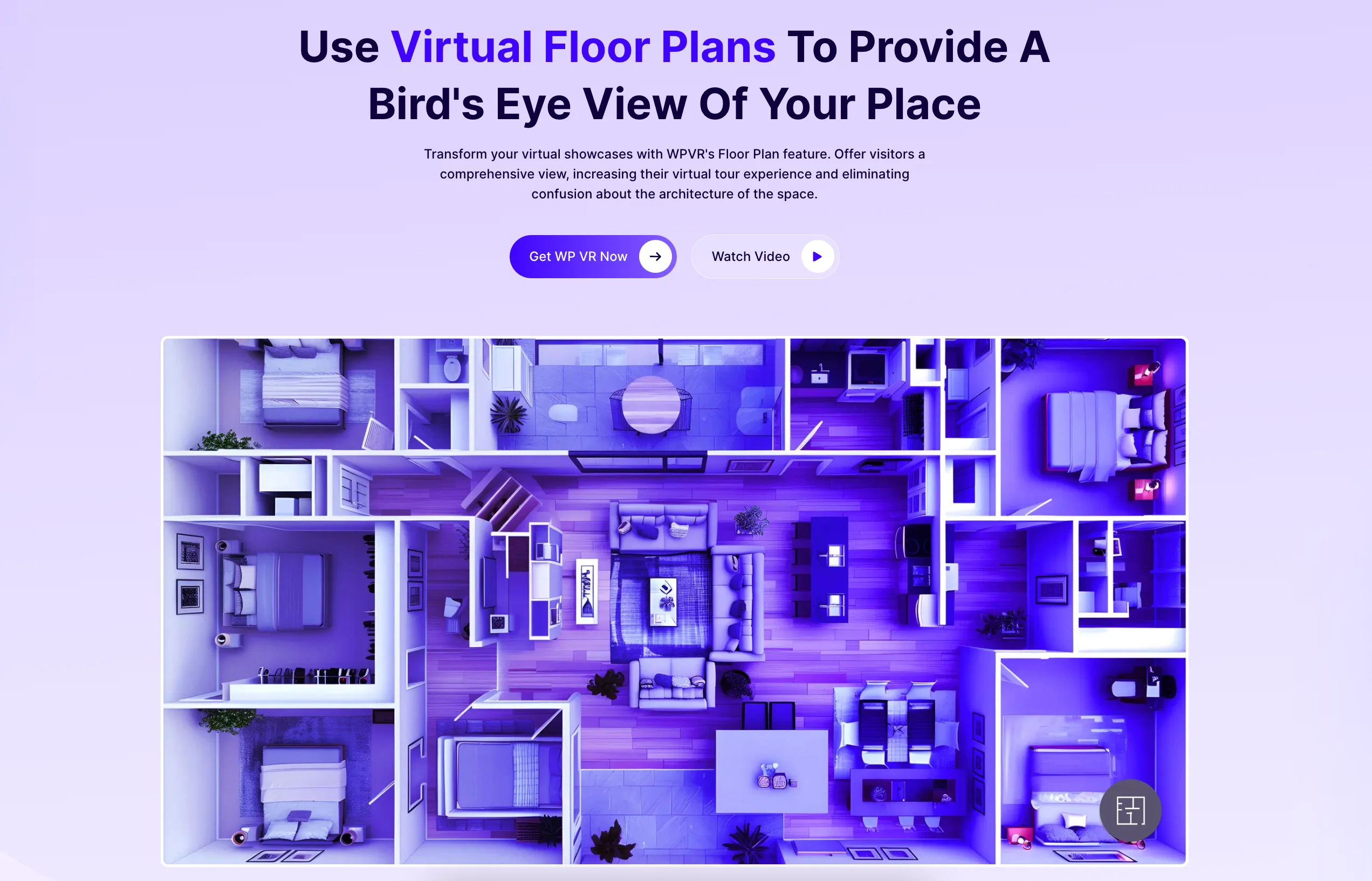
This helps them mentally organize the property. They understand how much separation exists between bedrooms. They see where bathrooms sit in relation to living areas. They can judge whether the layout fits their daily routine.
When buyers combine the walkthrough with a floor plan, uncertainty drops significantly. That reduction in uncertainty increases the likelihood of booking a showing because the structure already makes sense to them.
iii. Add Hotspots for Key Information
Hotspots allow you to place important details directly inside the virtual tour.
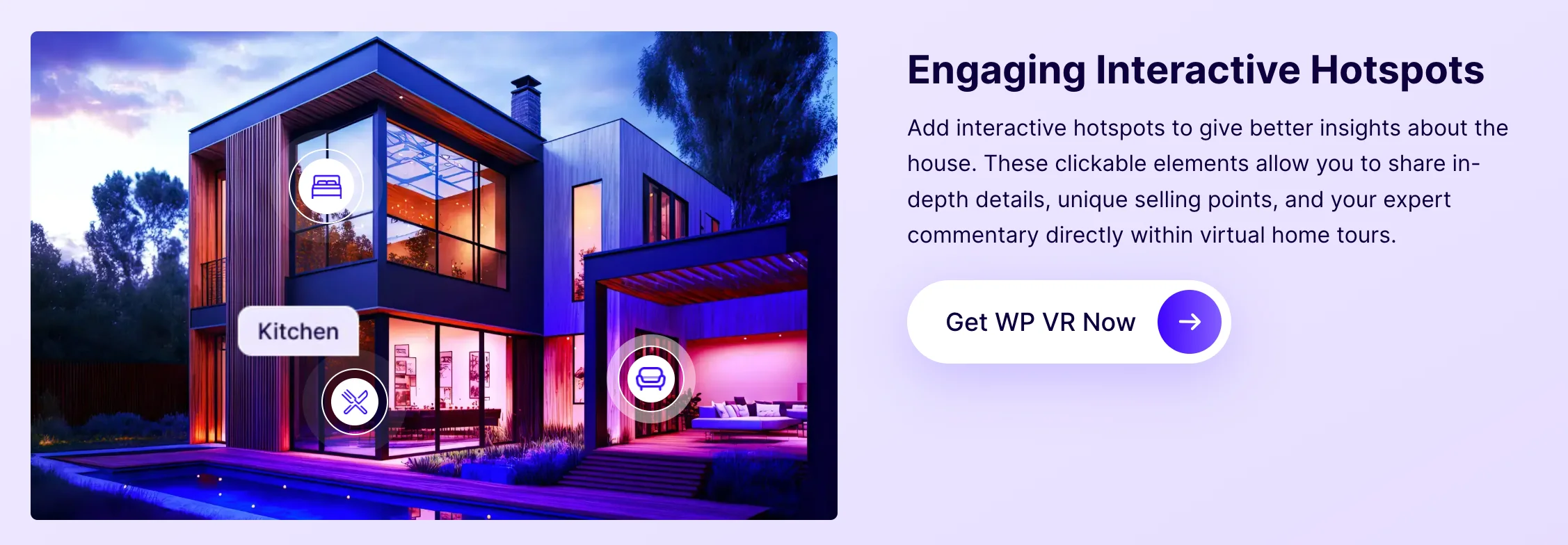
You can highlight:
- Renovated sections
- Storage spaces
- Appliance upgrades
- Balcony access
- Room measurements
Instead of waiting until the physical visit to explain these features, buyers see them during exploration.
This reduces repetitive questions during the showing and keeps the conversation focused on decision-level topics.
iv. Embed Tours Directly Into Your Listings
When you embed the tour and floor plan inside your property listing, you keep everything in one place.
Buyers stay on your site longer. They move from photos to the walkthrough to the floor plan without friction.
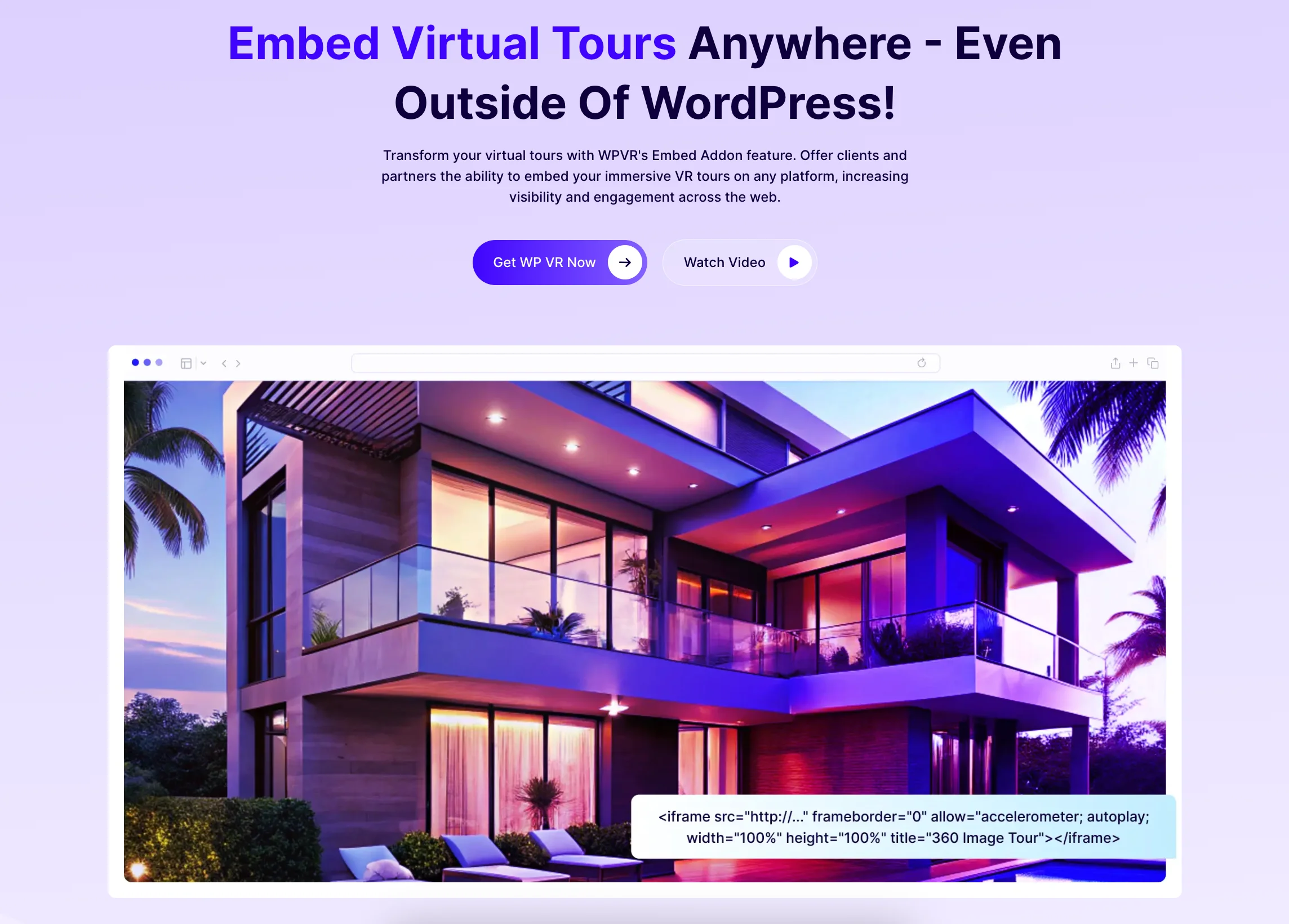
The more time they spend interacting with the property, the stronger their interest becomes. That deeper engagement often leads to more committed house showing appointments.
v. Track Engagement to Prepare for Showings
If engagement tracking is available, you gain insight into buyer behavior.
You can see which rooms receive the most attention and how long visitors explore the property.
This allows you to prepare for the physical showing more strategically. If a buyer spends extra time reviewing the floor plan and master bedroom, you can address those areas first during the visit.
That preparation makes the house showing feel focused and relevant.
When you use interactive walkthroughs, floor plans, information hotspots, and engagement insight together, you are not just presenting a property.
You are guiding buyers through a structured evaluation process before they ever step inside. That preparation leads to more confident visitors and more productive house showings.
Common Mistakes That Reduce the Effectiveness of Virtual Tours
You already see how virtual tours can strengthen house showings. But when you execute them poorly, they work against you.
Here are the mistakes that quietly reduce their effectiveness.
1. Low-Resolution or Poorly Lit Visuals
Uploading blurry, dark, or grainy 360 images damages credibility.
Buyers rely on visuals to judge space, condition, and layout. When details are unclear, they assume the property may not meet expectations.
Use sharp, properly lit visuals that reflect the property accurately.
2. No Logical Navigation Flow
Jumping randomly between rooms makes the layout hard to understand.
When buyers cannot follow a natural path through the home, they struggle to mentally organize the space. Confusion reduces interest in booking a physical visit.
Structure your tour in the same order someone would walk through the property.
3. No Clear Inquiry Step After the Tour
Letting the virtual tour end without a visible next step wastes buyer intent.
After exploring the property, buyers are most engaged. Without an obvious way to book or contact you, that interest fades.
Always connect the tour directly to a simple inquiry or booking option.
4. Outdated or Inconsistent Property Information
Showing old pricing, missing updates, or mismatched details weakens trust.
When buyers notice inconsistencies between the tour and the listing description, hesitation increases.
Keep all property information accurate and aligned across the entire listing.
5. Ignoring the Mobile Experience
Designing the tour only for desktop limits your reach.
Many buyers explore listings on mobile devices. When navigation feels difficult or slow on a phone, engagement drops quickly.
Make sure your virtual tour works smoothly across screen sizes.
Avoiding these mistakes keeps your virtual tours focused and effective. That consistency directly supports stronger and more productive house showing
Schlussfolgerung
Virtual tours are becoming a strong driver of successful house showings because they help build buyer confidence before physical visits.
When used correctly, virtual tours improve buyer intent, showing quality, and conversion potential. But they work best when combined with good photos, complete listing details, and fast response communication.
If you want to start using this strategy, you can explore how WPVR helps you create property walkthroughs and interactive listing experiences.
FAQs
What are the benefits of a virtual tour?
Virtual tours help improve buyer confidence by letting prospects explore properties before visiting. They also support better house showings by attracting more serious inquiries and improving the showing to offer ratio through stronger pre-qualification.
How do virtual viewings work?
Virtual viewings allow buyers to explore properties online through 360° walkthroughs, floor plans, and interactive hotspots. This helps them understand how do house showings work before scheduling physical visits.
How to host a successful virtual open house?
To host a successful virtual open house, make the tour easy to access, add clear property details, and provide inquiry options. You can also guide viewers on how to show your house to potential buyers by combining visuals, information, and fast communication.
What is the meaning of house showing?
House showings refer to the process of presenting a property to potential buyers so they can evaluate it in person. Successful house showings usually happen when buyers already shown interest after online exploration.
What day of the week do most house showings occur?
Most house showings are often scheduled on weekends because buyers have more free time to visit properties. Many agents try to improve their showing to offer ratio by arranging visits when buyer availability is highest.