Did you ever notice how you can do everything “right” in your WooCommerce store… but still you don’t get enough traffic or sales?
At this point, most Woo store owners often take the wrong path:
- They either start investing heavily in paid Ads to get some sales (killing their margins).
- Or they move to a store-first growth approach – SEO, image or description optimization, CRO.
But this is not the right action.
As a startup, your first goal should be to reach buyers where they mostly search for products.
According Sapio Research, 47% shoppers start their buying journey on online marketplaces.
This means that almost half of your potential buyers may not find your products because they are already browsing similar products from other brands on those marketplaces. Meaning, your store rarely gets to compete.
So you can understand how traditional digital marketing won’t help if you can’t reach your buyers.
But here’s what you should do instead.
List your products on multiple online marketplaces even before you invest in other tactics.
Yes, SEO and shop optimization are important. But they won’t get you any results if your buyers cannot find you!
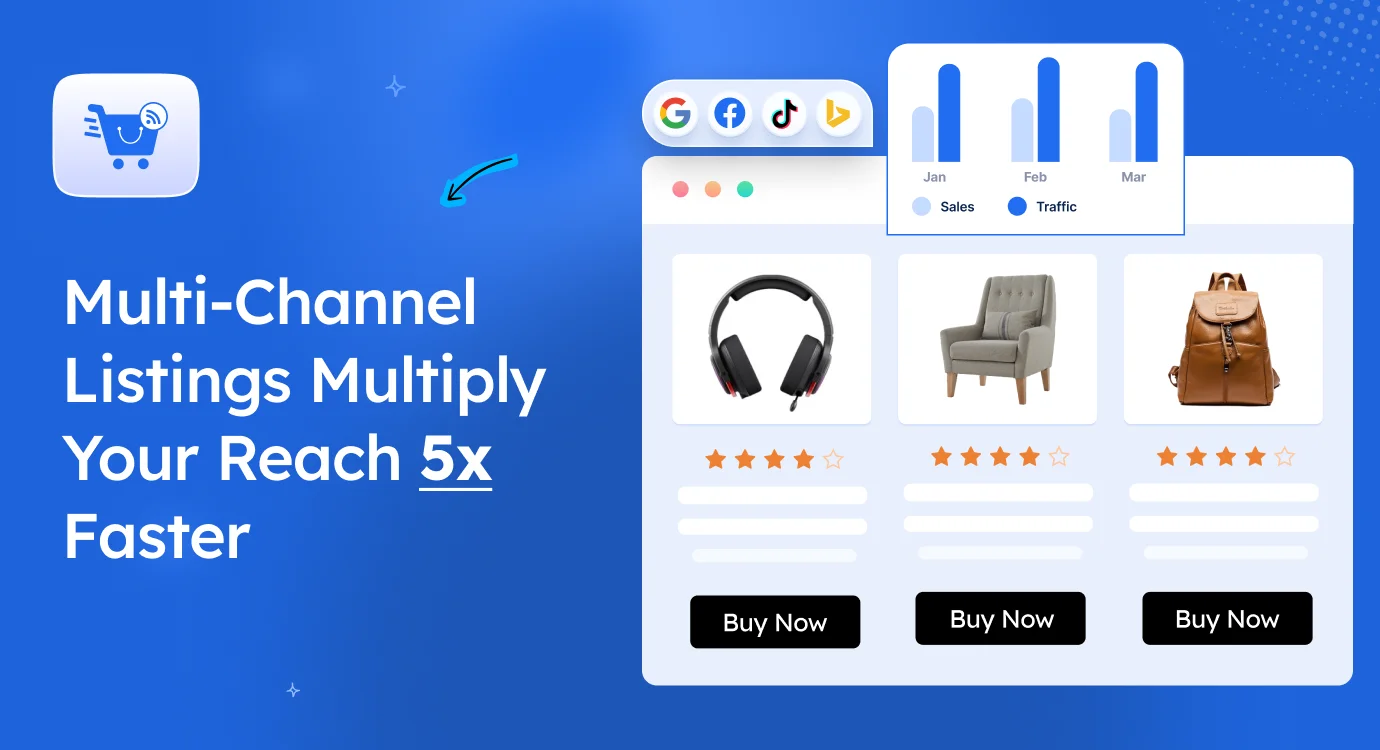
And as the title says, I’ll show you further in this discussion how multi-channel listings can actually get you 5 times faster reach than your traditional SEO and organic marketing tactics.
Plus, how it will be more profitable than your paid ad campaigns in the long run.
Fangen wir also an.
TL;DR
- Traditional traffic strategies (SEO, CRO) take time to bring results.
- Paid Ads can kill margins if started too early.
- Store-first growth = slow visibility build (SEO, ads, content)
- Buyers start by searching on AI engines or marketplaces, not regular search engines.
- Listing on a marketplace can reach more buyers.
- Listing on multiple marketplaces can increase reach by 5x
- More visibility across channels = more chances to get discovered and sell
What should you do next?
Instead of relying only on store traffic, start listing products on online marketplaces to reach buyers faster.
You’re Playing A 6-Month Game When Sales Could Start in Weeks
The first no-cost marketing tactic you can think of is SEO. You optimize your product description with ranking keywords, maintain proper schema markup, etc.
But if you don’t know, SEO can take about 30-90 days to get you any traction when you are still a growing online store.
Sometimes even more.
Why? Because it will take time for your store to build enough authority for SERPs to start suggesting you for search queries.
So what you do is you resort to Paid Ads.
While it will give you faster results, this is all about investing more money for every buyer you bring in. So it doesn’t help with your growth as it is short-lived and costly.
By the time you get any proper traction without losing too much money, you will have already passed 3-6 months. You can’t expect too many sales until then without paid ads. In fact, it may take at least 6 months to start getting regular sales.
That’s super slow. You can’t sustain that without a huge budget in your pocket.
But why do you need to rely on this slow process?
Buyers Are Already Searching Online Marketplaces First
So far, I’ve already mentioned that buyers nowadays start their journey by searching on online marketplaces. What I mean is, they visit Google Shopping, Amazon, or any local marketplace to search for products.
Doesn’t that mean you could reach buyers faster just by listing products on those marketplaces? ABSOLUTELY!
Lassen Sie mich das erklären.
While you’re still building visibility inside your WooCommerce store, buyer behavior is already happening somewhere else.
On average, they visit around 4 online marketplaces during their shopping process before making a decision...
And rarely search for the products on Google or Bing anymore.
So instead of finding your store, they’re visiting different platforms and comparing options as they go.
Meaning, online marketplaces already have buyers with high intent!
And while you’re waiting for traffic to build on your store, buyers are already actively checking prices, comparing listings, and narrowing down what they want long before they ever reach a single brand website.
I’ve covered details on this behaviour of buyers in another article, which you can read here:
This behavior is what naturally creates a speed difference because products that show up in multiple marketplaces usually get noticed more. So naturally, brands putting their products up on those multiple channels get more traffic from high-intent buyers.
That’s where your buyers are, and that’s where you should focus all your efforts first!
Why Multi-Channel Listings Multiply Your Reach 5x Faster
Now that you see where buyers are already active, the next step is understanding why this changes your reach speed so much.
It’s not because you are suddenly doing “more marketing.”
It’s because you are shifting where your products appear.
Here’s the simple breakdown of what’s actually happening:
- Your store traffic grows slowly because it depends on SEO, ads, and time
- Marketplace traffic already exists because people are already searching there
So the difference is not effort.
It’s access.
On one side, you are building visibility from scratch inside your store.
On the other side, online marketplaces already have daily traffic, search demand, and active buyers looking for products like yours.
And this is where the speed gap becomes even clearer in how discovery actually works:
- On online marketplaces, product listings get instant indexing through APIs, so your products can become visible almost immediately.
- But on your store, discovery depends on crawling and ranking cycles that take weeks before you even start showing up consistently in search.
So when you list across multiple channels, you are not creating new demand.
You are placing your products inside a demand that is already moving.
And that is exactly why the speed changes.
Because you are no longer waiting for people to come to your store first — you are showing up where they are already searching.
This is also where things start to become measurable, not just theoretical.
The next part will break down the actual time-to-value gap behind this speed difference and why it consistently shows up across stores using multi-channel listings.
The Math Behind the 5x Faster Reach Claim
You might look at the “5x faster” claim and feel like it’s just a catchy number I brought in to make a point stronger.
But when you break it down, it actually comes from a very simple timing comparison.
Here’s how it works.
So the basic math looks like this: 180 ÷ 30 = 6
Now, in real situations, not every product or channel performs at the exact same speed. Some move slower, some faster depending on setup and market conditions.
That’s why I kept it grounded at 5x faster reach instead of pushing the highest possible number.
What this really shows you is simple- you’re not dealing with a minor improvement in timing. You’re dealing with a real gap in how fast your products reach buyers.
And once that gap opens up, the way revenue builds starts to change, too.
Faster Reach Means Faster Revenue and Product Validation
Now that you’ve seen how the speed gap works, the next thing to understand is what it actually changes for your business.
When your products reach buyers faster, you don’t just get more visibility — you start getting real business feedback much earlier.
That shows up in a few direct ways:
- you get your first sales faster, instead of waiting months
- you can validate products quicker, instead of guessing what works
- you shorten feedback cycles, because buyers respond earlier
- you make faster reinvestment decisions, based on real performance data
So instead of waiting for a long traffic build-up inside your store, you start learning from actual buyer behavior much sooner.
And that shift matters because it changes what you focus on next — not just traffic, but what is actually selling.
At the same time, it also exposes a limitation in relying only on store optimization. You can improve conversions all you want, but if reach is slow, your sales cycle still stays slow.
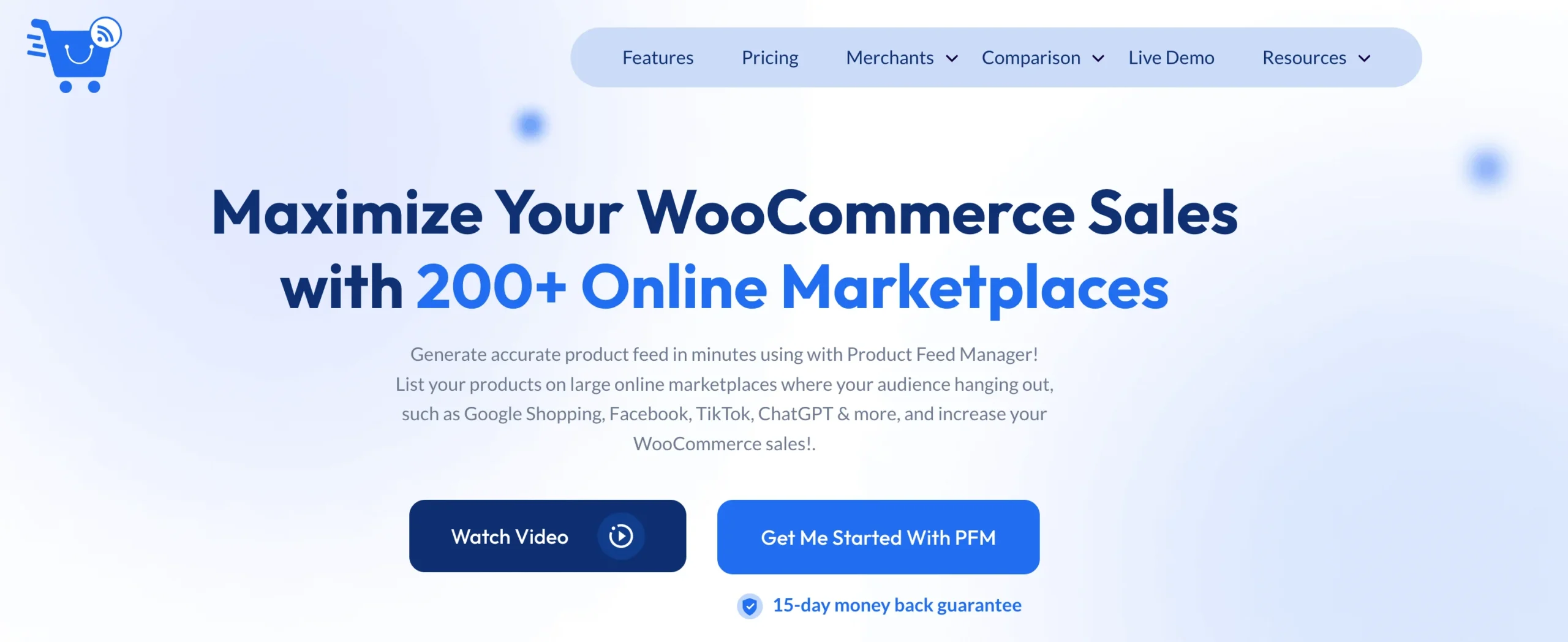
If you want to remove that delay and start listing your products across 200+ online marketplaces without manual work, you can use Product Feed Manager for WooCommerce to set it up in a structured way and expand your reach from one place.
Final Words
At this point, the pattern becomes clear for you — when you rely only on store traffic, your growth depends on slow, single-channel visibility.
And that naturally stretches your sales cycle, even if your store is well-optimized.
But when you start using multi-channel listings, you shift from waiting for traffic to reach your store to placing your products directly where buyers are already active across different platforms.
So instead of depending on one source of visitors, you start reaching buyers faster across multiple channels at the same time.
And that changes how quickly sales start to build.
The real question is no longer just how well your store converts — but whether your products are visible where buyers actually begin their journey.
FAQs
1. What are multi-channel product listings?
Multi-channel product listings mean publishing your products across multiple platforms like marketplaces, comparison sites, and search channels instead of relying only on your WooCommerce store.
This helps you reach buyers where they are already actively searching, instead of waiting for them to discover your store first.
2. Why are multi-channel listings better than store-only traffic?
Store-only traffic depends heavily on SEO, ads, and time, which makes growth slower and less predictable.
Multi-channel listings improve reach because they place your products on platforms where buyer intent is already high, leading to faster visibility and sales opportunities.
3. How do marketplaces improve product visibility faster than SEO?
Marketplaces already have built-in traffic and search systems, so your products get indexed and shown much faster than organic SEO.
While SEO can take months, marketplaces like Amazon or Google Shopping can start driving impressions within days of listing.
4. Do multi-channel listings replace the need for SEO in WooCommerce stores?
No, SEO is still important for long-term organic growth and brand authority in your WooCommerce store.
However, multi-channel product listings act as a faster distribution layer that helps you get early reach while SEO builds over time.
5. How does a product feed manager help with multi-channel listings?
A product feed manager helps you structure and sync your product data so it can be listed across multiple marketplaces without manual effort.
It ensures your WooCommerce store products stay consistent and optimized when pushed to different channels for better reach and visibility.

![Show Your WooCommerce Products on ChatGPT & OpenAI Ads with Product Feed [2026] 2](https://rextheme.com/wp-content/uploads/2026/08/Show-Your-WooCommerce-Products-on-ChatGPT-with-OpenAI-Product-Feed-1-407x213.webp)